
HEC Paris Students Engage Discussion on the Realities of Human Rights Due Diligence
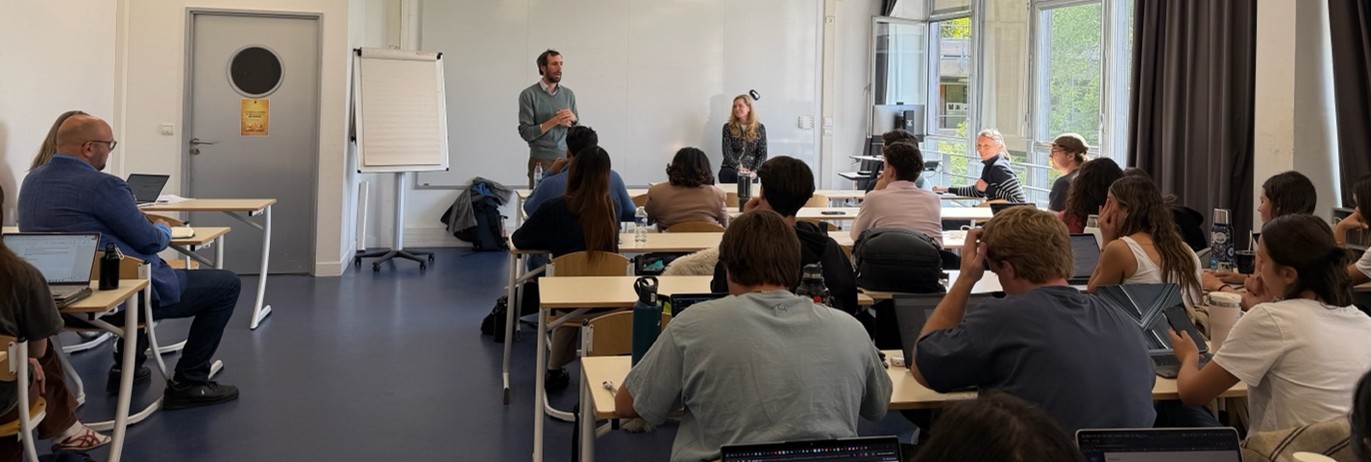
HEC students from different Grande Ecole programs had the opportunity this week to engage in an open conversation with Kerstin Waltenberg, Chief Human Rights Officer at Volkswagen Group, offering a rare inside look at the challenges of implementing human rights due diligence in a global industrial organization.

A Role Built from Scratch
Appointed in 2022, months before the coming into effect of the German Supply Chain Due Diligence Act, Waltenberg was tasked with building a function that did not previously exist within the group. Her role by law encompasses the monitoring and oversight of human rights risk management across Volkswagen’s vast ecosystem, which currently encompasses more than 2,100 entities and approximately 85,000 direct suppliers worldwide.
Speaking with students, she described her and her department’s role as both highly strategic and structurally complex. “We are not procurement, we are not legal, we are not compliance—but we oversee all of them,” she explained, highlighting the supervisory nature of the function under German supply chain legislation.
From Legal Obligation to Corporate Practice
The exchange encouraged lively discussion on the day-to-day realities behind corporate commitments. Waltenberg explained how legislative or legal obligations drive, shape and often act as a catalyst for any risk management function, including that of Compliance or Human Rights officers. Waltenberg also explained how her prior experience as a Compliance officer and her legal background for her have been instrumental in driving the human rights conversation within the Volkswagen Group.
Moving Beyond Box-Ticking Approaches
A central theme of the discussion was the relationship between formal processes, as designed and conceived on a theoretical basis, generally with focus on compliance with legal obligations, and effective implementation after practical experiences have been made.
Waltenberg shared Volkswagen’s experience of moving beyond industry-standard tools such as large-scale supplier questionnaires, which often generate extensive data lakes but perhaps limited insight on focus areas such as human rights. Her team, in a project joined by Volkswagen Group’s Procurement, Legal and Compliance functions, developed a more targeted, risk-based approach without questionnaires - identifying a smaller subset of suppliers associated with concrete human rights risks which then allows a targeted preventative response in the shape of focus audits, site visits, and impact assessments.
The Cost of Meaningful Due Diligence
Any additional risk management procedures are unavoidably connected to sometimes significant operational and financial implications. Building upon an existing risk management system, as Volkswagen Group did, has the advantage of not starting from scratch. It requires recognizing and reacting to interfaces between old and new, however. Potential synergies are usually only identified after the practical experience of the first year or so, and benefits can often be reaped only then. Students explored the relation between the need for rigorous due diligence and the associated contingencies. Cost may be a factor; no system works without resources. Waltenberg noted that meaningful human rights oversight requires both those resources and sustained internal commitment.
Navigating Complex Global Supply Chains
The discussion also addressed the increasing complexity of global supply chains, particularly in conflict-affected regions. Responding to a question about human rights risks in Sudan by HEC Imagine fellow Mayada Adil, Waltenberg highlighted the difficulty of tracing risks in multi-tiered supplier networks and the time and cooperation by all parties involved required to conduct thorough field audits or human rights impact assessments in such contexts. Waltenberg also shared practical examples and common challenges that the students may themselves come across in their future careers when confronted with human rights-related issues.
Bridging Theory and Practice
For students, this session organized by Charles Autheman, HEC Paris lecturer in Business & Human Rights, provided a valuable bridge between academic concepts and real-world practice. It underscored the importance of critical thinking, adaptability, and perseverance in addressing sustainability challenges within large organizations. The conversation, which was attended by his elective class of bachelor and master’s students, was also joined by students from other programs, including HEC’s master program in Sustainability and Social Innovation and certificate in Impact Investing & Entrepreneurship for Systemic Change.
Members of the faculty such as Matteo Winkler and François Gemenne also attended the conversation. Their participation and this conversation reflect HEC Paris’ interest and commitment to fostering dialogue between students and leading practitioners on the most pressing issues at the intersection of business and society.