


Deep Tech: Turning Breakthrough Science into Impact
From climate and biotech to AI, quantum and space, deep tech holds the potential to tackle global challenges. Yet turning frontier science into market-ready solutions requires more than technological excellence.
Deep tech rarely fails in the lab. Its greatest challenges emerge on the path to market. Through research, expert insights and entrepreneurial stories, this feature explores the critical role of funding, business expertise, mentorship, industrial infrastructure, partnerships and innovation ecosystems in enabling innovators to become key players in the major transitions.

 Innovation & Entrepreneurship
What really prevents deep tech breakthroughs from becoming scalable companies?
Turning discovery into a market-ready company is not only a question of science or funding. It takes business knowledge, the right people, and an ecosystem that connects them.

 Tech & AI
Can Europe Win the Physical AI Race?
As AI leaves the screen for robots, drones and satellites, a HEC Paris workshop at VivaTech 2026 asked whether Europe can turn its edge into real impact.

 Sustainability & Society
A Roadmap for Clean Tech to Drive Europe’s Net-Zero Strategy
Europe has world-class clean-tech assets, but a new research suggests their impact on the climate transition depends on connecting them through stronger innovation ecosystems.

Scaling Deep Tech Depends on Three Levels of Infrastructure
To realize their innovation potential, deep-tech ventures must manufacture the technology, integrate it into industrial systems, and rely on regulatory and financial frameworks that enable deployment.

 Strategy & Leadership
How Structured Mentorship Helps Deep Tech Startups Scale
Great mentorship helps deep tech founders focus, de-risk, and build the clarity needed to scale breakthrough science into viable companies.
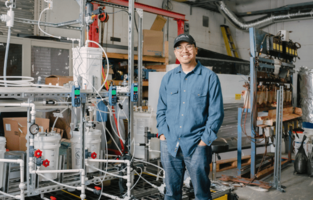
Climate Deep Tech: Solving Billion-Scale Problems Under Constraints
Cura Climate is building electrochemical technology to help cement producers cut emissions by up to 85%, without compromising on cost.