
Who Gets Ahead at Work? Examining Bias at HEC Paris MBA
Drawing on three academic disciplines and students’ own workplace experiences, the intensive elective asks future leaders to scrutinize the evidence—and the decisions they might otherwise take for granted.
Ask for more. Speak with confidence. Put yourself forward. Advice about getting ahead at work often assumes that the same behavior will earn the same response, whoever you are.
A new HEC Paris MBA intensive course examines what that advice leaves out. How do expectations change depending on who is asking for a raise or being considered for leadership? How can managers recognize bias in decisions they regard as fair? And what does research tell them about how to respond?
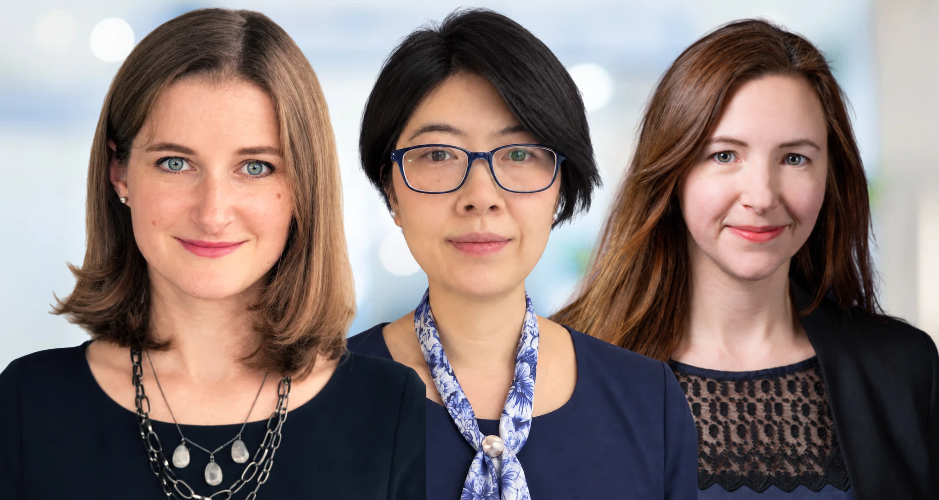
These questions brought together three professors from different disciplines to develop Evidence-Based Leadership Across Individual Differences: From Biases to Solutions. Ekaterina Netchaeva, Anastasia Buyalskaya and Crystal Yanting Shi combine research on workplace behavior, decision-making and pay inequality with situations students have encountered in their own careers.
Across five sessions in two-and-a-half days, the course asks participants to examine familiar explanations for professional success—and consider what they may need to change when they are the ones making decisions about someone else’s future.
Gender is a major focus, alongside questions of race, socioeconomic background and other dimensions of difference. The discussions extend from individual behavior to the systems within which managers hire, evaluate and promote people.
Bringing Three Disciplines to the Same Problem
Netchaeva, whose research focuses on gender bias, leadership and workplace experiences, had already developed related courses for other student audiences. Interest from students helped sustain and shape that teaching. Their questions gave her reasons to keep revisiting the material as the research evolved.
For the MBA elective, she joined forces with Buyalskaya, a behavioral scientist studying economic and financial decision making, and Shi, whose accounting research encompasses corporate governance, diversity and labor issues.
Each brought a different scale of analysis. Netchaeva examines how bias operates between people and within organizations. Buyalskaya studies individual decision-making -- including questions about competition entry and risk-taking -- relevant for many workplace decisions. Shi connects workplace practices to pay disparities, economic outcomes and corporate and government policy.
Together, they could follow a question beyond the boundaries of a single discipline. A difference in pay might involve negotiation behavior, an employer’s evaluation practices and the information available in a labor market. Understanding one element would not necessarily explain the others.
“The course is really focused on navigating the business world while recognizing individual differences,” Buyalskaya said. “There is a lot written out there but very little research behind it and sometimes the advice is contradictory. We wanted to put together a course that is evidence and data-based, leveraging our research background.”
The collaboration helped them examine their own assumptions before asking students to do the same.
Learning to Question a Convincing Explanation
The course begins with a debate about diversity’s benefits and challenges, followed by a simulation on managing differences. From the outset, students are asked to weigh arguments and examine the conditions under which a team might benefit from different perspectives or struggle to work together.
Netchaeva then turns to organizational decisions that may appear straightforward or merit-based: recruiting a candidate, assessing an employee’s contribution or identifying leadership potential. Simulations and case discussions explore how bias can enter these processes even when the people involved consider themselves fair.
Buyalskaya’s session examines research on gender differences in competition, risk-taking and self-promotion. A central question concerns interpretation. If people behave differently in a particular setting, what can a manager reasonably conclude about the reasons?
Students consider how social and cultural context may shape behavior, and what happens when circumstances change. For example, Buyalskaya shows that while early studies found a consistent gender gap in competitive preferences, a more recent paper from Cassar & Zhang (JEBO, 2022) found that, among parents, the gender gap shrinks or disappear entirely when competition rewards child-benefiting resources.
Shi herself learned a lot from her colleague’s materials. “I didn’t realize that women’s behavior may depend on who they are advocating for—for example, whether they are fighting for themselves or acting as mothers. More broadly, people’s stated preferences do not always align with their actual behavior.
For instance, consumers may say that they value diversity, but field experiments examining their real choices may show quite different patterns, especially when supporting diversity conflicts with their own interests.”
Personal experience can serve as a starting point for investigation, with research providing a way to examine how broadly that experience applies. Shi gave the example of a female student who felt it was reasonable to accept a pay cut after taking one year of maternity leave because she considered spending that time with her newborn child especially important.
The example illustrates that some observed gender pay gaps may partly reflect individual choices and preferences, while also recognizing that those choices can be shaped by constraints. People may knowingly make trade-offs between compensation, career progression, and family responsibilities, whether those trade-offs are freely chosen or influenced by circumstances.
“There are many different perspectives that help us understand the issue more deeply, ranging from negotiation and productivity to discrimination and access to opportunities,” Shi said.
Students may know that gender pay gaps exist, yet they are often less certain about their magnitude, how they vary across groups, and what different measures actually capture. Her session drew on public data, including OECD statistics, government policies aimed at reducing disparities, and academic research to help students examine these distinctions more carefully.
Putting Workplace Experience to Work
For Vanilla Temtching (MBA ’27), the connection was personal from the beginning. She enrolled partly to better understand workplace experiences through the lens of individual differences. The promise of moving from the origins of bias toward possible solutions interested her.
One idea that stayed with her was how early expectations can develop. Today, we talk about the underrepresentation of women in STEM, but girls are generally exposed to expectations about how they should behave, what they should like, and the “girly things” they should do, while STEM fields are more often associated with boys. She believes that addressing this starts in childhood, while also raising awareness among both girls and boys.
The course also reinforced her view that leaders need to understand the different dynamics that individual differences can create in the workplace. A colleague’s account of work life may reveal obstacles that someone from a privileged background has little reason to notice.
Hector Jimenez (MBA ’27) came to the elective by a different route. He was initially drawn to the professors’ backgrounds. The subject became more significant as he considered the expectations women can encounter in leadership and the additional effort they may need to establish their authority. He was moved after Netchaeva shared a personal story about singled out as a woman in her career and her mentor encouraged her, saying, “you can ask for whatever you want in life as long as you are nice.”
Afterward, Jimenez found himself thinking about hiring decisions, the balance of men and women in leadership and conversations he had not previously considered having. “When you are working in a corporate position, you don’t think about those things. Hopefully when I go back to a corporate position, the things I didn’t consider before, and thanks to that course, I can consider. That course is still on my mind.” He continues to study the topic while completing his dual degree at Yale University.
For Mike Sedjro (MBA ’27), the discussions brought new attention to pay disparities, including at senior levels. They also prompted him to consider his own responsibilities as a future leader: "How should I determine an appropriate salary when a candidate’s expectations might themselves reflect an unequal market?"
At the same time, the course made him aware that even when leaders have a desire to close a pay gap, other factors may interfere, such as a company’s financial pressures, which can’t be overlooked.
Netchaeva said she hopes students will want to change something in their own professional lives or within the organizations they join—and will be better equipped to judge how.
Research shows that being aware of gender bias does not eliminate it. Awareness needs to be coupled with motivation to change,” Netchaeva said. “Awareness is valuable, but it’s not enough. Ideally, we want students to feel inspired to make a difference—for themselves, the company they work for or the world. We want them not only to understand the issue, but also to want to do something about it.”