
Pieter Wassink
Summer Student Story
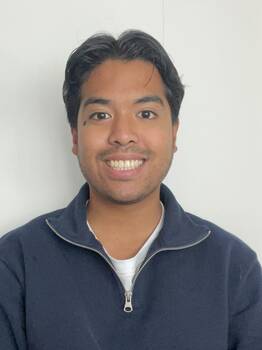
The HEC approach is very different from what I am used to. It is built around short cases and constant interaction. That was refreshing.
I finished my bachelor's in Information Science last November, and for the past eight months I have been working as a real estate valuer, spending most of my days inside financial models and writing reports. This September I begin a double master's in Applied Data Science and Real Estate Studies, as I want to build my career in real estate, where data and finance both draw me in. However, sustainability is impossible to separate from either. That combination is what brought me to HEC Paris, one of the few places that treated it as a serious angle rather than an afterthought.
I started with the Energy and Finance session, which set the tone for what followed. It gave me a solid overview of sustainable development and the energy markets, and even where I already knew the ground, I picked up plenty of new details on the finance side of energy: how markets, trade, commodities, and hedging fit together.
The heart of my summer was the Sustainable Finance and Investment session, where things went deep. We worked through what it really means to build a sustainability strategy into investment and policy decisions, not as a slogan but as something you have to defend with reasoning. Layal Nabhan, who directed both sessions, held the broader themes together and drew the many angles into one picture, while a big line of guest speakers each took on a specific part of the field. The result was both a broad map and several deep dives. It ended with a final presentation in which my group built an investment case for a water fund and pitched it to an 'investment committee' jury, a good way to test what I had learned and explain it back to the room.
What struck me almost as much as the content was how it was taught. The HEC approach is very different from what I am used to in the Netherlands, where lectures are more passive and I usually work through tutorials on my own. Here it was built around short cases and constant interaction. That was refreshing. It meant far more back and forth with the professors and the group, and ways of thinking surfaced that I would never have arrived at alone.
I also did not expect how much of the experience lived outside the classroom. Our SFI class was fairly small, so connecting was very easy and on the first weekend we went out to a memorable dinner in Paris and explored the city together. The balance between studying and everything around it is what I expect to remember the longest, along with the friendships I strongly intend to keep.
So who is SFI (or any HEC summer program) for? Anyone who wants an international experience, a stronger base in a subject they care about, or to make friends from around the world. For me it did more than that. It deepened an interest I already had into something I now want to build a career around, and it reshaped how I see the field I work in. I came to Paris to sharpen my sustainable finance skills, and I left convinced that sustainability is no longer something the numbers can afford to ignore.
Thanks to HEC for a genuinely transformative experience.