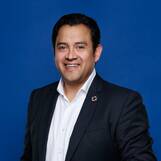
Fernando J. Díaz López is the Executive Director for Climate at Sustainability & Organizations (S&O) Center of HEC Paris and a lead author for the IPCC seventh assessment report AR7 (WGIII Mitigation of Climate Change). He has over 25 years of experience in education, research, and innovation, specializing in transformative climate resilience, circularity, and eco-innovation. He is also associate professor extra-ordinary of sustainability systems at Stellenbosch University (South Africa) and is holder of honorary research fellowships from the University of Ferrara (SEEDS Inter-University Centre) and the University of Alcala (INNOGREEN research group). Since October 2026, he also holds an honorary diaspora chair on 'Climate Resilience Innovation' by the Mexican Ministry of Science, Humanities, Technology, and Innovation (Secihti).
Fernando is Associate Editor at the Cleaner Waste Systems Journal (Elsevier). His work has been published at top environmental journals, including the Journal of Cleaner Production and Ecological Economics. He has also published books and chapters with Edward Elgar, Springer Nature (Palgrave McMillan), Routledge and Wiley.
Dr. Díaz López is part of the executive team of Business School for Climate Leadership – a partnership between HEC Paris, Cambridge Judge, IE, IESE, IMD, INSEAD, London Business School, and Oxford Said Business School. He’s a also mentor in the climate track of the Creative Description Lab (CDL Paris Climate), hosted by HEC Paris in collaboration with Rotman School of Management (University of Toronto).
Fernando holds a doctorate degree (PhD) in international economic development from the University of East Anglia (United Kingdom), a MPhil in economics and management of Innovation from Universidad Autonoma Metropolitana (Mexico), and a BSc in Chemical Engineering from Universidad Autonoma del Estado de Mexico (Mexico).



 Innovation & Entrepreneurship
 Sustainability & Society

 Economics & Finance