


 Strategy & Leadership
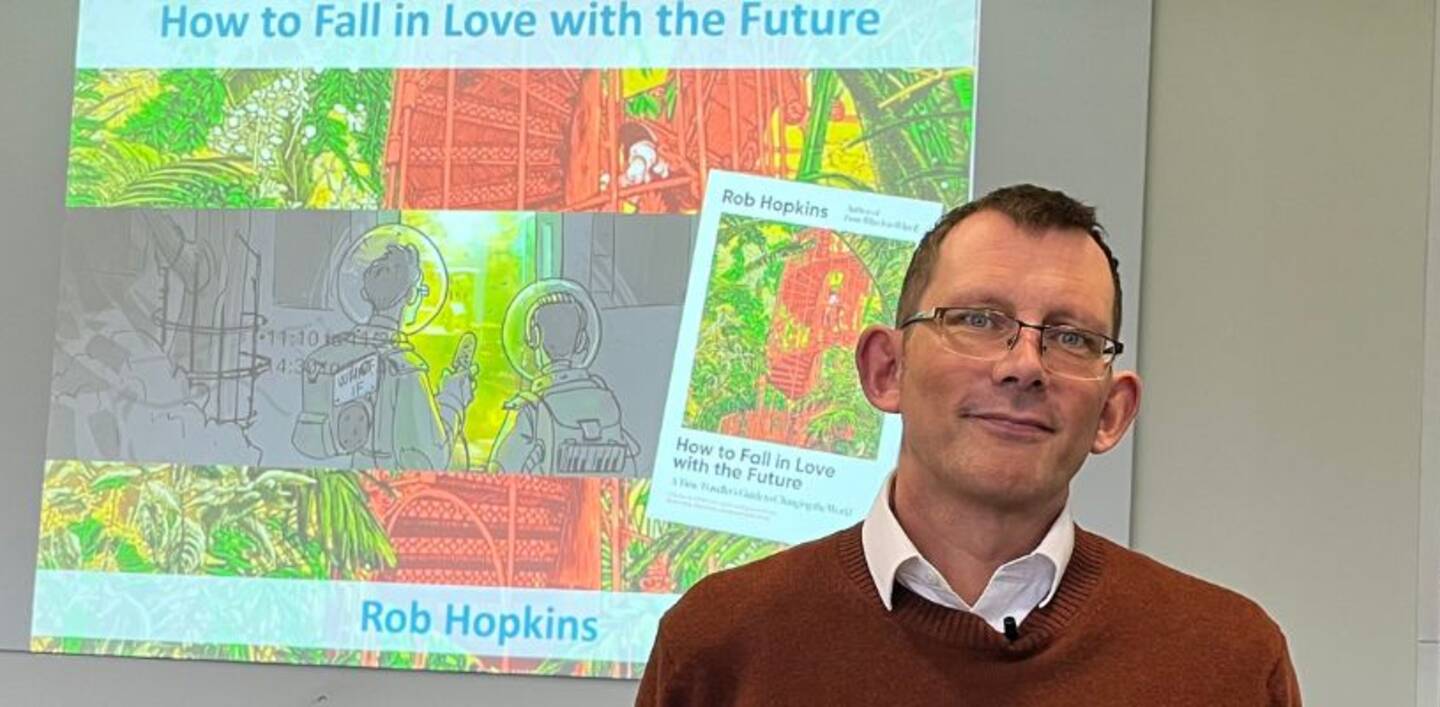

Could policymaking be designed to unlock collective longing for a better future?
The crises we face today — ecological, democratic, existential — are no longer hypothetical. This is a fact that everybody agrees on. Yet in many corners of power, political response feels outdated, timid, or technocratic. Rob Hopkins believes he knows why: “We’re not just facing a crisis of carbon, but a crisis of imagination.”
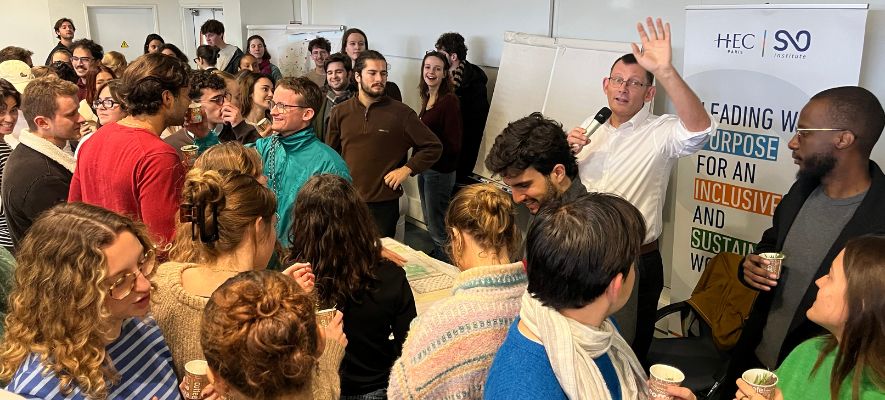
In his book From What Is to What If, and again in his talk on January 2026 to the HEC Paris students in Master on Sustainability and Social Innovation, Hopkins, an activist and co-founder of the “Transition Town” movement, best known for his work on community resilience and climate change, makes a bold claim: modern leadership suffers from an imagination deficit. And that failure is costing us not just viable policy options — but entire futures.
“Most institutions shaping the world today are incapable of imagining anything other than their everlasting existence,” he argues. “We need leaders who can reimagine what is possible, and who can bring the public along with them”.
- Political leaders are mentally overloaded and structurally discouraged from imagining alternative futures.
- Collective imagination can be institutionalized through citizens’ assemblies, civic labs, and immersive visioning methods.
- Cities and schools are already testing "pop-up tomorrows" to give people tangible experiences of positive futures.
- Designing for imagination requires new metrics: emotional safety, participatory culture, art, time, and narrative diversity.
How Power Structures Suppress Dreaming
What happens to leaders when their minds are constantly under pressure?
Hopkins shared the words of the former UK member of the European Parliament Molly Scott Cato, who admitted that four years in public office had “crushed” her imagination. “My mind is utterly overloaded all the time. You really don’t have space for the imaginative part of your brain,” she told him.
Hopkins links this erosion of imagination to deeper structural and cultural patterns: elite education systems that separate children from emotional grounding, organizational cultures obsessed with efficiency, and a political discourse that equates realism with resignation.
More fundamentally, if leaders cannot imagine different futures, how can they inspire society to pursue them?
From Climate Despair to Delicious Possibility
Hopkins' message resonates because it speaks to a growing psychological reality, particularly among younger generations. Climate change has become a crisis of the future itself.
A landmark international study published in The Lancet Planetary Health, based on responses from 10,000 young people aged 16 to 25 across ten countries, found that 75% believe "the future is frightening," while 45% say their concerns about climate change negatively affect their daily lives and ability to function. More than half report feelings of anxiety, sadness, anger or powerlessness, often linked to what they perceive as inadequate government action.
For Hopkins, these emotions should not be dismissed as a sign of fragility. Speaking to HEC Paris students, he offered a striking analogy: "If your house is on fire and you're experiencing house-on-fire anxiety, that's quite a reasonable reaction. It shows you're paying attention."
His concern is not that people are afraid — it’s that they are losing hope. “Young people marched in the streets for climate action,” he said. “And then governments did nothing. That’s why we need to stop telling stories only about collapse. We must give people things to run towards.”
Hopkins calls this “uncancelling the future.” The goal, he says, is to cultivate longing — not just for a less catastrophic world, but for one that is “delicious,” joyful, and radically better. “I’ve been to the end of the rainbow,” he told students. “There’s gold there. We need to start talking about the transition as a thrilling adventure not as an emergency protocol.”
What If Democracy Was Designed to Spark Ideas?
Far from being a utopian vision, Hopkins' argument is grounded in a growing number of real-world experiments. He highlights initiatives showing how imagination can become a powerful tool for public policy.
In Ireland, citizens’ assemblies have redefined constitutional debates on marriage and abortion through respectful, imaginative public deliberation. In Bologna, the Civic Imagination Office supports co-created urban visions with over 500 “pacts” between citizens and city hall.
Perhaps the most literal translation of his ideas comes from Mexico City’s Laboratorio para la Ciudad — effectively a “Ministry of Imagination” — that blends artists, designers, and data scientists to redesign public policy through storytelling, participatory research, and artistic exploration.
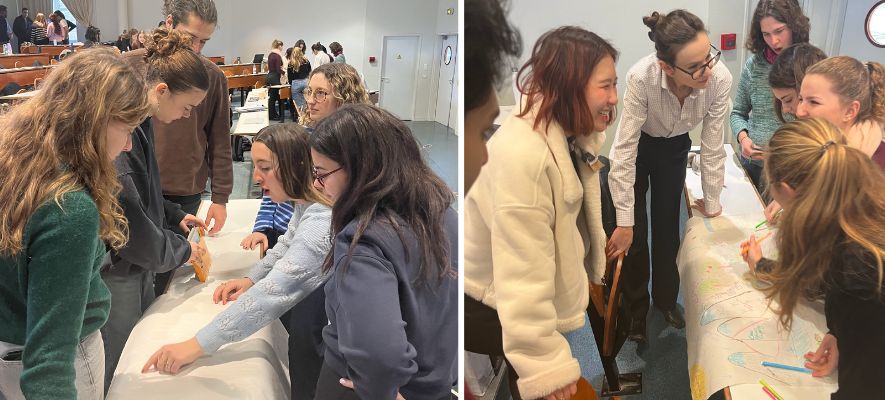
Hopkins brought this spirit to life through an experience called “Town Anywhere”, a participatory visioning lab where people physically build — and then inhabit — a fictional town 10 years in the future. “It’s not just conceptual,” he said. “You trade in it, you grieve in it, you celebrate it. Afterward, people say: ‘When I was in the future…’”
The Politics of Imagination and Its Opposite
Is imagination inherently progressive? Hopkins doesn’t think so. “Project 2025 is also a form of time travel,” he said, referring to the U.S. far-right policy blueprint. “But it’s not the future — it’s nostalgia weaponized.”
True civic imagination, he argues, must be grounded in limits: planetary boundaries, social justice, and collective well-being. That’s why he champions frameworks like Doughnut Economics — because “imagination loves limits. It's like improv theatre: when you set the scene, creativity flourishes.”
And it’s not only about governing. It’s about reclaiming time as a political resource. From Philadelphia jazz legend Sun Ra to the Afrofuturist “Oral Futures Booths” in gentrifying neighborhoods, Hopkins celebrates artistic traditions that play with time to challenge systems. “We need temporal fluidity,” he told students. “Not just always chanting, ‘What do we want? Now!’ But exploring how the past, present and future intersect.”
 Find out more
From Pop-Ups to Policy: Bringing the Future Into the Present
Hopkins calls these interventions “pop-up tomorrows”: temporary, tangible experiences that let people touch the future. He showed students how London’s Waterloo Bridge was transformed into a forest during the Extinction Rebellion. How Trafalgar Square was suddenly rewilded overnight. Or how a town in Wales built a literal time machine inside a mobile planetarium, where schoolchildren watched films made in and for 2035.
At first glance, these projects may seem playful. In reality, they serve a serious purpose: helping people experience the possibilities of a different future. “If people can’t imagine a better future, they won’t fight for it,” Hopkins insists. “But if they get even a taste of what it could feel like — the mood, the smell, the texture — it can change everything.”
From Despair to Participation: Where Leaders Must Go
So, what does this mean for decision-makers? It means acknowledging that despair is not neutral. As Hopkins noted, “Despondency is a gift I choose not to give to oil and gas companies.” It means creating conditions — in policy, education, and design — that restore a collective sense of agency. And it means asking new questions.
“What would my organization look like,” he challenged students, “if its primary objective was to cultivate longing for a better future?”
Is a Ministry of Imagination Really That Absurd?
Hopkins argues it isn’t. “The conditions for imagination are well known,” he said. “People need safety, hope, time, art, nature, nourishment, trust. What if public policy was measured by how well it nurtured those?”
He points to Wales’ Well-Being of Future Generations Act as a template — a law that compels public bodies to consider long-term impact and intergenerational justice. “Now imagine adding imagination itself as a strategic objective,” he said. “Imagine suing the government for cutting arts education, or closing libraries, because they undermine the right to imagine.”
What Do We Risk If We Don’t?
Hopkins closed his HEC session by recalling a question posed to a surviving member of the French Resistance: “What did all of you have in common?”
Her answer? “We were all optimists.”
“We’re in a moment like that now,” Hopkins reflected. “Not giddy optimism, but fierce, grounded hope. Hope as an axe to break down doors.”
In the end, his message to future leaders is both clear and urgent:
We cannot legislate imagination but we can design for it.
We cannot force futures to appear but we can make space for them to be dreamed.
And perhaps, most importantly: we are already the majority who want a better world. We just need to start acting — and imagining — like it.



 Innovation & Entrepreneurship

 Sustainability & Society