
Think
Research on Social
Our mission: Combine original data collection and rigorous scientific research in order to offer reliable solutions for decision-makers seeking to further economic inclusion and expand economic opportunity for all.
Through our reseach, we aim to answer the question: How can business help build a more inclusive society?
We work on topics such as:
• Driving behavior change through social labelling for reduced inequalities
• Forced migration and immigration and corporate responses
• Consensus and disagreement among ESG frameworks on how to assess the social dimension of companies
• Social cohesion, social ties, and loneliness
• Impact measurement tools and social value creation
• Alternative models of entrepreneurship for young people in the Global South
• The concept of vulnerabilities, main challenges organizations face when engaging with vulnerable individuals and groups
Our latest research papers
- Marieke Huysentruyt, Bertrand Quelin, The Governance of Nonprofits and Their Social Impact: Evidence from a Randomized Program in Healthcare in the Democratic Republic of Congo, Management Science, mai 2024, vol. 70, n° 5, pp 2732–2755, (in coll. with A. Fangwa, C. Flammer)
- Marieke Huysentruyt, Incentivizing Textbooks for Self-Study: Experimental Evidence from the Democratic Republic of the Congo, Economic Journal, Forthcoming, (in coll. with J.-B. Falisse, A. Olofsgård)
- Leandro Nardi, Can Public Organizations Perform Like Private Firms? The Role of Heterogeneous Resources and Practices, Organization Science, July-August 2023, vol. 34, n° 4, pp 1527-1553, (in coll. with T. Teodorovicz, S. Lazzarini, S. Cabral)
- Brian Hill, Are People Willing to Pay for Reduced Inequality? Management Science, Forthcoming, (in coll. with T. LLOYD)
- Rodolphe Durand, Impact Investing in Disadvantaged Urban Areas, Strategic Management Journal, 19 2024, vol. 45, n° 2, pp 238-271, (in coll. with R. Boulongne, C. Flammer)
On going research
- Yasir Dewan, The Ideological Imperative: Corporate Social Responsibility and News Media Coverage of Firms, Organization Science, Forthcoming, (in coll. with T. Simons, G. Wernicke)
- Camille Doche, When Producers Leave Cooperatives: the Interplay Between Shared and Common-pool Resources. (working paper)
- Audrey Holm, When Systems Challenge Occupational Ambitions: Boundary Negotiation while Rehabilitating Prisoners in a World of Corrections (working paper)
- Marieke Huysentruyt, Bridging Social Capital and Trust, a Research Agenda (in coll. with María de los Ángeles Gutiérrez, M. Yann Algan)
- Marieke Huysentruyt, The Effects of Audience-organization Alignment on Access to Social Benefits, 2023 Academy of Management Annual Meeting (in coll. with P. Gouvard)
- Finia Kuhlmann, Accounting for Values of Modern Slavery Survivor Care. An Ethnographic Study of the Development of Outcomes and Indicators (working paper
- Leandro Nardi, Supporting Contractors in Low-income Communities: A Field Experiment (working paper)
- Crystal Yanting Shi, LinkedIn’s Global Expansion and Its Influence on the Corporate Director Labor Market (working paper)
Focus on HOPES project
HOPES – HEC Opens the Door to Social Entrepreneurship
Launched at the end of 2023 with the support of the Bettencourt Schueller Foundation, a major player in social philanthropy in France, HOPES is an ambitious program led by HEC Paris.
Its goal: to accelerate social entrepreneurship across all regions of France, including overseas territories, by leveraging HEC’s academic and operational expertise.
The Program’s Two Pillars
- An operational ambition led by the Innovation & Entrepreneurship Institute through the Social Entrepreneurship Center. This dimension aims to:
- Raise awareness of social entrepreneurship among more than 10,000 women and young people aged 18 to 25 over five years.
- Encourage the emergence of projects with strong social impact, by empowering groups often distant from entrepreneurship.
- A research ambition led by the Inclusive Economy Center. This scientific component aims to:
- Study the factors driving the impact of social entrepreneurship for inclusion.
- Triple academic output by 2028 on themes such as social cohesion, social skills, and the fight against vulnerability.
- Encourage synergy between researchers and practitioners, and amplify the impact of HEC’s research on social challenges.
Central Question and Four Key Areas
The HOPES program structures its research around a central question and four key axes: How can social innovation reinforce talent, trust, and social cohesion?
- Trust and social capital as drivers for social inclusion
→ Assess and highlight social innovations benefiting vulnerable populations - Trust and social capital serving social entrepreneurs
→ Strengthen personal impact levers for social entrepreneurs - Fostering collaboration between social enterprises and traditional businesses
→ Identify and promote alliances to scale up impact - Semantics of trust
→ Explore words and narratives that help create a common language around trust

Publications
Based on a survey of nearly 4,000 private-sector employees in France, three HEC Paris professors show that workplace experience—particularly the quality of relationships and the sense of belonging—explains radical voting more strongly than traditional social variables. The company thus appears as a laboratory of trust, where relational dynamics extend into broader political attitudes and voting behavior.
The authors: Yann Algan (HEC Paris), Antonin Bergeaud (HEC Paris), Camille Frouard (HEC Paris, ENSAE)
Could Europe achieve its sustainability goals without undermining competitiveness? In this policy paper, HEC Paris set out one way: shifting disclosure rules from companies to products. A fundamental redesign, centred on product scorecards, could reconcile competitiveness with environmental and social ambitions. Done properly, it would enable the EU not just to defend its standards but to project them globally.
The authors: Brian Hill, Rodolphe Durand, Jinhong Eom, Marieke Huysentruyt, Stefano Lovo, Leandro Nardi and Crystal Shi
Contributors show how the social economy pursues innovation for impact, acts as an agent of change and enters partnerships with businesses, public administration and citizens. They demonstrate how this makes society more resilient and transforms the economy to meet sustainability challenges.
Available here on open access
Co-editors Gorgi Krlev, Dominika Wruk, Giulio Pasi, Marika Bernhard
Leading practitioners and academics as contributors among whom Marieke Huysentruyt
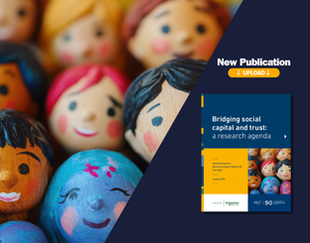
This report explores the growing importance of social capital as a key driver of well-being, resilience, and economic opportunity. Drawing on recent research and international initiatives, it highlights how trust and bridging social ties contribute to social progress, while also addressing the challenges of measuring and sustaining social capital across individuals, communities, and institutions.
The authors: Marieke Huysentruyt, Maria de los Angeles Gutiérrez M., Yann Algan
This report examines how organizations can meaningfully engage with vulnerability in a world marked by persistent social and environmental challenges. While systemic issues cannot be solved by organizations alone, their actions can either alleviate or exacerbate the conditions faced by vulnerable individuals and groups. Drawing on insights from HEC Paris scholars, the report examines key challenges and opportunities for responsible engagement, guiding organizations in identifying, prioritizing, and acting upon the needs of stakeholders in a way that enhances their well-being.
The author: Octavio Augusto de Barros
In partnership with De Gaulle Fleurance, HEC Paris S&O Institute has published the 5th edition of the Observatory of Societal Transitions.
De Gaulle Fleurance, in partnership with HEC Paris, has published the 4th edition of the Observatory of Societal Transitions, dedicated to new regulations and litigation trends related to sustainability issues. Strengthening of the duty of vigilance, the gradual implementation of the CSRD directive, sustainable finance... The lawyers from De Gaulle Fleurance, professors from HEC, and the Chief Citizenship Officer of Schneider Electric decipher these issues and their consequences for businesses.
The researchers of the S&O Inclusive Economy Center joined forces with S&P Global Ratings to take stock of the most influential ESG frameworks currently in use and ask: What social factors do these frameworks actually cover, and what factors are being left out?
We explain what an inclusive economy means to us and detail barriers to inclusion and levers that businesses can use to remove these obstacles.
S&O has published a Social Impact Assessment Strategy Report, your toolkit for better social impact measurement.
These 19 factsheets summarize, on a single page and in a simple and easily understandable language, academic and practical knowledge on various CSR-related topics: the Sustainable Development Goals, the triple bottom line, inclusive business, social business.
Academic team


What you need to know about Sustainability and CSR
These 19 factsheets summarize, on a single page and in a simple and easily understandable language, academic and practical knowledge on various CSR-related topics: the Sustainable Development Goals, the triple bottom line, inclusive business, social business..
Have a look at our collection of 19 factsheets