 Geopolitics & Public Affairs
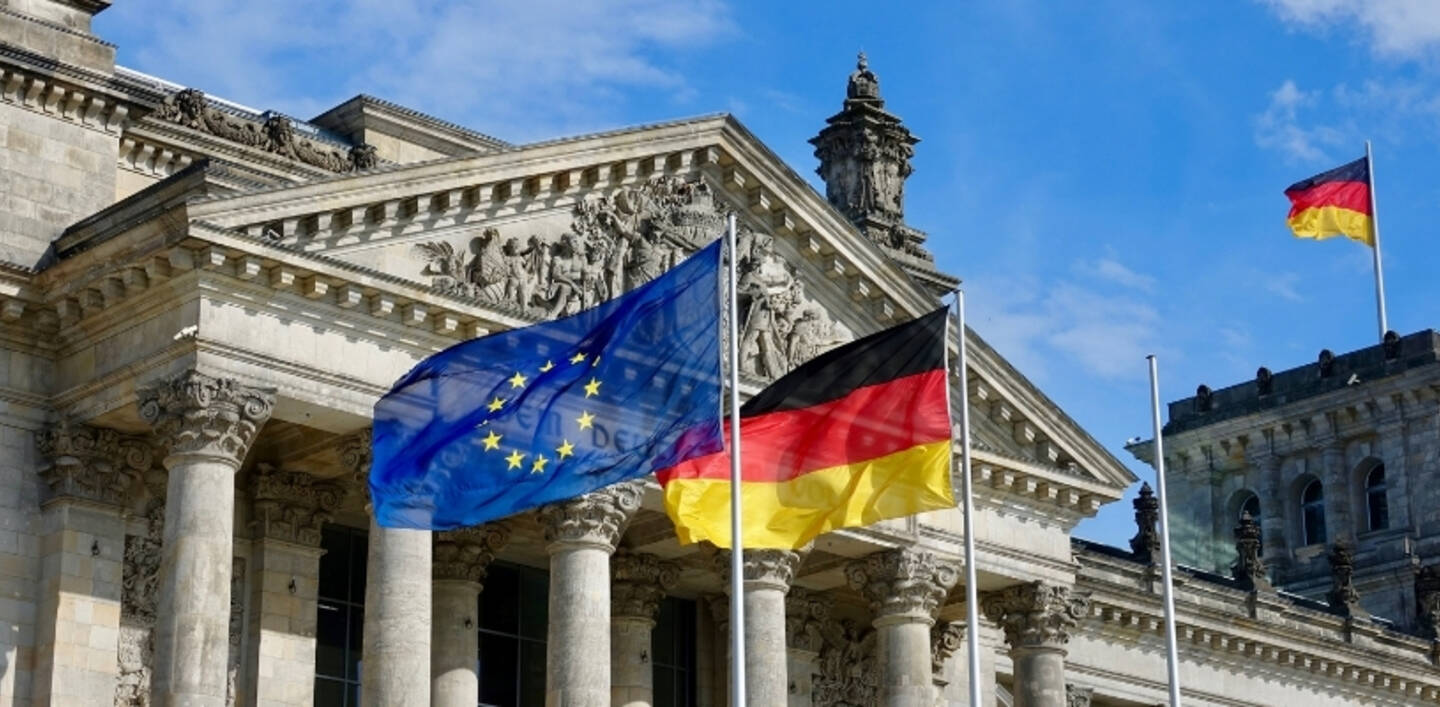


The Franco-German relationship is usually told through its summits. We remember the handshakes, the joint declarations, the ministerial councils and the occasional public disagreement.
Yet much of the real work of economic policy happens one level below. Directors-general, heads of unit and chief economists frame the options that ministers later choose between. They draft the notes, run the numbers and negotiate the compromises in Brussels. Too often, French and German officials in these positions know each other only through videoconferences and position papers.
On 7 and 8 October, HEC Paris and the German Embassy in Paris were bringing together more than twenty-five senior officials from both administrations for a Franco-German Government Dialogue on Fiscal and Economic Policy. On the French side, teams from the Ministry for the Economy and Finance, led by its chief economist and the directors in charge of macroeconomic and European policy, were joined by the Élysée's macroeconomic advisor. On the German side, the Federal Ministry of Finance, the Federal Ministry for Economic Affairs and Energy and the Federal Chancellery were represented at director-general and head-of-unit level. This event was funded by HEC Institute.
Defence, Eurozone, Trade, Innovation: Where Europe Needs to Act Together
The agenda reflects the hard choices Europe now faces. The first session asks what happens when the peace dividend that Europe enjoyed for three decades turns into a security premium. Military spending is rising on both sides of the Rhine related to the necessary increase of defence readiness, and the question is no longer whether to spend but how to finance it and what it will do to growth, public debt and industrial capacity.
The second session turns to the euro. In a world of fragmented finance and weaponised payment systems, monetary sovereignty through a strengthened euro is no longer an abstract notion. Europe must decide how far financial integration should go to support its strategic autonomy.
The third session addresses trade. Europe is the largest single market in the world, yet it struggles to translate that weight into bargaining power when the rules of global commerce are being rewritten unilaterally. How much power can Europe actually exercise, and at what cost?
The final session looks at firm dynamics, innovation and productivity. France and Germany have very different industrial structures and have taken different paths on business creation and technology adoption. Both are now confronting the same productivity gap with the United States, and each has something to learn from the other's successes and failures.
On each of these topics, Paris and Berlin start from different positions, institutions and political constraints. That is precisely why a frank conversation between the people who prepare decisions in their administrations matters.
Scientific Evidence as Common Ground for Policymakers
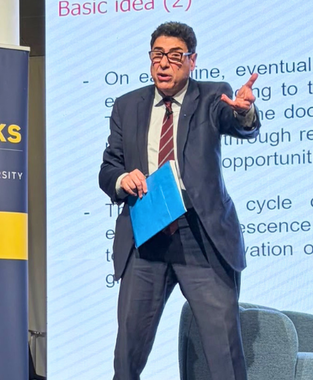
National positions divide; evidence can bring people onto common ground. Each session therefore opens with a short research impulse from a leading economist: Paolo Surico and Lucrezia Reichlin of London Business School, Chad P. Bown of the Peterson Institute for International Economics, and Diego Comin of Dartmouth College. A French and a German official then respond, before the floor opens for a long discussion. The sessions are chaired by HEC faculty members Olivier Chatain, Gaetano Gaballo and Arnaud Dyèvre, and by Marion Jansen, Director of Trade and Agriculture at the OECD.
More than half of each session is devoted to open discussion rather than prepared statements, and all exchanges take place under the Chatham House Rule. Participants may use what they hear, but nothing is attributed to any individual or institution. The aim is not to produce a communiqué. It is to let officials test ideas against the best available research and against each other's assumptions, free from the constraints of formal negotiation and public positioning.
Trust is Built in Repeated Interactions
Cooperation rests on repeated, personal interactions. Institutions alone are not enough. People who know each other, who have argued over the same evidence and shared a meal, find it easier to pick up the phone when a crisis hits and to assume good faith when positions diverge.
This applies to administrations as much as to societies. The Franco-German engine has sometimes stalled not for lack of political will at the top, but because the people preparing decisions understood each other's constraints too late. A German official who grasps the political economy of French public finances, or a French official who understands the institutional logic of German fiscal rules, will draft better options for both governments.
Bridging Academic Research and Economic Policymaking
Universities have a distinctive role to play here. They offer common ground, and they can bring frontier research into the room in a way that speaks directly to policy. HEC Institute was created to connect academic research with the decisions of companies and public institutions. Combining that academic platform with the diplomatic convening power of the German Embassy gives this dialogue a form that neither could offer alone.
Europe's economic sovereignty will not be decided only at summits. It will also depend on whether the people who prepare decisions in Paris and Berlin learn to think together. If this first dialogue helps build that habit, it should become a regular fixture of the Franco-German relationship.



 Tech & AI
 Strategy & Leadership
 Innovation & Entrepreneurship