
 Innovation & Entrepreneurship
 Tech & AI

- AI boosts content production, but creator visibility plummets
- Current copyright frameworks are outdated for AI-era value chains
- AI accelerates polarization among creators
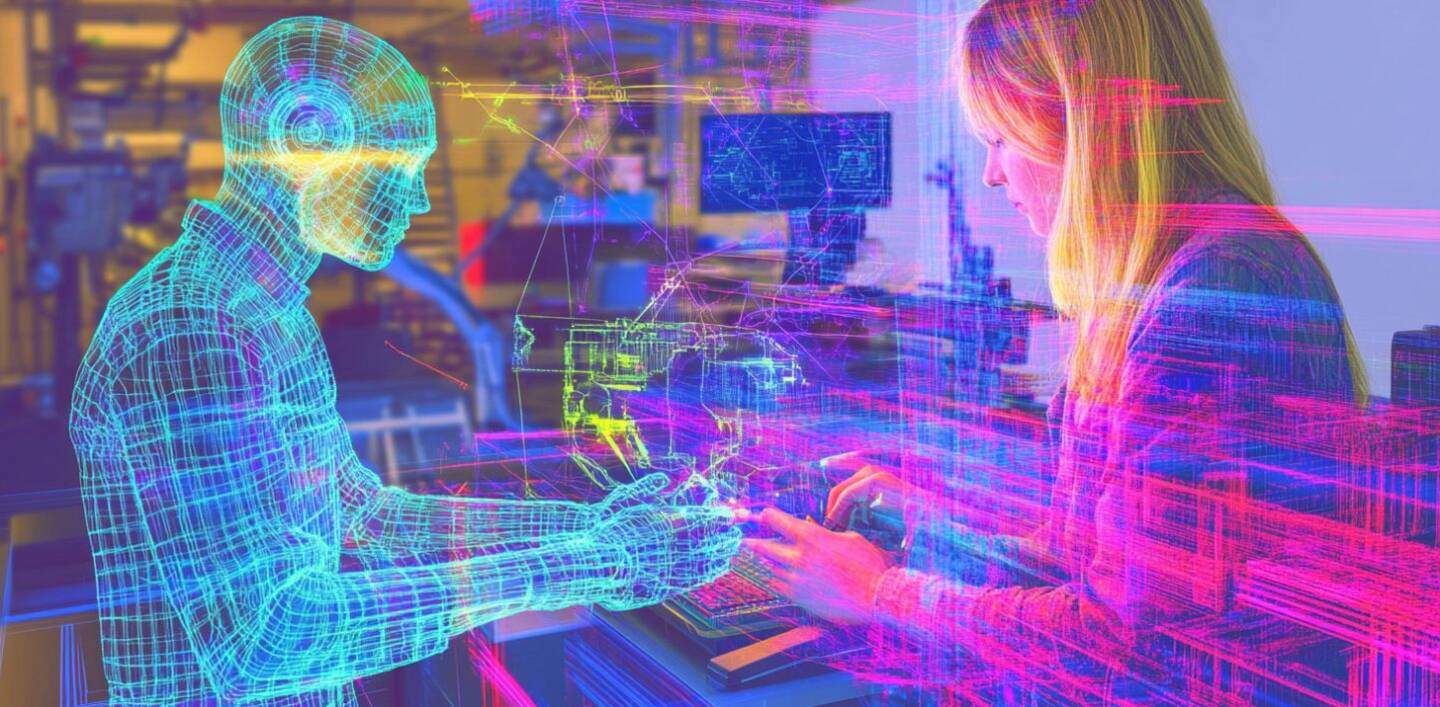
In our research co-authored by Alain Busson and David Piovesan, we explore how generative AI tools are reshaping creative industries — not by replacing humans, but by amplifying production, intensifying competition, and challenging long-standing legal frameworks. While these technologies streamline creative processes, they also raise new questions around visibility, value-sharing, and artistic integrity. We argue that only flexible, forward-looking regulation can ensure AI supports, rather than sidelines, human creativity.
How Generative AI Is Reshaping Cultural Production
Is the rise of generative AI tools like ChatGPT and Midjourney breaching the last bastion of human exclusivity in economic activities: creation? The exponential use of these tools raises fundamental issues around the quality of art itself, a judicial framework for content producers, and the visibility of cultural creators.
Yet, we believe flexible regulation could enhance rather than threaten human creativity. We all have in mind the unprecedented five-month strike in 2023 by thousands of Hollywood writers demanding protection against generative AI tools. Their Guild won important concessions concerning accreditation, complementarity and general usage. But, parallel to such conflicts and concerns, generative technological tools continue to be adopted by creative industries for their efficiency and ability to streamline repetitive tasks. In the book industry, for instance, platforms like Genario offer writing assistance, providing narrative structures and trend analyses to guide authors. At the same, tools like Babelio and Gleeph enable better matching of supply and demand through personalized recommendations based on reader preferences.
Intellectual Property in the Algorithmic Age
Beyond redefining art and copyright issues, AI's deployment in creative industries raises questions on what appropriate legal framework should govern relationships between content producers and AI operators. Furthermore, what impact could it have on creator visibility and creation quality? AI operators, like digital platforms, derive value from exploiting large volumes of content rather than specific pieces. This creates conflicts around value sharing, as seen between music streaming platforms and rights holders, or search engines and press operators. While fragile agreements are emerging, they highlight the need for a new general framework for these novel relationships.
Too Much Content, Not Enough Visibility
AI is also increasing content abundance by lowering barriers to entry for creation. Amazon, for example, had to limit authors to uploading only three books… per day! This amplification of available content makes it increasingly costly to achieve the visibility necessary for a new work or author to emerge. This could lead to even greater precariousness for small actors or new, genuine creators, who are often more likely to bring innovation.
The impact of AI on creators and creation is twofold. On the one hand, it provides new tools and intensifies a hyper-competitive context. On the other, it accentuates polarization between a few prominent creators and countless others struggling for visibility. In this environment, phenomena like BookTok on TikTok or personalized algorithmic recommendations could become crucial tools for navigating this abundance, reinforcing dependence on digital prescribers and exacerbating inequalities between creators.
The Role of Platforms in Creator Inequality
While AI presents such challenges, it also offers opportunities. In the book industry, AI-generated image banks for book covers and voice synthesis for audiobooks simplify and accelerate production processes. However, again, this ease of production further intensifies competition and the struggle for visibility.
Why Regulation Must Empower, Not Restrict
The key to harnessing both AI's potential and protecting creators lies in adaptive regulation. By establishing a balanced framework, it's possible to foster innovation while respecting creators' rights and ensuring fair compensation for their work.
As we grapple with this new landscape, the focus should be on creating an ecosystem where AI enhances rather than replaces human creativity, and where the benefits of technological advancements are equitably distributed across the creative industries.
Find out more
On The Conversation France (in French): Débat : Intelligence Artificielle et création artistique, des enjeux complexes
Also on The Conversation France: Copyright, droit d’auteur : quel statut juridique pour l’IA dans la création audiovisuelle ?
On The Conversation Europe: Generative AI, online platforms and compensation for content: the need for a new framework
Sources
“Quelle politique pour les industries culturelles à l'ère du numérique ?”, edited by Thomas Paris, Alain Busson, David Piovesan. HEC Paris Associate Professor Thomas Paris is also a CNRS researcher and the scientific director for the HEC Master in Media, Art & Creation.



 Economics & Finance

 Geopolitics & Public Affairs