


 Innovation & Entrepreneurship
 Sustainability & Society
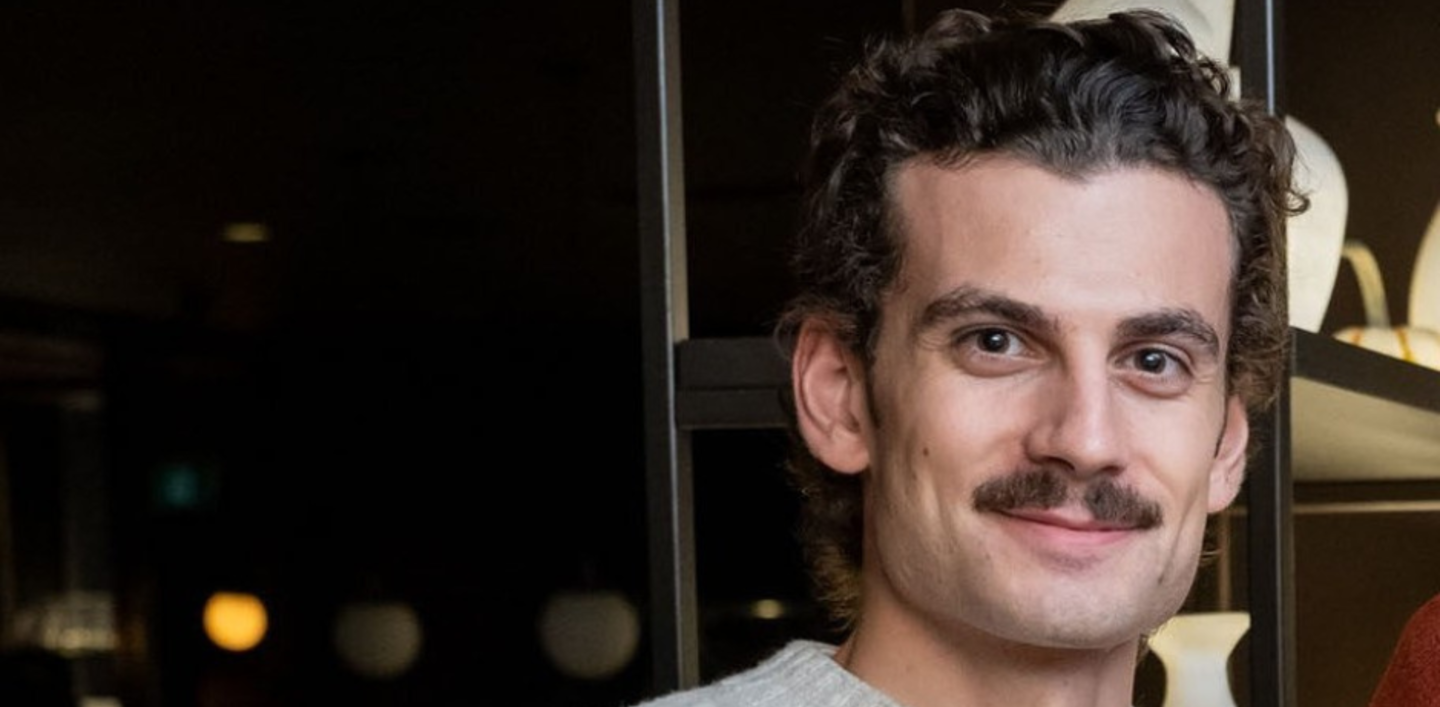
Some journeys begin with curiosity, are shaped by unexpected encounters, and ultimately crystallize into a sense of purpose, so strong that it becomes impossible to ignore. For Raphael Certain, that purpose is clear - helping humanity better understand, treat, and ultimately prevent neurodegenerative diseases such as Alzheimer’s.
From marine biology to neuroscience, from a small town near Toulouse to Silicon Valley, and from academic research to entrepreneurship, Raphael’s path is one of exploration - of the world, of the brain, and of himself. Today, as founder and CEO of Clarity, a pioneering neuroscience company developing non-invasive treatments for neurodegenerative diseases, he embodies a generation of entrepreneurs driven by meaning and impact.
From the Ocean to the Brain
Raphael Certain grew up in the countryside near Toulouse, in the southwest of France. From an early age, he developed a passion for science - he dreamed of discovery, of humanity’s greatest frontiers - deep space, the deep sea, and the deepest frontier of all - the human mind.
At 17, convinced that the ocean was his calling, he left home to study marine biology in Brest. He spent two formative years there before completing his bachelor’s degree in Trois-Rivières, Quebec - an experience he describes as one of the best years of his life.
Yet long before that, an unexpected experience had quietly shaped his future. At just 13 years old, he completed a short internship in a neuroscience lab at the CNRS in Toulouse, observing researchers study sleep and dreams. The memory lingered and neuroscience continued to fascinate him.
That seed finally took root in Canada. Unable to enroll in marine biology courses, Raphael chose a hybrid path between biology and psychology, studying neurophysiology, behavioral biology, and neuropsychology. What began as a compromise became a revelation. He fell in love with the field - its complexity, and its profound relevance to human life.
Entrepreneurship for the Greater Good
Despite his growing scientific focus, Raphael also had entrepreneurial ambitions. Coming from a non-business background, he learned by doing – through reading, reaching out to founders, and by launching small ventures. For him, entrepreneurship was not just about status or finance, it was about usefulness and working on problems that mattered.
Initially skeptical of business schools, his perception changed when he encountered graduates of the MSc X-HEC Entrepreneurs. He realized that this program was about people, self-development, and offered exposure to diverse journeys, experienced mentors, and a community of individuals driven by purpose. The program helped him structure his thinking and connect with mentors and peers who would later become his investors.
Another decisive factor for choosing the program was the opportunity to spend a semester at UC Berkeley. For Raphael, immersing himself in Silicon Valley and being able to accelerate his entrepreneurial journey was a transformative experience.
Clarity: Turning Brain Waves Into Hope
Clarity was born from a simple yet radical question - why can we send rockets into space and bring them back, yet still struggle to treat neurodegenerative diseases like Alzheimer’s?
Raphael’s motivation was rooted in both scientific curiosity and a sense of urgency. Despite decades of research, neurodegenerative diseases remain among the most complex and devastating conditions. Traditional pharmaceutical approaches - targeting molecular pathways - have largely failed, offering only modest progress in recent times.
A growing community of neuroscientists began exploring a different lens - the brain’s electrical system. Brain waves are closely linked to memory, sleep, and cognition. Research revealed that a specific type of brain wave, known as gamma activity, is significantly reduced in Alzheimer’s disease.
Groundbreaking studies at MIT showed that restoring this activity in rodents using light and sound stimulation dramatically slowed disease progression. Raphael saw an opportunity - what if this approach could be translated safely and effectively to people? During his master’s degree at the Neurodegenerative Diseases Institute in Bordeaux, he dedicated his thesis to answering that question. The result was Clarity.
The goal of Clarity is to develop a wearable virtual reality headset that delivers personalized light and sound stimulation at precise frequencies. By embedding therapy within immersive, enjoyable experiences, Clarity aims not only to stimulate the right brain regions, but also to improve patient comfort and engagement. The ambition is bold - accessible, non-invasive, home-based treatments that can be used anywhere in the world.
Progress and Ambitions
Clarity has already completed its first clinical feasibility and safety trials on Alzheimer’s patients, with results published in Scientific Reports. The study demonstrated excellent safety, compliance, and - most importantly - the ability to precisely train brain activity at the targeted frequency using virtual reality technologies, something never achieved before.
Even more encouraging, patients showed improved memory performance after a single stimulation session - clear evidence that the technology activates the right neural networks. The next step is decisive - a clinical efficacy trial involving 100 Alzheimer’s patients over six months. This study will be critical for regulatory approval and commercialization.
Raphael is clear about Clarity’s positioning. This is not a wellness product. It is a medical technology designed to deliver therapeutic benefit at the level of a drug, the cost of which can be reimbursed, so patients are not burdened financially.
Creativity, Complexity, and Conviction
As founder and CEO, Raphael’s role has evolved constantly - from fundraising and recruitment to strategy, partnerships, and product vision. The early days were intense - hiring teams while raising capital, building prototypes while defining long-term direction.
What gives him the most satisfaction remains product design - the creative process of transforming underused scientific knowledge into a tangible, meaningful product. For him, this creativity lies in synthesis - science, technology, AI, and human experience combined into one coherent vision.
The challenges are equally complex. Leadership requires balancing opposing traits at the same time - confidence and humility, conviction and openness, firmness and flexibility. It also demands resilience, especially in fundraising, where uncertainty, risk, and pressure are constant companions.
Impact and Personal Responsibility
For Raphael Certain, impact is not an abstract concept. It is deeply personal. Neurodegenerative diseases touch almost everyone - patients, caregivers, families. Raphael himself has aging grandparents, and the thought that they - or millions of others - might need a solution that does not yet exist fuels his sense of urgency.
Raphael’s journey is a reminder that purpose often emerges at the intersection of curiosity and compassion. When you choose a problem that truly matters to you - and refuse to let go - you don’t just build a company. You find your true sense of purpose and sometimes bring hope where it is needed most.