Sandrine Wamy's Path to General Management
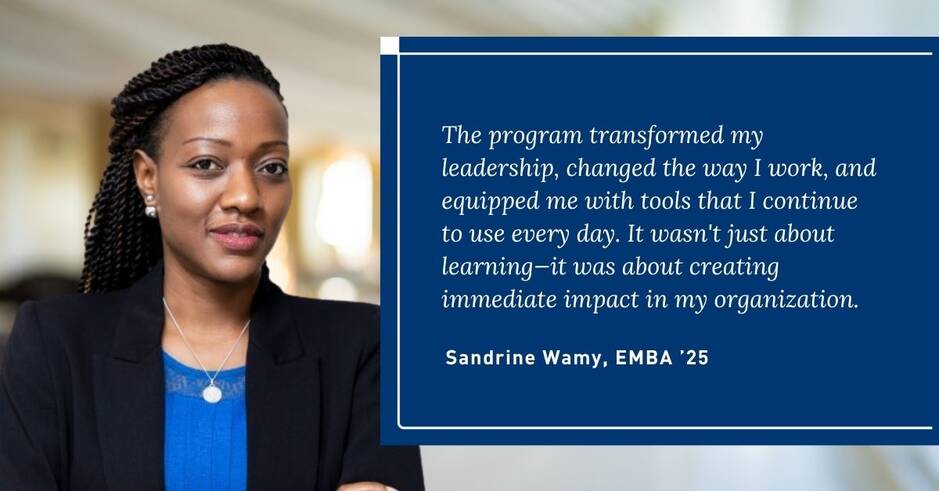
"The program transformed my leadership, changed the way I work, and equipped me with tools that I continue to use every day. It wasn't just about learning—it was about creating immediate impact in my organization."
Sandrine Wamy began her career at Africa Global Logistics 20 years ago as an IT manager. Today, she serves as Managing Director of Owendo Container Terminal in Gabon, a strategic company for the country’s economy, after progressing through a series of leadership roles within the Group.
The idea of pursuing an Executive MBA first took shape in 2017 while she was serving as Regional CIO for the Gulf of Guinea. By then, she had already built a strong technical and managerial foundation through her engineering background and her experience within AGL. As she set her sights on General Management, she realized she would first need to move into operations and complement that experience with broader business and leadership skills.
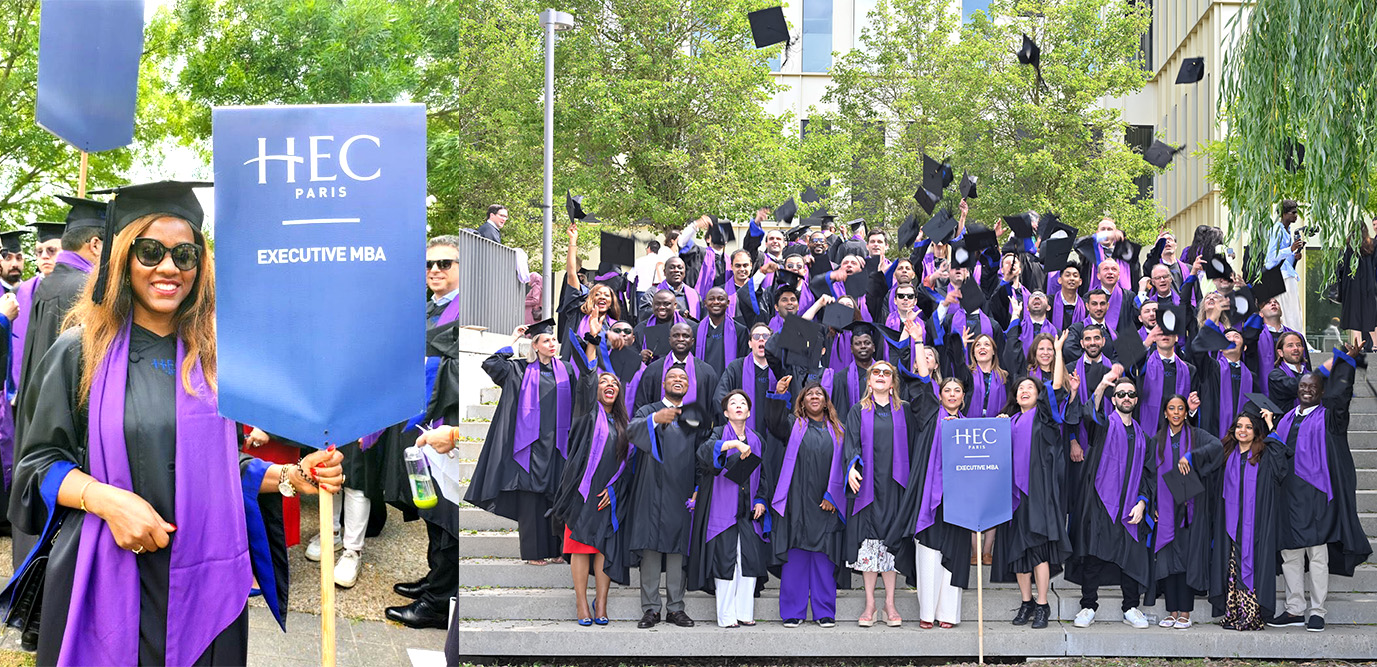
She joined the HEC Paris EMBA in 2024 while serving as COO of Congo Terminal, one of the group's largest container terminals, graduating in June 2025. Less than a year later, she was appointed Managing Director of Owendo Container Terminal.
In the Q&A below, Sandrine reflects on her experience at HEC Paris and the impact the EMBA has had on her career and leadership.
Why HEC Paris?
After 20 years at AGL, across both IT and operations, I had accumulated extensive hands-on experience. However, I recognized that my growth had been largely experience-driven. I wanted to complement that experience with the structure and rigor of an academic framework.
I was looking for more than a training course or a certificate. I wanted a degree that would challenge my thinking, strengthen my strategic and financial skills and give me the opportunity to learn from high-level peers across industries and countries.
HEC Paris quickly became the obvious choice. I was looking for a top-ranked, globally recognized EMBA with a strong reputation for academic excellence and leadership development. I also wanted an in-person program where I could build lasting relationships and learn through shared experiences with a diverse cohort of senior leaders from both the private and public sectors. The strength of the alumni network further reinforced my decision.
After attending several presentations, HEC stood out naturally, and Paris's direct connection from my home in Congo was the icing on the cake.
Which modular format did you choose and why?
Given my location in Congo at the time and my responsibilities at Congo Terminal, I needed a structure that would allow me to remain fully engaged in my role while dedicating focused time to the program.
The week-long format was therefore the best fit, as it enabled me to step away periodically without compromising operational continuity.
Between the January and September intakes, my decision was ultimately driven by timing. After successfully completing the Executive Assessment in October 2023, and with a personal objective to graduate before my eldest son began his own business school journey, the January 2024 intake became the natural choice.
This structure allowed me to balance demanding professional responsibilities, family life, and academic commitments in a sustainable and disciplined way.
How quickly were you able to put the learning into practice?
One of the most powerful aspects of the EMBA was its immediate applicability. Throughout the program, I systematically connected every assignment to real business challenges. Rather than working on theoretical cases, I used my own organization as a learning laboratory.
This approach allowed me to structure my decision-making processes more rigorously, strengthen my stakeholder management strategies, adopt a more data-driven and strategic perspective and launch new projects within my organization.
The program was intense, highly practical, and instantly actionable. It created a continuous loop between learning and impact. It transformed my leadership, changed the way I work, and equipped me with tools that I continue to use every day.
How did the EMBA shape your leadership skills?
It pushed me to reflect deeply on who I am as a leader: my strengths, my biases, and my areas for improvement. Through leadership courses covering topics such as purposeful leadership, adaptive leadership, change management, and multicultural environments, I gained both theoretical frameworks and practical tools.
What made the difference was the integration of these topics into real-world contexts, including geopolitics, CSR, digital transformation, and power dynamics.
As a result, I developed a more strategic and forward-looking mindset, strengthened my ability to lead through influence in complex environments, and became more self-aware and intentional in my leadership approach. Today, I can confidently say that I am a different leader, more grounded, more adaptive, and above all more authentic.
How did you personalize your EMBA experience?
From day one, I intentionally connected my learning to my professional reality. I brought my own business challenges to class, leveraging peer feedback and collective intelligence as a powerful sounding board.
The program also offered extensive opportunities for customization, which I fully embraced. I had initially planned to join the Board Governance specialization, which aligned with my goal of moving into General Management. However, after exploring the different options, I chose Innovate like an Entrepreneur instead—a decision that proved invaluable for driving innovation within my company as an intrapreneur. The experiences at Station F, Babson College, and MIT were real highlights of the program.
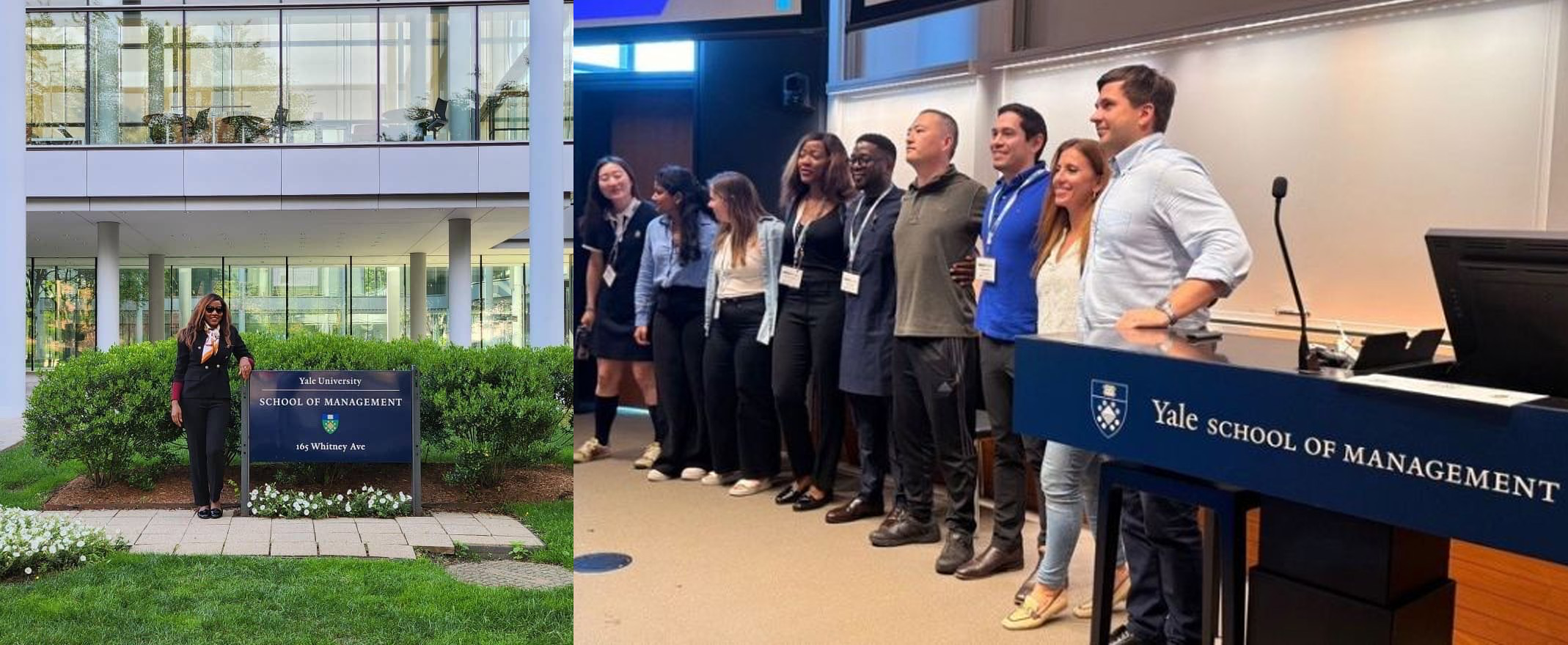
I also took advantage of two Global Network for Advanced Management (GNAM) learning opportunities: a leadership program at Yale on the Behavioral Science of Management, and a course at Ghana Business School on Transforming African State-Owned Enterprises, which gave me valuable insight into the public institutions I work with every day, including port authorities, customs administrations, electricity companies, and other state-owned organizations.
These experiences significantly expanded my perspective, impacting my work at AGL. Looking back, I would also have liked to take courses on the African Continental Free Trade Area, the AI intensive, The Future of Money and Payments certificate, and the leadership coaching program.
The program offers much more than what you initially expect but you need to actively seize those opportunities.
What was the highlight of your EMBA?
The most valuable and memorable experience was undoubtedly my Capstone project. It represented the culmination of the entire program, bringing together all the disciplines, frameworks, and insights into a single strategic initiative.
I chose to focus on a project linked to the digital transformation of a business unit within my organization. It was not just an academic exercise, it was a real strategic reflection with ongoing implementation potential. This ability to directly translate learning into concrete impact is, for me, one of the greatest strengths of the program.
I’d love to say more but I am still working on the implementation.
How valuable has the HEC network been?
The networking experience has been exceptional. Being part of such a diverse and senior cohort of 70 leaders from around the world created a unique environment for exchange, challenge, and growth. We learned as much from each other as from the faculty.
What is particularly remarkable is that this connection did not end with the program. We continue to stay in touch, support each other, and share both successes and challenges.
We called our cohort “The Radiants,” even created its own identity adapting the famous song of Queen We Are the Champions into We Are the Radiants. It reflects the strong bond we built. Beyond professional connections, some of those relationships have turned into genuine friendships.
For me, this network is one of the most valuable long-term assets of the EMBA, both professionally and personally. A kitchen cabinet for life...