
Veeton: When AI Reinvents Fashion (Visuals)
A visual revolution in the fashion industry is on its way, and it is powered by Veeton, an all-in-one platform designed for the creation of AI-generated ultra-realistic fashion imagery. Why is it a game-changer? Because it addresses the ever-increasing demand for visual content in e-commerce. Is Veeton what brands have been longing for? It looks like it. The numbers speak for themselves: “We achieve a X2 conversion rate for clients like Fjork Merino and Decathlon”, explains its co-founder Flore Lestrade. Even better, the solution “divides the cost of photo shoots by 3 and saves up to 2 days per month”. A considerable saving of time and money for brands, large or small.
Things are going incredibly fast for Veeton, which was born on the benches of HEC Paris in June 2023, and already closed a fundraising in June 2024. Let’s walk you through the fascinating journey of Veeton and the three people behind this genius idea.
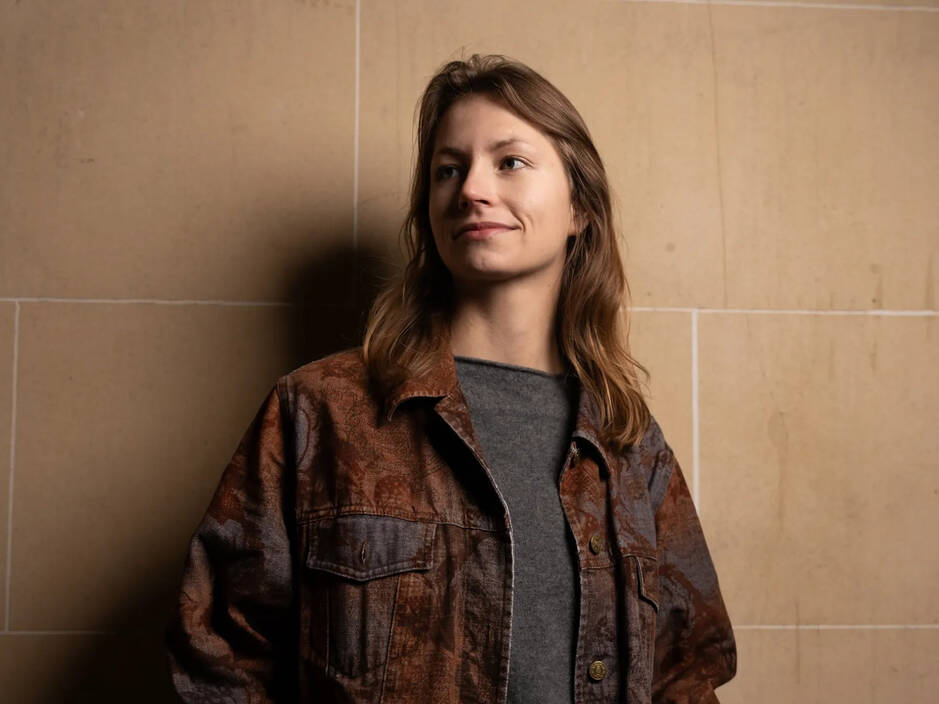
Veeton, the new fashion tool on the block
Veeton transforms flat garment photos into lifelike, on-body visuals on any model, in various poses, and even in video format. This innovative approach serves as a turnkey solution for brands wishing to generate all the visuals they need, especially for high-quality studio photos for online retail. What sets Veeton apart is its guarantee of ultra-realistic and natural images, featuring exceptional detail and material rendering. This advantage is invaluable for brands looking to differentiate themselves online with bespoke visuals.The platform’s capabilities have already demonstrated impressive impact, working with diverse clients ranging from large groups like Monoprix to smaller brands such as Fjork Merino. Clearly, Veeton has fulfilled a previously unmet need.
Veeton: the perfect blend of an entrepreneurial spirit and two tech-savvy minds
Veeton’s journey began with the clear entrepreneurial ambition of its co-founder and CEO, Flore Lestrade, who envisioned launching a startup immediately after her studies. She managed to align her professional experiences with this goal in mind, focusing on understanding the rapid growth and international expansion of startups, notably during her six-month stint at Doctolib in Berlin. Flore later held a highly responsible role at a production company, leading digital projects, which further sharpened her problem-solving skills.
The pivotal moment arrived when Flore met her co-founders, Christian Kotait and Tristan François, during the X-HEC Entrepreneur Master program. These “big fanatics of machine learning”, as she calls them and for whom she has profound respect, who were already working on the precursors of “virtual try-on”, or the art of “digitally dressing models who don't exist”, shared the same vision for AI:
“AI really felt like an unstoppable force, and all three of us wanted to be part of that momentum. It’s a bit like living through the third industrial revolution, so being involved, even right up front in the driver’s seat, felt important to us.”
Flore Lestrade, co-founder and CEO of Veeton
Their collaboration began as Christian and Tristan were developing their initial virtual try-on models and a foundational research paper in the field. Both co-founders brought deep technical expertise, with Tristan having spent a year in R&D at the Télécom Paris labs, and Christian serving as a research associate in Montreal and London.
Flore recalls seeing their early models, which aimed to dress a mannequin image with a flat garment photo, and the stunning results by January 2023. “There was an incredible alignment between, on the one hand, a technology that has finally matured, and on the other, a problem that fashion brands have been trying to solve for years”, she explains.
That was it. This perfect alignment, exacerbated by the explosion of e-commerce and the COVID-19 pandemic, marked the birth of Veeton in June 2023, directly after their studies.

Immediate Success, Constant Challenges
Veeton’s journey is truly out of the ordinary. The company grew fast. In just one year, Veeton raised 2M€ in the Seed stage. The team now comprises 15 people focused on AI, development, and sales operations, and has just moved out of the Station F startup campus to their very own first premises in Paris. The icing on the cake? The startup is featured in the 2024 Future 40 ranking from Station F, and this year the three cofounders have joined the Forbes 30 Under 30 Europe List.
But just like in any new startup, the journey is a constant landscape of “ups and downs”. For Veeton, the most significant challenge encountered has been recruitment. “Securing top talent requires so much time and resources, it’s always longer and more laborious than expected, especially for AI and Development profiles”, recalls Flore. The rapidly evolving nature of AI also means that “the only certainty we have is that we have none”, making the environment both “exhilarating” and “scary”.
Despite these challenges, Flore emphasizes her confidence in her team, stating, “you just trust the people around you”.
A journey powered by HEC Paris
Flore Lestrade speaks about her HEC Paris experience in glowing terms: “The HEC Paris ecosystem has been a key accelerator for Veeton's development, offering a framework, advice, and an invaluable network while allowing the necessary freedom for our specific project.” The graduate credits her participation in various HEC Paris programs for providing critical support, enabling the company to not just conceptualize but actively accelerate its projects.
The X-HEC Entrepreneur Master Program is where it all started. This is when the team met and was able to work on the Veeton project while benefiting from the program’s pedagogical structure and supervision. The Master also provided an incredible network, ambition, and opportunities, including a rare six-month internship in Venture Capital early in her career.
Through the Master, the team joined the HEC Paris Startup Launchpad: this 11-week acceleration program, was “ultra-condensed and intense”, as she recalls, but it proved instrumental in structuring their early steps, from market exploration to pitch development.
As laureates of the 2023 HEC Entrepreneur Demo Day, Veeton gained access to the Incubateur HEC Paris at Station F, which served as the perfect continuity phase, and offered a physical workspace, networking opportunities, mentorship, and acted as a ‘resonance chamber’ for the startup.
This ecosystem also played a role in securing 2 million euros in funding rapidly after the company's creation, and attracting top investors.
Now that the company is up and running, the next significant milestone is the release of a new version of its platform by the summer, which will mark a transition from its high touch model to a self-service one.
One last word to entrepreneurs?
To aspiring entrepreneurs, especially those in the AI space, Flore Lestrade offers valuable insights:
“The core challenge for a specialized AI startup like Veeton is not necessarily to build the best model, which doesn't make sense given the rapid advancements in large models, but rather to create the specific application and sequencing that meet the precise demands of a niche market.”
Flore Lestrade, co-founder and CEO of Veeton
And if you are wondering where the name Veeton comes from, ‘Viton’ was the original name of the pioneering research paper the co-founders were working on, which literally addressed the challenge of projecting a flat garment onto a body with appropriate deformation.