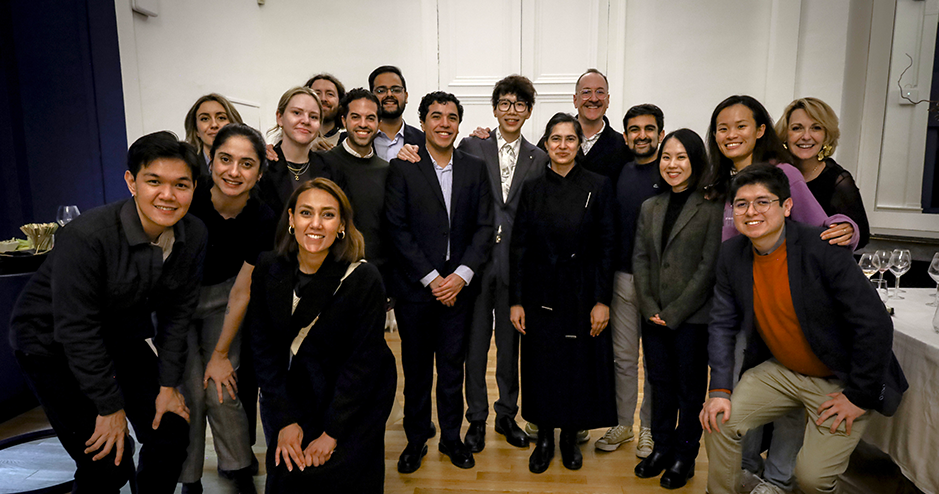
European Student-Corporate Alliance Challenges U.S. Attacks on DEI
American corporate and student leaders are reeling from a politically motivated attacks on DEI. A recent HEC workshop challenged DEI take-downs and offered solutions.
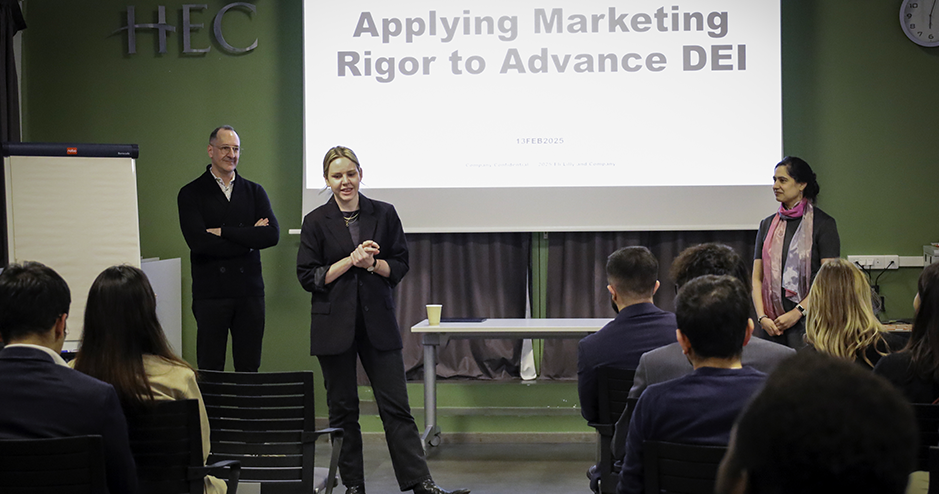
Sarah Shorhagen - HEC Paris MBA student and co-organizer of the event “Fostering DEI and Allyship at work” - introduces corporate executives from Eli Lilly Germany.
By Erika Palmer
Key Findings
- Political shifts in the U.S. are threatening DEI programs globally
- European students fear the knock-on effects for their careers
- Companies like Eli Lilly reaffirm DEI as core to performance
- Employee Resource Groups support leadership and innovation
- HEC students demand transparency, not slogans, from employers
Resilience and Authenticity
The political climate in the US around DEI policies in education and business has not gone unnoticed by students in Europe. Many are concerned by DEI backlash on their future employment prospects and the broader perception of diversity in Europe.
In this context, HEC Paris students organized Fostering DEI and Allyship at Work, a workshop bringing together Eli Lilly executives and students for a candid conversation on the challenges ahead. Hosted by the school’s LGTBQ+ Allies Club and the Marketing Club, the event became more than a discussion. It was a rallying cry, a mirror, and a roadmap for defending inclusion in times of backlash.
But the participants broadened the debate to corporate resilience, and generational demands for authenticity and impact. The workshop exposed the urgent, messy realities of defending DEI policies under siege - and the high stakes of getting it right.
Joining the students for evening exchange were corporate representatives from Eli Lilly eager to share their corporate experiences and to understand the future of DEI. The company was represented by Juan Granados-Zuñiga, CMO of Eli Lilly Germany, and Dr. Parveen Karjiker, Senior Brand Manager at Eli Lilly Germany.
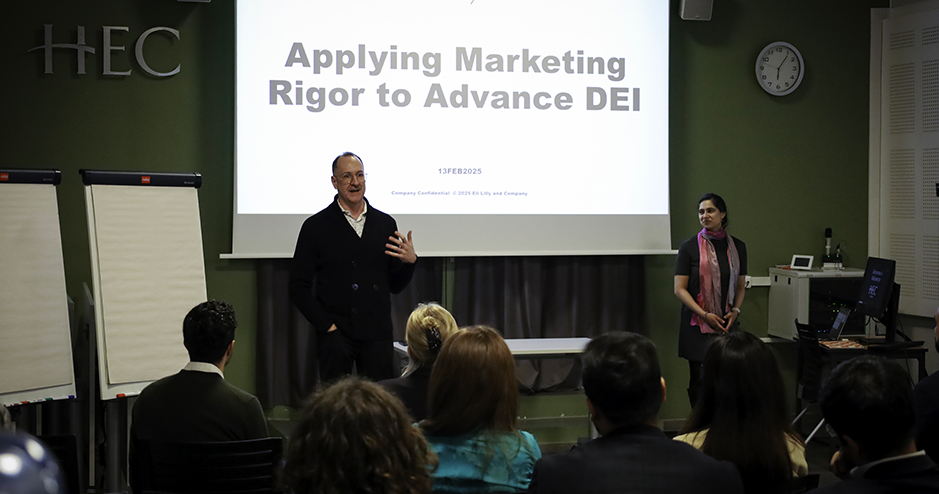
The corporate representatives emphasized that, despite external pressures, Eli Lilly remains steadfast in its commitment to DEI, recognizing it as a strategic priority integral to the company's success. Granados-Zuñiga highlighted that "Lilly's market cap in healthcare is the highest of any company, and in my opinion, a big part of that success is how DEI has become a key strategic consideration." This assertion is supported by company data indicating that within the healthcare sector, significant positive correlations exist between manager diversity and financial performance metrics such as free cash flow per share and income after tax.
Unprecedent Attacks in USA
The scholars’ fears are reflective of a broader apprehension within European academic institutions. For instance, the University of Sussex in the UK faces a record £585,000 fine for failing to uphold free speech on diversity issues, highlighting the complex interplay between DEI commitments and institutional policies.
On the other side of the Atlantic, the Trump administration is intensifying its scrutiny of DEI programs within higher education institutions. In its latest moves against transgender youth, it threatened to block federal funding from California unless a transgender woman is barred from competing in the state girls’ finals. Its Department of Education issued warnings to 60 universities, including Ivy League schools, threatening to withdraw federal funding over alleged failures to address antisemitism and for promoting “divisive ideologies”. Meanwhile, Columbia University faces a $400 million cut in federal contracts due to its handling of such issues. Similarly, the University of Michigan announced the closure of its DEI Office in response to federal pressures.
Students Mirror DEI in Action
Eli Lilly’s affirmative statements were designed to reassure the HEC students. In many ways, campuses such as the one hosting the business school serve as microcosms of DEI: gender parity is a feature of many programs, students come from over 130 countries, with diverse religions and socio-economic backgrounds, and an age range spanning from 18 to over 40.
HEC students were quick to connect the dots. “Beyond being hired, we want a path forward,” said Sarah Storhagen, the event’s co-organizer. “We want fair pay, mentorship, and leadership access—not just diversity at the entry level.”
Storhagen’s sentiment echoed tensions across Europe. At IE Business School in Madrid, students recently challenged banks for dismantling DEI teams in New York and London. At the University of Amsterdam, a DEI town hall was postponed amid internal reputational fears. The ground is shifting.
For students like Luis Dominguez Guillot, the way forward is clear: “Corporations should understand the value of DEI because it prevents a monolithic perspective that could hinder innovation. Diversity of thought enriches companies.”
But concerns amongst the students are growing with the US government’s determined campaign against DEI. As Marcelle Laliberté, Chief Diversity Officer at the business school, testified, there is an increase in student inquiries: “Some are asking me: ‘What does this mean for my future job prospects?’ and ‘Will this backlash influence perceptions of diversity in Europe?”
Many students are also apprehensive about raising their voices publicly in environments where DEI has taken on negative connotations. They said they wanted practical tools to navigate these conversations with confidence and understand the cultural nuances at play.
“To support students in navigating these complexities, we’ve encouraged them to organize events and discussions around these themes,” Laliberté confided. The February 13 workshop involving Eli Lilly allowed these future business leaders “a unique opportunity to gain valuable insights, share perspectives, and explore ways to create environments where everyone feels valued and included.”
Bridging the Gap Between Students and Employers
“I think students want to work for companies where their values align and where they and their colleagues will be supported, heard, and respected,” said Storhagen, who is a leading member of HEC’s LGTBQ+ Allies Club and the Marketing Club.
“We don’t just want diversity at the entry level. Given today’s political and business climate, a lot of discussions focus on accountability: Are companies taking real action, or just making statements?”
These questions echoed the concerns during the workshop but the corporate guests did not shy away. Eli Lilly’s CMO, Juan Grandados-Zuñiga, who is noted for his franc parler, responded: “I don’t change the way I speak and present in front of the Board of Directors. It’s one thing to have a diverse team. It’s another for those team members to feel empowered, heard and valued, and to challenge the status quo. I do this at the highest level.”
Grandados-Zuñiga’s insistence on leading with authenticity sparked discussion among students who are increasingly wary of performative leadership and empty corporate slogans. For them, DEI is not an HR trend - it’s a tool for navigating a fractured global landscape. Their questions, raw and often skeptical, reflected a broader generational shift happening across top European institutions.
Grandados-Zuñiga did not hide his satisfaction at the enthusiasm of the students: “I think we sparked real interest on topic of diversity, equity and inclusion,” he observed. “What started as a corporate presentation during a previous recruitment event at HEC Paris, quickly became a broader discussion-one that students wanted to continue beyond this event.”
At the CMO’s side was Dr Parveen Karjiker, Senior Brand Manager at Eli Lilly the company’s Germany affiliate “I come from Cape Town, South Africa,” he said. “I studied medicine there, essentially grew up even in my career in medicine there. And South Africa is called the rainbow nation for a reason - but that doesn't mean we have DEI figured out. We do not. It is a work in progress.”
During their presentation, the Eli Lilly speakers emphasized the role of corporate DEI initiatives in gaining a competitive advantage and improving performance. They explained the importance of allyship, demonstrated how to foster inclusiveness, and shared personal stories that motivated their involvement in DEI efforts. They also outlined the structured process for developing Employee Resource Groups (ERGs) at Eli Lilly - initiatives that are employee-driven, internally vetted, and ultimately approved by the Board based on data-driven evaluations.
A Case for DEI and Allyship
The discussion between the students and professionals also underscored the importance of representation in decision-making. In healthcare, for example, understanding diverse patient needs is essential. “Certain populations experience higher incidences of specific diseases,” Granados-Zuñiga noted. “For example, Black and Hispanic communities in the U.S. have a higher prevalence of Type 2 diabetes. If we only have a homogeneous team making decisions, we risk overlooking key cultural and systemic factors influencing these patients’ healthcare experiences.” By ensuring diverse perspectives on brand teams, companies can create more effective, culturally relevant strategies.
When companies become leaders in DEI, integrating and aligning it into their business strategies, studies show it can give them a competitive advantage over their business counterparts. A TechTarget study reported “71% of ‘Leaders’ saying they usually beat their competitors to market by a 4-month time-to-market advantage.” Granados-Zuñiga shared how his experience at Eli Lilly showcases this very idea.
"Lilly has always had a strong corporate culture," he insisted. "One of the most surprising things for me was how similar Lilly's culture is across different regions, from the U.S. to Germany. Despite the differences in cultural context, Lilly’s corporate ethos remains consistent. This speaks to the company’s ability to embed DEI into its very fabric, regardless of location."
Overall, Eli Lilly has embedded diversity into its strategic operations for nearly two decades, becoming the most valuable healthcare company globally, with a market cap of over $752 billion as of March 2025. In comparison, Pfizer and Johnson & Johnson, which both faced scrutiny over the lack of racial representation in their senior leadership in 2023, posted far more modest market gains over the last five years.
The policies at Lilly speak to the power of embedding DEI not just in policies but in everyday leadership and company culture. The firm was cited in a 2023 As You Sow report as having one of the most transparent and outcomes-driven DEI governance structures in the S&P 500. Its ERGs are linked not just to employee satisfaction but to product development, marketing insights, and executive feedback loops. But challenges remain.
No Turning Back, Say Students
As the workshop wrapped up, a strong sense of optimism remained. Despite shifting DEI policies and external pressures, one thing was repeated time and again: DEI remains a strategic necessity for companies. The participants insisted that addressing unconscious biases and fostering inclusive workplaces are essential for innovation, employee satisfaction, and long-term success.
“Corporations should understand the value of DEI,” said Luis Dominguez Guillot, one of the student organizers. “because it prevents a monolithic perspective that could hinder innovation and problem-solving. Diversity of thought, stemming from varied backgrounds and experiences, enriches companies. It enables them to better understand their markets, develop products, and tailor their services accordingly.”
To sum up, the February 2025 workshop on DEI in the Trump-driven era underlined the intrinsic value of DEI in fostering inclusive and successful workplaces. Institutions like HEC Paris and corporations like Eli Lilly demonstrated that, despite the backlash, integrating DEI into organizational culture is not just a moral imperative but a strategic advantage.
The event ended with a commitment to challenge any structure - academic, corporate, or cultural - that limits potential. The students’ message comes at a time when American academia is reeling from the decision by three senior professors, Jason Stanley, Marci Shore and Timothy Snyder Marci Shore , to leave Yale University in protest against Trump’s policies.
Some are suggesting that this movement could serve as a catalyst for the European Union to launch a dedicated initiative aimed at welcoming American researchers, academics, PhD candidates, and students into European universities. With DEI under siege, student-led workshops like the one held at HEC, could be its best defense - and students, if equipped, may be the ones to save it.