
Paris Peace Forum 2025: Women Move From Sidelines to Center Stage
Women were at the heart of strategy at the Forum, pressing governments and donors to move from symbolic inclusion to real power over budgets, texts, and the terms of peace.
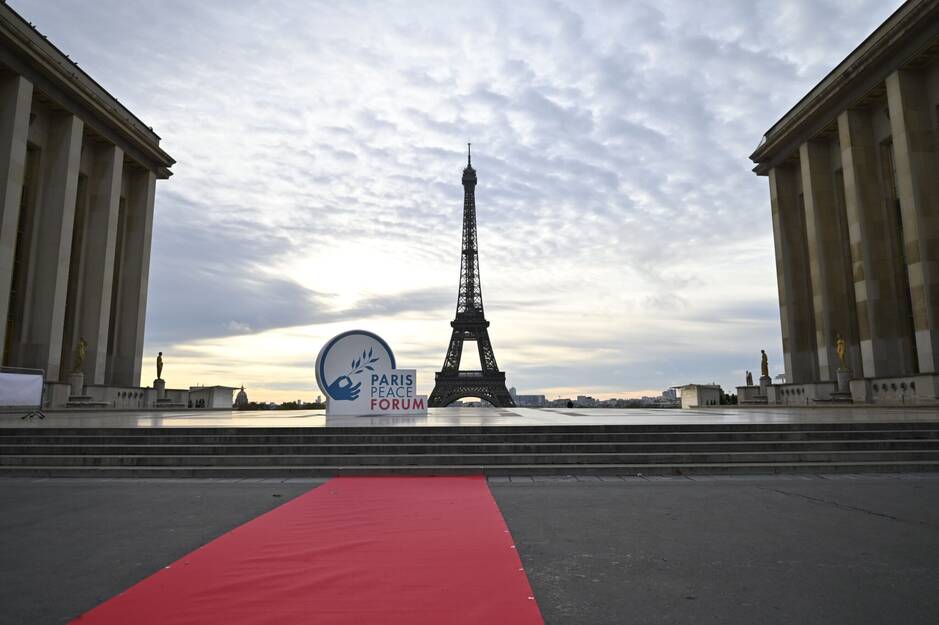
(C) Paris Peace Foundation
KEY TAKEAWAYS
• Women speakers pressed for decision rights, budget lines, drafting authority, and committee chairs.
• Frontline defenders and local organizers framed the agenda, arguing that protection, financing and digital security for women leaders are prerequisites for any durable settlement.
• The Forum’s gender lens now extends across security, finance and technology, converging with parallel debates at the Women’s Forum Global Meeting in Paris on Nov. 6–7.
The two-day gathering on October 29-30 unfolded against a familiar backdrop of wars and information warfare, but the cadence felt different. The question was no longer whether women should be at peace tables; it was how institutions would rewire power, quickly, to make their presence consequential. From plenaries at the Palais de Chaillot to corridor conversations overlooking the Seine, participants pointed to the same failure mode: women appear in the photographs but not in the footnotes: the clauses, numbers and timelines that decide whether a ceasefire holds or a reconstruction plan survives its first winter.
Sudan Tragedy Pushed to the Center
She presented herself as Mayada Adil El Sayed, an HEC Imagine Fellow from Sudan, and immediately grabbed the packed auditorium’s full attention. “Imagine a young girl in 2019 who used her passion for fashion to promote a revolution and help topple a dictator,” she began, recalling the fall of Omar al-Bashir over six years ago. “Fast forward to today: my country is at war; Darfur is facing genocide right now. Two days ago, over 1,000 people were killed. 300 women were murdered or raped,” she added. “Thousands of women have been raped.” Speaking through tears, Adil asked a question that reverberated across the Forum’s sessions: “What is peace for Sudan? Peace cannot be an abstract concept. It has to come with accountability, or we reward impunity.” She widened the lens to other wars, Ukraine, Gaza, Congo, before landing on the one non-negotiable: “We cannot talk about peace without the people who make it: the youth.”
Chairing one of the final sessions on Day Two of the eighth Paris Peace Forum was Trisha Shetty who presides over the annual event’s steering committee. She put Adil’s testimony in perspective, and did not mince her words: “The world has failed you; what can we do to fix this?”. The Young Leader for the UN’s SDGs answered without theatrics. “Love and peace were never popular movements,” Adil said. “The world is held together by the love and compassion of very few people… So change the narrative: Sudan is not the forgotten war. Talk about Sudan. Hold your governments to account so they put pressure on those causing this genocide.”
Fighting “Pervasive Inequality”
It was the human-rights lawyer and founder of SheSays Trisha Shetty who supplied the connective tissue between the plenaries, the foyers and civil society. In an interview with HEC after one of four sessions she chaired, her firebrand approach spilled over: “How can you stand for equality without fighting pervasive inequality?” she asked. “The attacks that keep women out of politics are multifold: there isn’t enough funding; there are death threats; there is sexual and online harassment in ways men just aren’t subjected to.” Then her voice broke as she described “frontline defenders” who count their weeks by court dates and safe-house moves. “I’m sorry, I get emotional every time I bring their situation up,” she said. “I know one too many women in jail in one too many countries.” The prescription that followed was unromantic: fund protection, lawyers, secure devices; refuse to let lies stand; build party machines that defend their own women candidates.
Shetty’s vision crystallized the Forum’s central preoccupation this year: moving from sentiment to circuitry. If last year’s gathering fretted over geopolitics and AI, this edition treated women’s authority as a security tool in its own right. It was less slogan than wiring diagram.
Beyond Gender
Attending the two days of the conference, HEC law professor Julia Emtseva underlined the persistent glass ceiling women face: “It’s over two decades since the adoption of UN Security Council Resolution 1325,” she noted, “which recognized women’s vital role in peace and conflict resolution. And yet we still don’t see any meaningful change in the peacemaking field.”
The academic’s research probes ways international law might be reimagined to advance more inclusive and socially transformative outcomes. Emtseva admits that there are several initiatives which promote women’s participation. “But their presence alone is not enough and has never been enough. True transformation requires looking beyond just gender. It should also focus on the qualities and intersectional experiences negotiators bring to the table." The author of International Crimes of Western Colonialism insists peacebuilding must embrace more than questions around gender: “It must also include class, ethnicity, and geography, and ensure that inclusion is about capability and perspective, not mere representation. Representation is important, but without reflecting on the quality of representation, the number of women sitting at the negotiation table is pure performance.”
Global Reflections
A couple of set-piece conversations featuring two of the world’s most prominent women politicians, pushed such reflections into the multilateral frame. After six years as New Zealand’s youngest prime minister Jacinda Ardern described herself as “an optimist by nature. But here I’m a pragmatist.” Having just published A Different Kind of Power, she took time off her fellowship at Harvard University to join a Forum panel on governing adversarial use of AI. Arden pressed for leader-level safeguards for technologies that threaten democratic life. “The world is polarized”, she conceded, “and multilateral infrastructure is strained. But that does not preclude high-order consensus on existential risks (pandemics, nuclear control, AI misuse). Confrontation in these fields is not in the interest of China or the United States either.” The starting point, she argued, is a frank conversation at the top, then “guardrails coming all the way down through the system.” Ardern’s sharpest line was aimed not at diffusion of AI in the global South but at its governance: “I’m interested in equitable access to power, influence and decision-making—and we absolutely do not have that presently.”
Michelle Bachelet, Chile’s former president and ex-UN High Commissioner for Human Rights, made a similar case from the institutional side. The UN does not need reinvention, she said during a session devoted to the institution’s 80th anniversary. It needs “results in an efficient and effective manner,” a reorganization that restores public trust without abandoning the Charter’s principles. Reform is already under way under the UN80 rubric, but the test is implementation: “papers can accept anything. What matters is action that shows people their lives improve because multilateralism exists.” Bachelet also warned that the global summit treadmill is self-defeating and argued for fewer, more strategically organized convenings that serve people rather than pageantry. In her opening remarks, she summed up the decade’s problem set with the economy of someone who has governed: conflicts play out in cities at an unacceptable human cost, in cyberspace and “in the minds of people,” often propelled by disinformation and deep social fractures. “Peacebuilding”, she added, “must be built from the ground up, by women, youth, and all of those too often left behind,” and measured not by the absence of conflict but the presence of trust and dialogue.”
Beyond Inspirational Speeches: Authority
Despite marquee voices like Ardern and Bachelet, the Forum’s women leaders were not arguing for more inspirational speeches. They were pushing for authority: who writes text, who signs checks, who chairs the committee. That logic resurfaced in a workshop, “Empower Her: Championing Women who Shape Policies”. Eight engaged actors discussing women in decision-making, and suggesting a recipe that was deliberately prosaic: give women control of budget lines; put the pen in their hand when paragraphs are drafted; hand them the gavel in the sub-groups that set the agenda. As the current Minister of State for Francophonie and International Partnerships, Eléonore Caroit, put it, “you cannot achieve peace if half of humanity is outside the room. And you cannot keep peace if the women inside the room do not hold the pen.” The point resonated because it matched evidence long whispered by practitioners: where women have drafting power, ceasefire texts more often include humanitarian corridors, services for survivors of sexual violence, and monitoring rules that survive the photo op.
Data threaded through the anecdote. Several speakers flagged that women account for a small single-digit share of official negotiators in peace processes and still occupy under a third of parliamentary seats globally. UN Women reports a decline in the share of women serving as heads of government and only 27 countries are currently led by women. As of September 2025, only six countries have 50 per cent or more women in parliament in single or lower houses: Rwanda (64 per cent), Cuba (56 per cent), Nicaragua (55 per cent), Andorra (50 per cent), Mexico (50 per cent), and the United Arab Emirates (50 per cent). Numbers alone do not transform institutions, they warned, but they signal whether systems are set up to hear women before decisions are made.
Peace Budgets Need to Free Women
In conversations on peace financing, donors and development banks heard a blunt request: stop counting “women reached” and start funding women with decision rights. The Aga Khan Development Network’s experience with tens of thousands of community groups was invoked by its CEO in the UK, Matt Reed, to make a point that rarely makes it onto communiqués: time is a currency, and women in many regions are still investing 40–50 hours a week fetching water or fuel. If a peace budget does not free that time (through basic investments in water, energy, transport), he said, then political participation remains a slogan. The Forum’s financing track tried to formalize that link, insisting that program design tie disbursements to actual authority for women-led groups and to the infrastructure that makes their work possible.
Digital space, too, was treated as an actor in conflict rather than a mere backdrop. A debate on the dual role of platforms, called “Mediator and Manipulator”, took a practical turn once participants swapped horror stories about coordinated harassment. There is, they argued, a calendar to abuse: waves crest before elections, during ceasefire talks and at budget time. If platform policy does not anticipate those cycles and raise the floor of protection when it matters most, women’s voices will continue to self-censor at precisely the moments when their input is most valuable. The Forum’s tech-governance crowd, which in previous years trained its gaze on AI and submarine cables, sounded markedly more social this year, focused on enforcement and safety features that affect who dares to speak.
Quotas as Infrastructure
There was also a noticeable reset in how people spoke about quotas. A decade ago, quotas were framed as a moral corrective; at the Forum, they were treated as infrastructure. “Regulation,” one cabinet minister said at the Empower Her workshop, “is what stops progress from swinging with the news cycle.” She pointed to the way quotas in her country changed not only the composition of parliament but the tenor of debates on budgets and judicial appointments. Everyone in the room understood the subtext: meritocracy is not gender-neutral; it inherits the networks and norms of the people already in charge.
If last year’s Forum made headlines by pairing geopolitics with AI anxiety, this edition treated women’s authority as a security tool in its own right. HEC Paris reported in 2024 on how the Forum had become a working bench for governance issues that spill beyond Paris. This year followed through, integrating gendered decision-making into AI panels and climate security sessions that once treated “women and peace” as an adjacent theme.
Women’s Forum Relay
The connections did not stop at Chaillot. Just across town, the Women’s Forum Global Meeting (Nov. 6–7, Place Vendôme) pressed a complementary theme, courage, with a program that nods to the same problem set: who gets heard, who is protected, and who decides. Organizers framed their 20th anniversary as a call to act rather than celebrate, a message that would have felt at home on the Peace Forum’s main stage.
It was in this broadened frame that HEC Paris supported the Forum and brought a score of its students to absorb some of the world’s major political challenges. The school’s Imagine Fellows program, created to bring talented students from war-torn countries into its master’s programs, had a quiet but resonant presence.
The crowded and somewhat chaotic foyers made the Forum look, at a glance, like every other grand conference. 4,000 participants, 500 speakers (including 15 heads of state and 25 ministers), 85 sessions and roundtables made for a head-spinning two days. But the texture was different. The people whose work is often treated as an adjunct to “real” diplomacy were not just on stage; they were setting terms. When a young Sudanese woman from HEC’s Imagine Fellows reminded the room, tears filling her eyes, that one of the world’s worst conflicts can no longer go unnoticed the line did not jar. It was picked up by all her fellow panelists and matched the mood of an event increasingly shaped by practitioners who want fewer declarations and more durable rules.
Sudanese Women Today
Mayada’s Adil’s testimony was all the more poignant in that it echoed premonitory words by Mo Ibrahim at the very same forum a year ago: “If we don’t end hostilities by drying up arm sales and illicit support to both sides,” he told us, “Sudan will disintegrate into fiefdoms, provoking a tsunami in the region. It will become a no man’s land; a million refugees will flee, and tens of thousands of civilians will die.” One forum later, and it needed the student’s reminder that this genocide continues to scorch our collective memories.
But what of Sudanese women’s role both as victims and as possible solutions? From her exile, Adil has been working tirelessly with women’s coalitions to both support and suggest strategies for the Sudanese to end the genocide: “Those women back home are fueled by rage,” she confided after the session. “They want to change the system that brought those men to power. And I'm speaking as part of a broad coalition of Sudanese women, and woman advocacy groups. We work behind the scenes. We don't talk about our work because of the dangers it could present on the ground.”
Adil insists it is Sudanese women who advocate peace most forcefully: "Most of the men on the ground want the war to continue so they can eradicate the RSF rebel forces. But I think this is impossible. There is no way that this war can be solved through military might, fed by the same mentality that created the war. So, I believe the women I’m working with have many proposals and point of actions that must be taken into consideration.”
Could Adil's beliefs translate some of the final words by the Paris Peace Forum DG, Justin Vaïsse? After all, this is how he put it at the closing press conference: “Faced with a brutalized and chaotic world, we do not simply analyze it; we take action, we bring together stakeholders with a view to transforming it.” Only time will tell what role women will have in the transformation the Forum aspires to.