
Be Prepared for the Low-Carbon Revolution
The world is going through an unprecedented change.
Science has shown that the impacts of climate change are happening now. With fast escalating climate concerns, and carbon emissions becoming a major driver of the global economy and politics, the way we have done business or created value over the past decades has clearly become unsustainable.
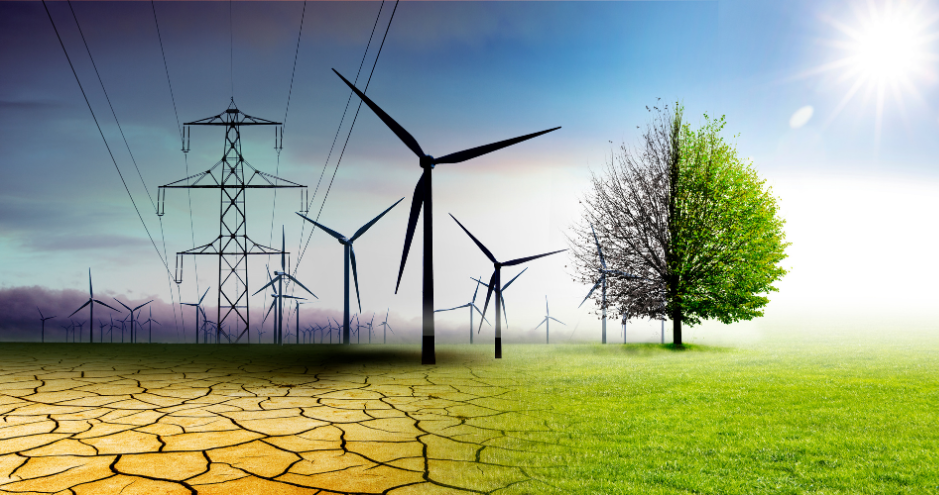
For over 50 years now, the global economy has been based on fossil fuels for more than 80% of its energy supply. The Paris Accords 2015 and the Net Zero objectives design a completely new energy pathway leading to a Carbon Neutral economy by 2050. This means that, for those countries that have transposed the Paris Agreement into their national laws, as is the case for the EU member states, the UK and many others, reaching net zero emissions by 2050 has become a legally binding target. The countries whose revenues rely on hydrocarbons are facing a high risk of economic contraction and will have to reinvent themselves. The corporates that ignore, or do not prepare for this low-carbon revolution, are at risk of losing their customers, their market share and even their access to capital, including human capital.
The Energy Transition calls for a radical redesign, not just of the energy systems but also of all our infrastructure. New energy sources and technologies, including solar PV, offshore wind, large size batteries, automated electric vehicles…, will replace the old, centralised energy organisation with decarbonised, decentralised and digitised systems. All businesses, including heavy industries and transports, but also the banking and financing sectors, will go through a sea change: the world economy will move from hydrocarbon to massive electrification; the steel industry is moving away from the old blast furnace and basic oxygen furnace to the electric arc technology; cement producers are reducing the share of clinker in cement; the transport industry is looking into hydrogen or the so-called e-fuels to decarbonise road, shipping and air traffic.
The annual infrastructure investment that is required to meet carbon neutrality in 2050 is mind-blowing and represents up to 4% of global GDP over the next 25 years, whilst the global yearly budget today is less than half of that amount. The financing of the Energy Transition, with new debt instruments including sustainability-linked loans and green bonds, will introduce new challenges but also create new opportunities for producers, consumers, banks, governments, regulators and capital markets.
This huge expenditure will take place in a context of record uncertainty. Energy markets remain exceptionally volatile. Global oil pricing mechanisms are here to stay and will still affect the global economy, sometimes with an even higher volatility. The implementation of climate change response policies and the emerging of a carbon price in a growing number of large countries are adding another new layer of volatility. At the same time, the geopolitical risks that we see today at the very borders of the European Union, in the South China Sea or in the Middle East will not subside for another few decades.
How successful will the low carbon transition be? Can the EU become a 100% renewable-based economy? Will the boom of unconventional oil and gas in Northern America be only short-lived? Will the Inflation Reduction Act in the US be a game changer? Will China continue to play a dominant role across the energy industry, both as a major importer and consumer of hydrocarbons and as the world’s leading supplier of energy transition technologies and components? Will energy systems in 20 years still be pretty much like today, an integrated, capital‐intensive industry based on fossil fuels and centered around heavy infrastructures, or will they be all local, decentralised, based on renewables and centered around demand management?
In the face of these developments, businesses will have to review their strategy going forward, individuals will have to change their behavior, and governments will have to develop visionary policies.
These are only a few of the major questions that will be addressed by a mix of high-flying professionals and academics in the Summer School on The Energy Transition.