
SASI in the Field: From UN Halls to Alpine Peaks
Each spring, students in the MSc Sustainability and Social Innovation (SASI) program at HEC Paris step out of the classroom and into the field, exploring how real-world sustainability challenges are addressed by governments, international institutions, NGOs, and businesses. This year’s study trip took them to Geneva and Chamonix, blending the institutional heart of global governance with the fragile ecosystems of the Alps. With a carefully planned itinerary, the trip took the students from the important halls of the UN to the mountains and avalanche rescue training.
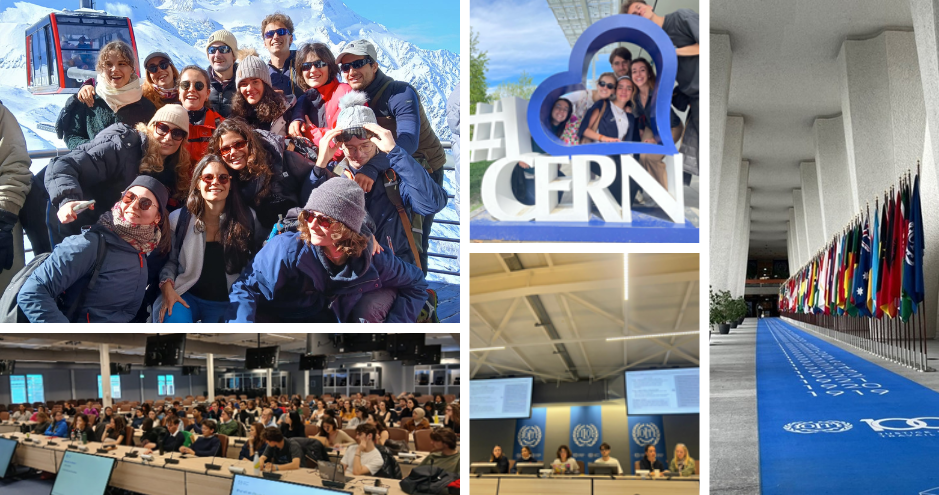
The Geneva–Chamonix study trip is a core part of SASI’s experiential learning model. The purpose is to deepen the students’ understanding of the complexities of sustainable development, engage directly with change agents across sectors, and develop professional skills in cross-cultural communication, organization, and crisis management. The program for the trip is organized by the SASI team and student volunteers, who are responsible for identifying potential visits, the outreach and putting together the program. This student-led approach allows for a dynamic program and valuable learning experiences. Spanning over seven days the trip offered a rare opportunity to engage with the complexity of sustainability in practice.
“This trip reflects the very essence of what we aim to cultivate at SASI: exposure to diverse realities, dialogue with actors we rarely see in a traditional business school setting, and deep reflection on the systems we’re part of. By going into the field, we widen our students’ intellectual and emotional horizons — and equip them to lead with greater nuance and humility.”
— Déborah Keraghel, Executive Director of the SASI Master’s Program
Geneva: Global Sustainability at the Source
The first leg of the trip took place in Geneva, home to more than 40 international organizations. Over the course of four packed days, students engaged with a diverse mix of institutions, policymakers, scientists, and activists working at the frontlines of sustainability.
At Génilac, an ambitious urban energy project, students learned how the city uses the cold water from Lac Léman to cool buildings like the airport and public infrastructure, before returning the water to the lake in a way that protects local biodiversity. It was a compelling case of urban resilience and systems innovation.
At the World Trade Organization, students explored the increasingly complex relationship between trade and the environment. The session touched on climate regulations, shipping emissions, and the EU’s Carbon Border Adjustment Mechanism, highlighting both opportunities and tensions between global economic governance and ecological goals.
A visit to a farm outside Geneva with Luc Barthassat, author of a key regional report on agriculture, brought these abstract dynamics into sharp local focus. As students walked through the fields and spoke with Barthassat, they gained new insights into how food systems and policy shape each other at the regional level.
United Nations agencies offered further perspective. At UNEP, students discussed biodiversity, environmental diplomacy, and eco-humanitarian response, how to ensure that emergency relief doesn’t come at the environment’s expense. At the UNHCR, the focus shifted to displacement and climate-induced migration, with a timely discussion on the consequences of reduced international funding.
“The study trip offered rare access to institutions like the WTO, UNHCR, World Bank, ILO, CERN, and WIPO, doors that wouldn’t typically open to students. This trip was far more impactful than company visits on campus. It culminated in a powerful experience in Chamonix, where stepping into nature made the real-world effects of climate change impossible to ignore.”
— Johanne Skjævestad, SASI student
The group also had the chance to meet with impact investors at Symbiotics, explore trade and labor issues at the ILO, visit WIPO to discuss AI and intellectual property rights, and tour CERN’s exposition to better understand scientific cooperation on a global scale. At the World Bank, students were briefed on how environmental criteria and climate adaptation are becoming core components of funding decisions.
The visit to the International Labour Organization (ILO) stood out not only for its institutional relevance but also for the active role students played. Alongside a guided visit and an introduction to the ILO’s history and mission, a select group of students presented their coursework from the “Business and Human Rights” class, engaging directly with technical experts.
“For the second consecutive year, students were able to visit the International Labour Organization, meet technical experts working on labour standards, and present some of their work. Sensitizing students on labour and human rights issues is critical in what is often referred to as the ‘just transition’ conundrum—the necessary transition that factors both environmental and social aspects of the sustainability agenda. During this year’s visit, it was particularly interesting to witness peer learning amongst students on issues such as indigenous peoples’ rights, labour migration, or REDD+ projects.”
— Charles Autheman, HEC Paris Lecturer in Business and Human Rights
The agenda also included a more personal and unexpected perspective at Aspasie, an NGO advocating for the rights of sex workers. Students engaged in an honest conversation with a former sex worker, discussing legal frameworks, dignity, and harm reduction, broadening their understanding of social justice in sustainability.
The Geneva program ended with a workshop on sustainability communication led by climate communicator Gemma Parkes, who challenged students to rethink how they frame narratives of change in an age of urgency and misinformation.
“The trip to Geneva opened my eyes to the possibility of working for international organisations like WHO, ILO, and the World Bank, where I can make a real positive impact. In Chamonix, we experienced firsthand the impacts of climate change and learned the importance of environmental preservation and mitigation at a local level.”
— Victoria Schrankler, SASI student
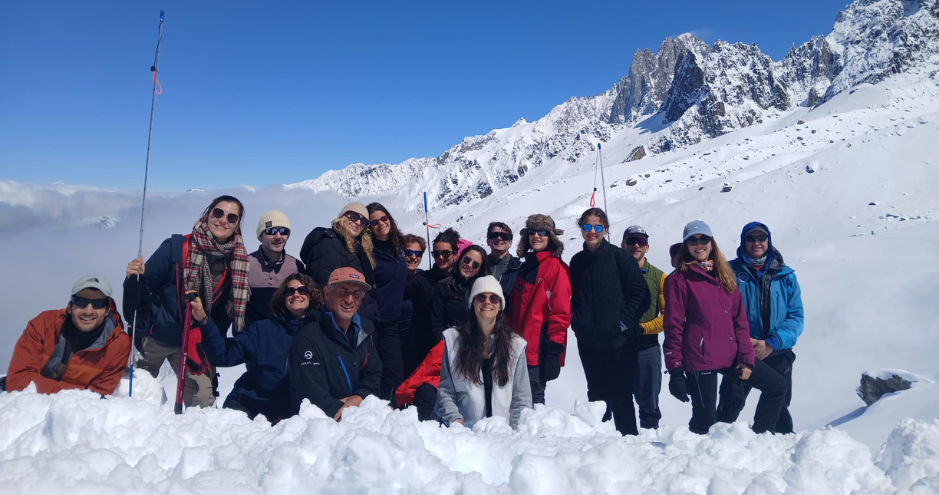
Chamonix: Lessons in Uncertainty
The trip’s second chapter, in Chamonix, offered a very different kind of learning. Upon arrival, a snowstorm swept across the region, dumping nearly a meter of snow overnight. Plans to visit the Mer de Glace glacier and the Simond factory had to be scrapped, as train lines were blocked and businesses closed.
What could have been a major disruption quickly turned into a live exercise in flexibility and resilience. With the support of Mountain Path and the quick work of SASI staff and local partners, a revised program took shape overnight. Students still got the opportunity to learn aboutlocal businesses and community leaders, gaining insight into the pressures facing mountain towns in a changing climate.
The unscheduled downtime also gave the cohort a chance to slow down, reflect on the Geneva visits, and connect with each other on a more personal level.
On the final day, the group headed up to Plan de l’Aiguille for avalanche rescue training, a hands-on session led by mountain professionals that combined technical learning with practical teamwork. Later, a cable car trip to the Aiguille du Midi provided breathtaking views of Mont Blanc and the Chamonix valley, driving home the stakes of environmental preservation in high-altitude ecosystems.
More Than a Trip
From global institutions to alpine villages, the Geneva–Chamonix study trip helped students grapple with the complexity and interconnectedness of sustainability. It illustrated how climate, finance, health, trade, and justice are not separate issues, but parts of the same system. It also reminded participants that no matter how well-crafted a plan may be, the ability to adapt is just as crucial as preparation.
This year’s trip reaffirmed the power of field learning to inspire, challenge, and connect. For the students who participated, it was a week of rich conversations, new perspectives, and unforgettable moments.
Read more: From HEC Paris to Global Impact: The SASI Class of 2025 Graduates with Purpose