
 Innovation & Entrepreneurship
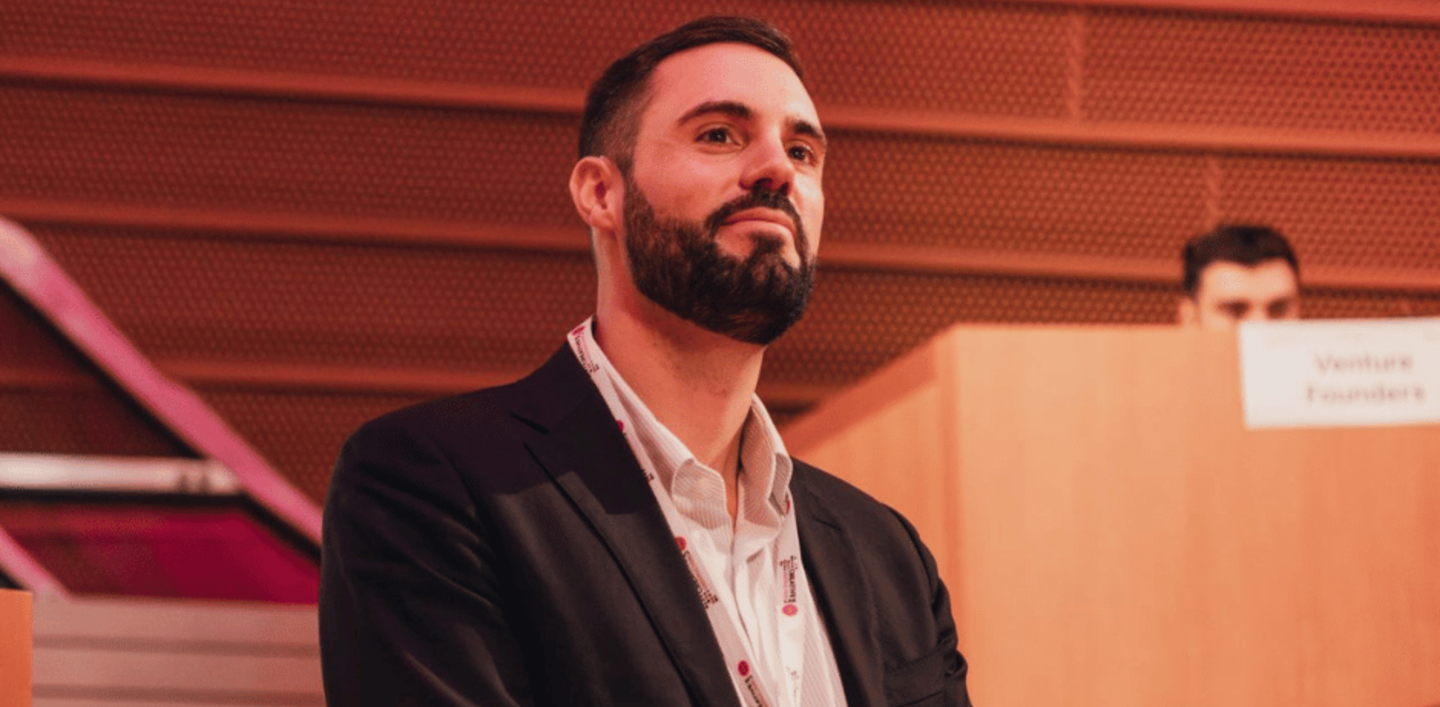

Founded by Florian Corgnou, Neurobus is a deeptech startup developing frugal, embedded Artificial Intelligence for defense and aerospace systems. Its technology processes data directly on devices such as drones and satellites—dramatically reducing energy consumption by eliminating data transfers to energy-intensive centers.
Initially rooted in the space sector with partners like Airbus Defense and Space, the European Space Agency and the French Space Agency, Neurobus has rapidly expanded into the fast-growing drone market.
The Problem
Aerospace and defense increasingly rely on high-performance onboard processing, yet traditional AI is energy-hungry and resource-intensive. Sending data to remote centers consumes significant power and creates delays—an issue magnified in satellites and drones with strict energy constraints.
Florian observed this technological gap while working with leading industry players like Tesla, SpaceX and Airbus Defense & Space. Despite rapid innovation in the sector, no solution offered both intelligence and radical energy efficiency. This unmet need paved the way for Neurobus.
The Solution
Neurobus provides an embedded, frugal AI designed to operate directly on host systems while consuming minimal energy.
What they built:
- Neuromorphic systems inspired by the human brain and retina—delivering high computing power at extremely low energy levels
- On-device AI processing, avoiding energy-intensive data transfers
- Integration-ready architecture for drones and satellites
- Component assembly + tailored software layers, positioning Neurobus as both an integrator and a software publisher
- Specialized applications for defense and aerospace, including drone detection
The result: By assembling existing sensors and processors rather than manufacturing them, Neurobus accelerates adoption and reduces capital intensity. This approach enables drones equipped with frugal AI to make real-time decisions with minimal human intervention—for example avoiding a fast-oncoming object autonomously, while still requiring human authorization for strategic actions.
Key Figures
- Partners include Airbus Defense & Space, ESA, and CNES
- Winner of a European defense innovation competition
- €600,000 in 2024 R&D revenue (excluding public subsidies)
- Team of 5 (2 partners + 3 employees), expanding to ~10 by June
- Preparing a €5–10M fundraising round to develop the final product
How They Did It
Florian’s path began in engineering and aeronautics before entrepreneurship redirected his trajectory. After launching Trezy—an SME financial monitoring startup that raised €3.5M—he returned to a field that truly inspired him: aerospace.
The turning point came during a space entrepreneurship program with Airbus Defense & Space, where the idea for Neurobus began to take shape. Immersion with aerospace engineers helped Florian identify major market needs and the opportunity for frugal AI.
The journey was shaped by:
-
A decisive pivot after exposure to Tesla, SpaceX and Airbus technological environments
-
Deep industry validation secured through R&D contracts, not early fundraising
-
Strategic discipline to avoid dispersion: “You must focus, master a single use case, execute it flawlessly, and avoid spreading yourself too thin.”
- A clear decision-making process to identify the application with the highest business and technological value (drones)
HEC Paris played a continuous role in the company’s evolution:
The Executive MSc in Innovation & Entrepreneurship (EMSIE) provided expertise and support while Neurobus was being launched. The Incubateur HEC Paris assisted in finalizing complex client contracts, while the Creative Destruction Lab – Paris (CDL) challenged strategic direction and helped refine critical decisions. Finally, the Challenge+ program helped further structure the team and sharpen its execution.
Through client-funded R&D and disciplined focus, Neurobus demonstrated traction without early dilution.
What’s Next?
With rising demand in defense and drone autonomy, Neurobus is preparing a €5–10M fundraising round to accelerate development of its final product, shaped directly by client feedback.
The company aims to expand its team to around 10 members, broaden applications within defense, and open the door to future civilian uses such as autonomous drone delivery.
Neurobus’s mission is clear: deliver frugal AI capable of empowering the next generation of space and drone systems—smarter, faster, and far more energy-efficient.



 Strategy & Leadership