

 Innovation & Entrepreneurship
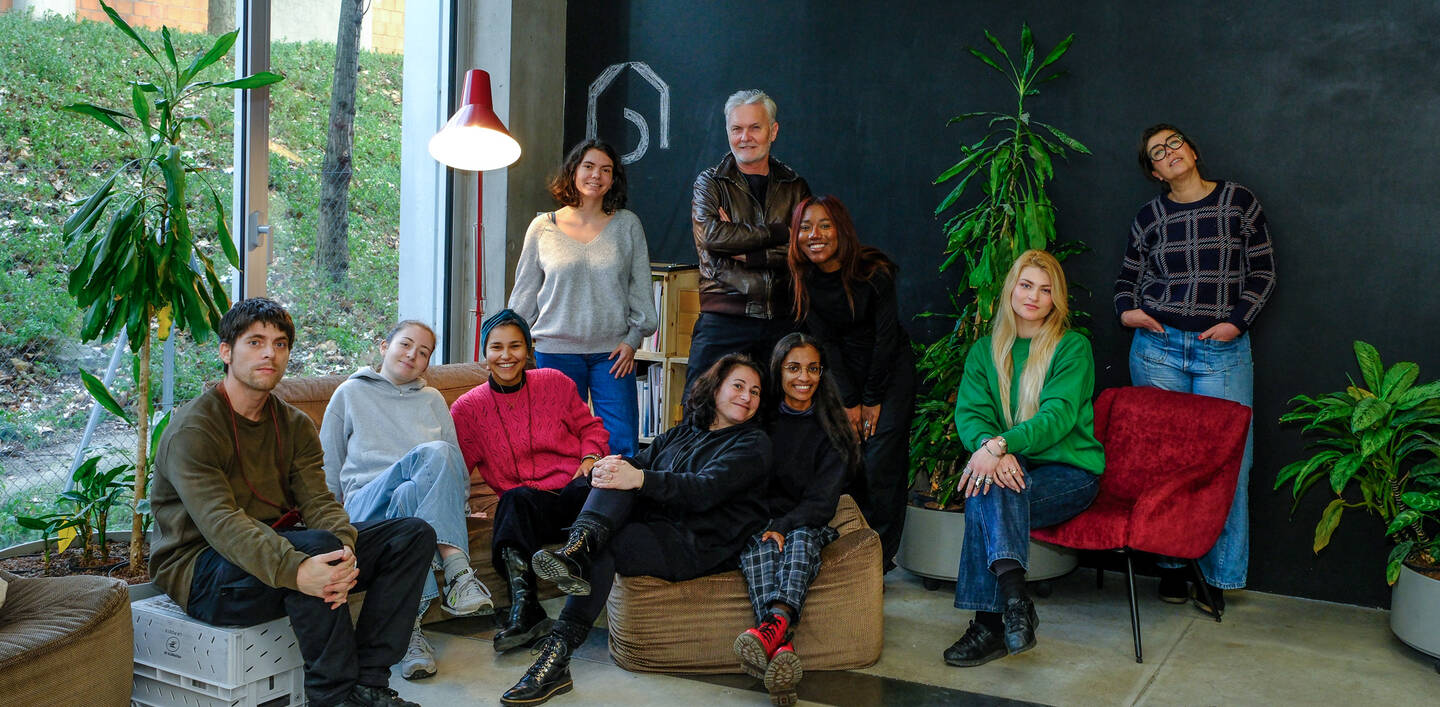


Xavier Cazard knows all about connection! Drawing on his background as a journalist and associate director of a communications agency, he has spent 20 years working on the power of conversation in driving engagement, innovation, and attractiveness for businesses and brands. Xavier holds one firm belief: this conversation must take shape within a context... within a place.
This is how, in 2019, the Maison de la Conversation was born, at Porte de Montmartre (Paris), in the 5th poorest neighborhood in Île-de-France. The goal: to have a twofold impact — a local one on the neighborhood's residents, and a societal one through a space for experimenting with new conversational practices. It is with this project that the Maison de la Conversation joined Cohort 7 of the Accélérateur ESS, supported by the Île-de-France Region.
The problem
Loneliness, a new public health issue? That is at least the view of the WHO, which created a "Commission on Social Connection" at the end of 2023. Six years after the COVID-19 pandemic, loneliness appears as an ailment that spreads quietly but causes as much damage as a virus making front-page news:
The Fondation de France reaches the same conclusion in its annual report "Loneliness in France": nearly one in three French people is currently in a situation of relational isolation, and one in four feels lonely. Young people are no exception to the phenomenon: more than 1 in 3 young working adults (aged 25 to 39) feels particularly lonely, twice as many as those aged 60 to 69. 1
The world of work has not been spared and has undergone major changes since the COVID-19 crisis. Work plays a key role in socialization: 69% of French people even consider that getting along with colleagues is more important than the work itself. Yet during the pandemic, the same proportion felt they had failed to maintain quality interactions with their colleagues when working remotely. 2
A growing body of research examines the link between loneliness and polarization in democracies. Loneliness tends to fuel distrust, a form of withdrawal from public debate, and depending on the context, it can make people more susceptible to populist and oversimplified narratives about social and economic realities. 3 4 5
Connecting citizens through conversation matters for social cohesion, individual health, and more broadly for democratic, social, and economic life.
The solution
If the problem is global and systemic, the Maison de la Conversation intends to provide a response that is both local and highly replicable: conversation as an experience contextualized in a place, a group, and a given moment.
Concretely, the Maison de la Conversation is:
- A space for relational experimentation and socialization, open to all,
- A space with clear and transparent ground rules: on the walls, you will find the values of the place: conviviality, inclusion, equality, usefulness, and serendipity,
- A free program built around conversations engaging the head, the heart, and the body — to connect with others, but also with oneself and one's environment,
- Social impact programs such as the rue de la Conversation, designed to build connections in public spaces,
- Advisory services to strengthen communities, and private hire spaces for 10 to 300 people for workshops, training sessions, and seminars,
The Maison de la Conversation is thus a partner of the "Faut qu'on parle" ("We Need to Talk") project, launched in 2024 by Brut and La Croix. Around a hundred people out of the 6,300 who took part in the initiative took the time to exchange, one-on-one, with people holding different opinions. Not to convince, but simply to listen and get to know one another. A moment of pause amid the media noise, to try to understand those who do not think like us.
Companies too find in it an original setting to rebuild connections within their teams: "We felt free" says Christophe Feuillet, Chief of Staff to the President of NaTran, after a seminar organized for his Executive Committee. As for Yves Pellicier, President of MAIF, he remembers "a magnificent place that we will invest in further" where his board of directors worked on the theme "How does greater diversity improve the quality of decision-making?"
Impact and Key figures
And it works! In its 4th year and for the first time, the Maison de la Conversation is generating a positive result, with revenue growth of 46%. Quite a feat in the current funding environment for the social and solidarity economy. This growth has been supported since late 2024 by the HEC Paris ESS Accelerator: Xavier is mentored by Laurent Azières (H.84), himself an alumnus of the school.
Behind the impact ambitions, the Maison's actions are already taking shape:
- More than 72,000 people welcomed since September 2021
- More than 4,200 free programs
- 116 conversation formats offered
- 526 client and partner organizations (SNCF, Biocoop, MGEN, GRDF, the Greater Paris Metropolis, the Tourism Office, etc.)
- Commercial revenue: €460,000
- Association budget: €290,000
Today, more than a third of its visitors live in the neighborhood, and the average age (38) reflects the Maison's ability to attract young people. In 2025, the Maison de la Conversation received the Prix de la Participation (Associations category), awarded at the Senate by the think tank Décider ensemble.
How they did it
Any entrepreneur who manages venues will tell you: welcoming the public in a physical space is a job for the passionate! And that is precisely what characterizes the team at the Maison de la Conversation. Through diverse skills and backgrounds, each member brings to life in their own way a convivial, unexpected place that encourages stepping outside oneself.
All of this is also made possible thanks to members and volunteers who actively participate in events. The venue is open every day, with flexible hours and spaces that prioritize visitor autonomy, flow, and encounter. Nearly a third of the Maison's programming is not planned in advance, in order to welcome initiatives and creativity.
For Xavier and his teams, conversation is above all a relational, cultural, and transformational lever that enables authentic listening and self-expression, facilitates recognition by others, cooperation, and creativity. Essential ingredients for developing the robustness of our society.
This robustness is also embodied by the organization itself, which must adapt to the economic constraints of the social and solidarity economy through a hybrid model:
- an association that oversees programming and receives public grants;
- an endowment fund that finances impact projects through patronage;
- a SASU holding an ESUS certification for the operation of the venue.
What's next?
In 2026, the time has come to scale up: as with many venues with a mission of general interest, the impact model calls for pushing beyond its walls. This is already the case with the "Rue de la Conversation", a piece of street furniture created through the City of Paris's participatory budget, and designed to encourage interaction.
The local roots in a priority neighborhood have allowed the Maison de la Conversation to develop contextually relevant experiments. This expertise now makes it possible to envision other Maisons de la Conversation in similar areas, where the loss of social connection leaves residents vulnerable.
The strength of the Maison de la Conversation also lies in its ability to attract committed partners, such as Dsides and Vitra, ready to expand the existing offering with an introductory program on Robustness for leadership teams — a concept inspired by living systems and put forward by biologist Olivier Hamant as an alternative to the "cult of performance".
Each year, the Maison de la Conversation designs a major project to raise awareness of its programming. For 2026, the team is preparing "Dépolarisez-moi!" ("Depolarize Me!"), a performance that serves as a reminder that the challenge of democracy is to debate without fighting.
Sources
1 Fondation de France, annual study on loneliness in France, press release, January 22, 2025.
2 Ifop, survey on conversation topics and workplace friendships, 2023
3 Delaney Peterson, Matthijs Rooduijn, Frederic R. Hopp, Gijs Schumacher and Bert N. Bakker, "Loneliness is positively associated with populist radical right support," Social Science & Medicine 366 (February 2025)
4 Berlingieri, Francesco; d'Hombres, Béatrice; Kovacic, Matija (2025): Disentangling loneliness and trust in populist voting behaviour in Europe, GLO Discussion Paper, No. 1634, Global Labor Organization (GLO), Essen
5 Alexander Langenkamp, "Enhancing, suppressing or something in between – loneliness and five forms of political participation across Europe," European Societies 23, no. 3 (July 2021): 311–332.
6 Olivier Hamant, Sandra Enlart and Olivier Charbonnier, "L'Entreprise robuste: Pour une alternative à la performance" (Odile Jacob, 2025)



 Sustainability & Society
 Geopolitics & Public Affairs