

 Sustainability & Society
 Innovation & Entrepreneurship
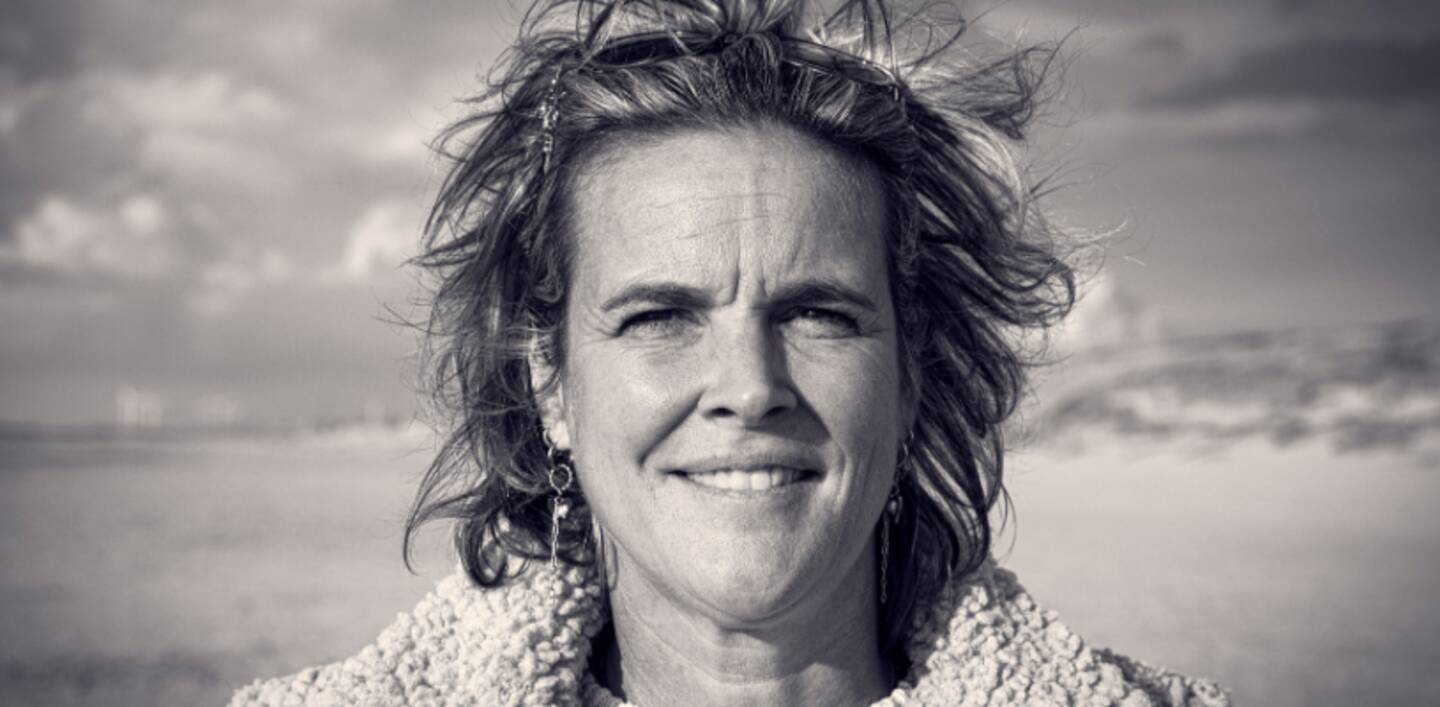
From as far as she could remember, her life had been governed by clarity: rules, structures, and the pursuit of justice. Then, slowly, the ground shifted, and she began to understand that trust is not born from certainty, but from learning to stay inside uncertainty without losing yourself.
From police institutions in the Netherlands to women leaders in Mozambique, her work sits where trust has been shaken: in polarized teams, fragile ecosystems, and organizations facing societal fractures.
For her, trust is the intangible infrastructure that makes collective action possible (or impossible), and it must be approached with the same precision as any complex system.
As the proud co-owner of The Next Lab, a boutique design thinking agency, she now dedicates her work to resolving complex societal challenges, known in her lexicon as “wicked problems” focusing intently on creating social impact and cultivating trust.
Learning Trust Through Displacement
Frederique grew up in the south of the Netherlands, and developed a strong sense of justice at a young age. A criminal law degree came first, followed by ten years in corporate roles. But motherhood shifted something. The metrics that had once motivated her - performance, efficiency, results - suddenly felt too small. A quiet question pressed against her: Is this really what I'm meant to contribute?
That question didn’t go away. It deepened.
She didn’t have the perfect answer yet, but based on what she knew then, she was convinced she needed to make a change and embrace it. A move that would springboard her entire career…
The real rupture came when she moved from the Netherlands with her family to Southern Africa, living between South Africa and Mozambique. The displacement was more than geographical. It unsettled her from within. Frederique found herself navigating unfamiliar social codes, power dynamics, and inequalities, not as an observer, but as a participant. She realized her identity was stretching between two worlds that operated through entirely different logics. What felt intuitive in the Netherlands suddenly had no traction in her new environment.
And yet, instead of resisting, she chose to pay attention.
During that period, she enrolled in the HEC Paris-Oxford Saïd Consulting & Coaching for Change program, now called the Executive MSc in Change Leadership.

There, she experienced another internal jolt. Surrounded by participants from 26 nationalities, she suddenly realized that what she had considered “neutral” was revealed as cultural. What she assumed was universal was merely familiar.
But these micro-disruptions didn’t break her open; they opened her up.
For the first time, she understood that trust doesn’t come from sameness. It emerges from exposure, curiosity, and the courage to remain present in discomfort.
That experience, combined with living in Africa, shifted her relationship to difference: from something to manage, to something to engage.
Becoming Comfortable Being Uncomfortable
One phrase has stayed with her since: leaders must learn to be comfortable being uncomfortable.
She experienced it firsthand. As soon as she joined the HEC Paris-Oxford program and met the other participants—impressive profiles speaking perfect English—she began to doubt: Why did they accept me into the program? Will I fit in?
She could have shrunk back, spoken less, simplified herself. But she didn’t.
Instead, she stayed present. When participants from Kenya, India, or Hong Kong challenged perspectives she’d unconsciously held as neutral, she didn’t defend her worldview - she questioned it. She sat with the discomfort of realizing that what felt universal to her was merely familiar. And slowly, something shifted: discomfort stopped feeling like a threat. It became information, even an internal compass.
Years later, working with police leaders, healthcare organizations, and large institutions in the Netherlands, she recognized that same tension in others: fear of saying the wrong thing, of offending, of being exposed. Many leaders had the responsibility to address issues of identity or power but not the language or confidence to do so.
Rather than giving them answers, she offered what she once needed: space.
A space where people could slow down.
A space where listening mattered more than certainty.
A space where vulnerability could replace performance.
This was new. The old Frederique would have tried to fix their discomfort. The new one designed the space for leaders to fix it.
Drawing on the Executive MSc in Change Leadership pedagogy of head, heart and hands, she designs environments where people can slow down, reflect, feel, and experiment, not just understand intellectually. Her conviction: nobody is born racist or exclusive; people are shaped by their contexts. Expand the context, and empathy becomes possible.
At the Dutch Police Academy, where she leads programs on inclusive leadership and digital transformation, this often means guiding participants through uncomfortable conversations about power, identity, and institutional responsibility. She invites deep listening over accusation, vulnerability over defensiveness.
Trust, she insists, cannot be built through moral instruction, but through collective vulnerability.
From Polarization to Dialogue
Though polarization defines much of today’s world, Frederique sees division as a signal rather than a crisis. Something essential is asking to be heard. She uses Barry Johnson’s Polarity Thinking to help groups move beyond “either/or” and into “both/and” — a cognitive and emotional shift that often destabilizes before it soothes.
One of the most delicate interventions she led was an assignment conducted in the public sector involving an internal behavioral incident, which went public. Her team opted for a radical approach: gather everyone involved, including those hurt and those in positions of power, and reconstruct the story collectively. Not an expert mediator, not another structured dialogue protocol - but collective vulnerability. As a bridge, not a barrier. It was a risk: a reconstructing one.
The process was raw. People hesitated before speaking; some confronted their blind spots for the first time. As each person shared their perspective, others asked questions not to challenge but to understand. Slowly, the tension in the room shifted. Those previously positioned as adversaries began to see one another not as roles, but as individuals shaped by their own fears, assumptions, and intentions.
Beyond being a moment of reconciliation, this episode became a reweaving of relational bonds. For Frederique, this is where trust begins again: when people feel seen in their humanity, not reduced to their position.
Rebuilding Social Capital
Frederique’s commitment to trust extends beyond institutions. In Mozambique, she co-founded Mozambique Women of Energy (MWE), a platform focusing on Sustainable Development Goals (SDG) 5 (Gender Equality) and 7 (Affordable and Clean Energy), and enabling women and men to lead the energy transition while strengthening social capital in a fragile socio-economic context.
There, she witnessed another series of subtle inner shifts. Working in a context marked by inequality, she observed a form of intelligence often overlooked in Western systems: a grounded, community-driven ability to act without waiting for perfect models or control. It challenged her assumptions about leadership and decision-making.
She saw that not knowing could be a stance — one requiring vulnerability more than authority.
Holding Systems Together by Holding People Together
Back in the Netherlands, through her work with The Next Lab, she continues this mission, extending it across multiple domains, including healthcare and services for the elderly.
Using Design Thinking methodology, Frederique not only focuses on understanding the needs of the elderly and their families, but also on translating these insights into concrete interventions and new ways of working.
Projects aim to shift the mindset of intrinsically motivated, but often overworked, caregivers in the Netherlands to seek help from families and to grant elderly residents more autonomy and ownership over their daily lives. This holistic approach strengthens cohesion, enhances collaboration within care teams and families, and ultimately improves the overall quality of care.
Across all these contexts, her question remains the same: How do we create conditions (space) where people can trust again — themselves, others, and the systems they belong to?
Her answer is always relational. Her methodology incorporates collective expeditions, intervision practices, and the ‘Human Library’—where diverse individuals (refugees, veterans, trans people) become 'books' for participants to engage with directly. These encounters often provoke internal micro-shifts: doubts, recognitions, cracks in old assumptions. All these experiences are designed to create safe spaces where people feel free to speak without fear of judgment.
Frederique does not claim to restore trust. She designs the spaces where trust can begin to reappear.
By strengthening what she calls the glue, the invisible fabric connecting people, Frederique’s leadership takes shape. Not through imposed solutions, but by holding the space in which people can remain together long enough to find them.
The question that once hollowed her out–Is this really what I’m meant to contribute?–has been answered. Not through accomplishment, but through presence. She stayed in the discomfort long enough to learn its architecture. Now she builds with it.
 Find out more

 Geopolitics & Public Affairs