
Maket: Pioneering Circular Fashion Across West Africa
When you hear about circular fashion, what’s the first platform that comes to mind? Vinted? Vestiaire Collective? Now, what about circular fashion in Africa? Probably nothing, and that’s completely normal. It’s still nascent.
That gap is precisely what Fatou Dieng, a fashionista and entrepreneur living between Paris and Dakar, is working to fill with her concept “Maket." But don’t be mistaken: Maket is not — and will never be — a pale copy of Vestiaire Collective. The African market deserves its own platform, tailored to its people, culture, and ways of consuming fashion. Furthermore, the platform specializes in African designer items and tackles textile waste head-on while empowering regional creativity.
After demonstrating significant traction in Francophone Africa, the company is preparing for an ambitious funding round, aiming to accelerate its expansion into new markets and further establish the continent as a key player in the global circular economy.

Introducing Maket: Africa’s Answer to Second-Hand Fashion
Launched in 2025, Maket* is a second-hand platform specialized in the sale of quality articles at accessible prices to combat textile waste. The platform, open to West African countries, was created with the ambition of being an African version of ‘Vestiaire Collective’”, tailored to local realities and promoting African designers too.
Maket’s value proposition lies in offering secure and anonymous transactions, adapted to the cultural context. Indeed, in Africa, people are often reluctant to sell their belongings due to a cultural barrier. To overcome this, Maket operates a fully anonymous model: all transaction logistics are managed by the platform, including professional sanitization of items. Buyers and sellers never meet or share contact details, unlike many European platforms. As founder Fatou Dieng explains: “We took Vestiaire and Vinted and put them in African sauce in the sense that it’s anonymous... We will really be the intermediary.”
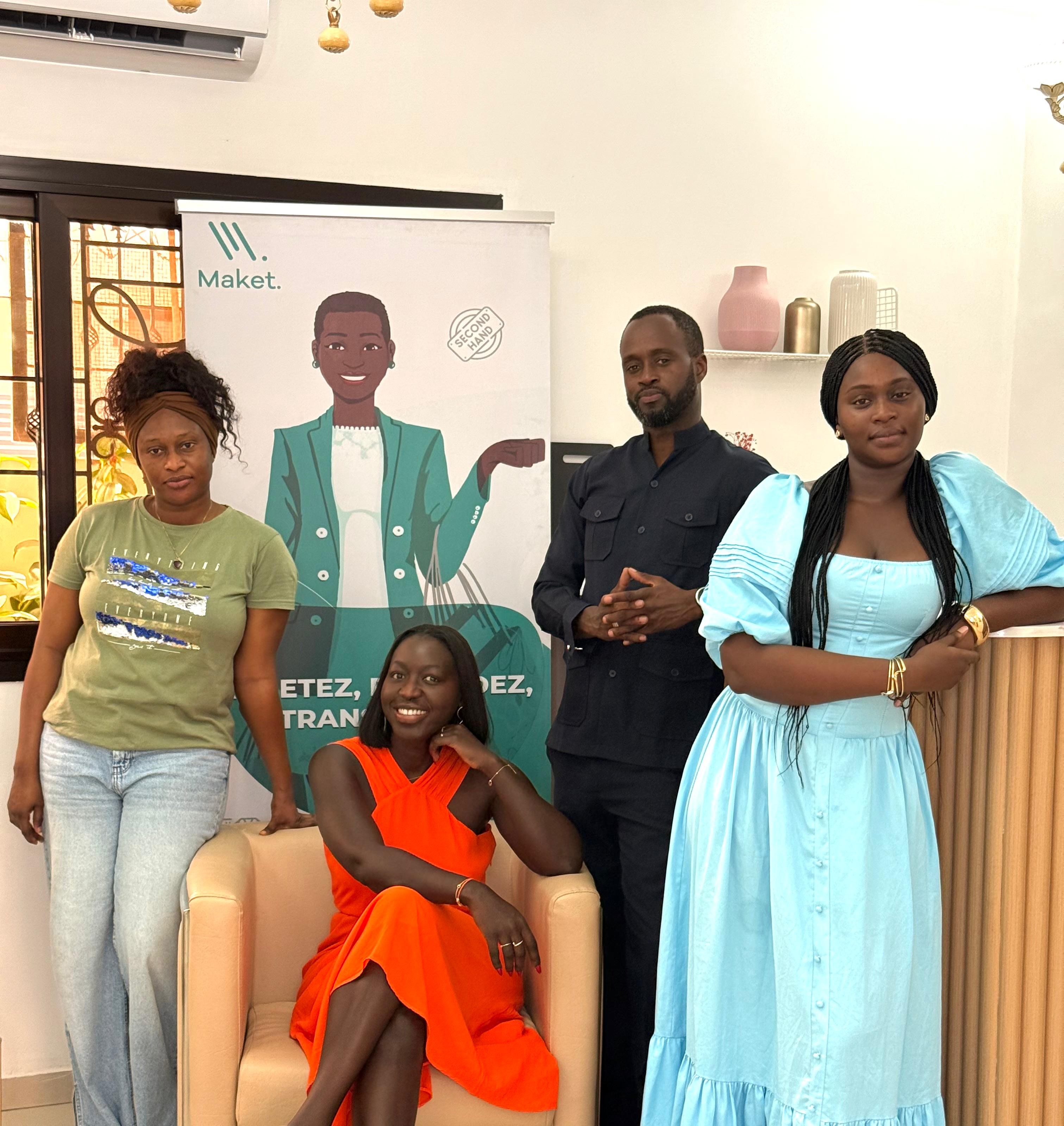
However, Maket’s mission goes far beyond the traditional second hand platforms. Fatou’s mission is multiple, but mostly involves sustainability, cultural change, promoting African culture, and people empowerment.
Scaling value, not waste: Maket’s triple impact ambition
Maket's primary goal is to have a positive impact by promoting Africa’s circular economy, and fighting overconsumption and fashion waste. As Fatou notes, “Africa is often perceived as the trash can… because poor quality articles end up there in thrift stores or markets.” Maket positions itself as a solution against the flow of low-quality garments that flood the continent despite it being home to many great local designers, who design high quality garments.
“The idea behind Maket is also to promote these African designers internationally, showcasing that their creations are high-quality and built to last.”
The adoption of responsible consumption however implies shifting people’s mindsets, who — whether rich or poor — often purchase new items like Traditional outfits for events, but only wear them once. “I really want to fight against this waste and tell African people, 'Okay, you have the right to treat yourself, but we also have to think about the environment, we have to think about circulating these items.”
Maket is already quantifying its sustainability impact, aiming to collaborate with African environment ministries to raise awareness about climate change and overconsumption. She shares: “purchasing a second-hand pair of jeans helps reduce CO2 emissions by 17 kg”.
“More than 200 dresses were sold through Maket over a period of six months. This represents over 6,000 kg of CO2 avoided — equivalent to six round trips between Paris and New York.”
The impact is there, and could be enormous knowing that Maket has only been operating for a few months.
Building on her previous finance and entrepreneurial experience, and relying on the support from HEC Paris, Fatou already plans to scale her solution, something that wouldn't have been possible in her first entrepreneurial venture as she likes to tell.
The Entrepreneurial Pivot: From a bespoke solution to a scalable one
“I never thought I would be an entrepreneur in my life; I saw myself more as a Director of the World Bank, a bureaucrat”, Fatou admits. Today, Fatou is a serial entrepreneur. After arriving in France post-baccalaureate and completing a Master's degree in Finance, she spent 13 years working in the banking sector. All this time, fashion was calling...
While still employed, she launched Your Personal Shopper (YPS) in October 2017, catering to West African clients who still desired access to French shopping items. “I realized that there were quite a few people who were returning to Africa, and who were still attached to France, in the sense that they still wanted to do their shopping here.” Fatou turned that idea into a viable business. Personal shoppers go to Galeries Lafayette, with whom Fatou has developed a partnership, to shop for their customers.
However, Fatou quickly identified YPS’s fundamental limitation when participating in the HEC Challenge Plus program in Dakar: “Your Personal Shopper is niche and very personalized, which makes it very difficult to scale”. At the same time, she realized that her clients engaged in YPS were accumulating articles that were often worn only once or twice before ending up stored away. Developing a new solution, both scalable and impactful, in the fashion industry became her new target.
Participating in the program taught her to hone her focus and to define a clearer trajectory for her ambitious vision. “I pivoted from YPS to Maket during my time at Challenge Plus,” explains Fatou, resolved to build something significant, “my vision for Maket is much clearer: I want to do something big, something huge, something impactful!”. An ambition that resonates with the HEC Paris Innovation & Entrepreneurship motto to “Make it happen, make it big!”
It all happened very quickly. Fatou launched Maket in January 2025, dropped her finance career to dedicate herself full-time to Maket during the year, and joined the Incubateur HEC Paris program at Station F in September 2025.
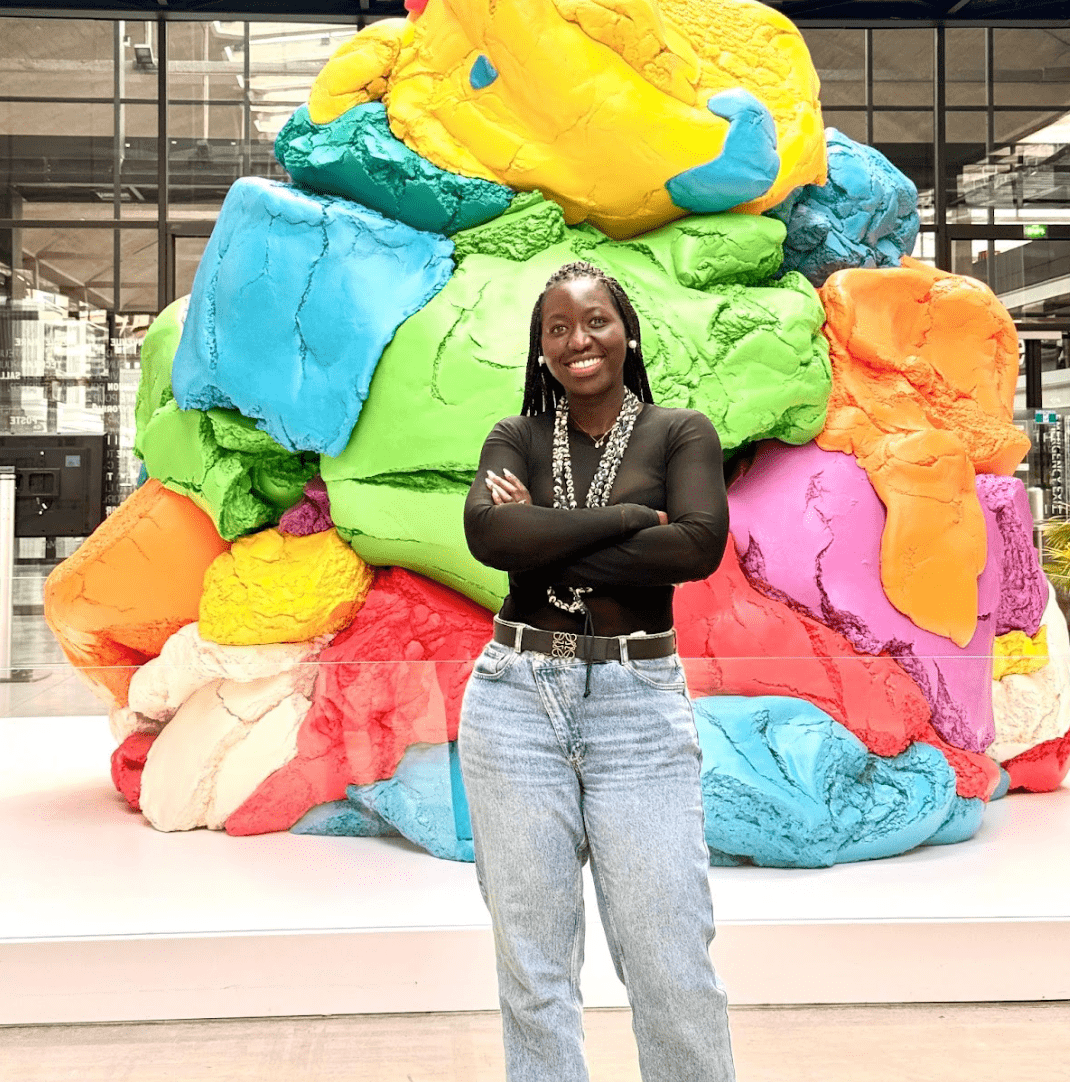
This integration has provided immediate, measurable advantages, particularly through networking. Fatou stresses the power of this connection: “The HEC Paris network has opened many doors for me... I would never have had access to those people.” Access to an established e-commerce and marketplace ecosystem in Paris allows Maket to leverage existing knowledge, enabling the company to “gain 10 years” of market acceleration.
Operationally, building Maket’s model required intensive research. However, her experience with YPS during the Challenge Plus program helped her leverage one key challenge, common to both her companies: logistics. “Logistics is a very masculine world, and if there’s one thing I learned from HEC Paris, it is ‘Focus’. This is where I realized that creating fruitful collaborations with specialized logistics startups was the best solution to focus on what I do best: merchandising and selling.”
“Everything is yet to be done”: Leading from the Diaspora
Fatou highlights the paradoxical role of Africa: it is the continent that globally emits the least CO2, yet it bears the burden of international waste. This reality presents a unique opportunity: “Since everything is yet to be done, if we try to educate the population from the beginning and make them aware, we won't reproduce the same patterns” as the West.
As a member of the diaspora living between Paris and Dakar, Fatou champions the diaspora’s role in creating sustainable economic models. While the diaspora contributes over 100 billion dollars in transfers annually, the true objective is to move beyond simply “perfusing” economies as she puts it. She adds:
“The idea is really to create value, to create jobs and ultimately participate in the empowerment of people.”
Maket already employs five individuals in Senegal and is set to expand rapidly into Anglophone markets like Ghana and Nigeria, key hubs for African creativity. This expansion aims not only to capture larger markets but also to promote African designers internationally.
For aspiring entrepreneurs aiming for global impact, Fatou offers straightforward, actionable advice:
- Network Strategically: “The network is very, very important in entrepreneurship.”
- Maintain Focus: “Remain singularly focused on the specific problem you intend to solve.”
- Dare to Launch: “Just launch yourselves. If it doesn't work, that's okay, we'll get back up in any case, but you have to dare.”
*For the linguistically curious, “Maket” means “market” but many West Africans say “I’m going to the ‘maket’”—dropping the letter ‘r’—when referring to shopping for clothes.