
Press Drawing as an Innovative Teaching Tool to Address Forced Labor
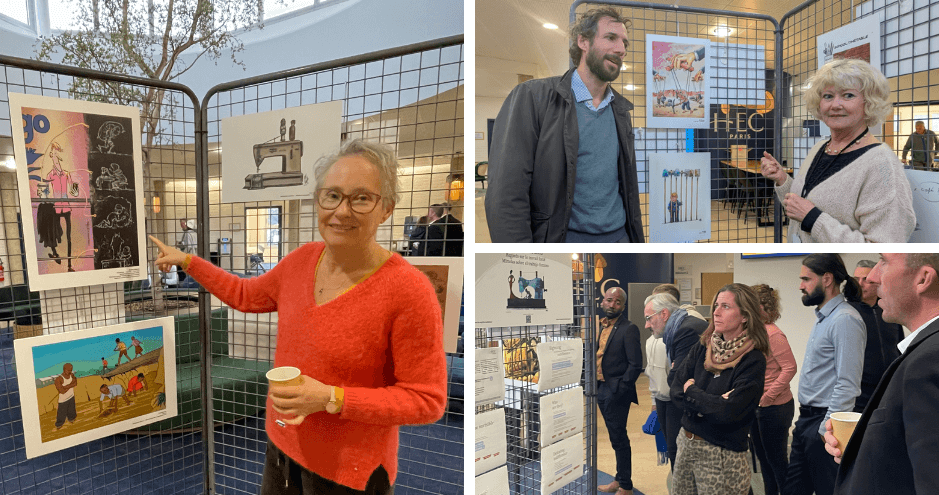
In September 2025, the organizers of the Financial and Extra-Financial Performance Management Certificate at HEC Paris Executive Education offered the fifty participants an original learning experience on the HEC campus: an immersion in an exhibition of press drawings to deepen their understanding of forced labor issues.
Forced labor, slavery and business
An exhibition to decipher contemporary labor rights challenges
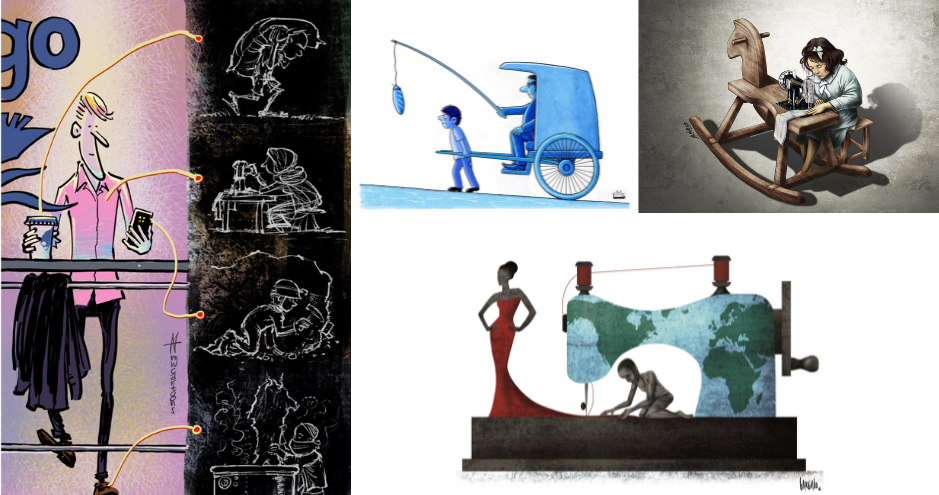
For this session dedicated to forced labor, the teaching team chose to work with the exhibition "Through their eyes", created from an international competition held in 2021 by the International Labour Organization and Human Resources Without Borders. Comprising around sixty cartoons and a dozen explanatory panels, the exhibition provides a nuanced overview of the many forms this still widely misunderstood phenomenon can take.
The artworks depict a broad range of situations: child labor in extractive industries, the complexity of modern global value chains, consumer dilemmas, as well as challenges faced by judicial institutions. These are all issues that can be directly connected to the realities faced by corporate managers: ensuring production traceability, preventing human rights violations affecting workers or local communities, and effectively communicating on a company’s extra-financial performance.
A two-step learning experience
To fully leverage this visual medium, Anne Frisch, Academic Director of the certificate, and Charles Autheman, lecturer in business and human rights, designed a two-phase learning pathway.
An immersive phase: participants first explored the exhibition freely. Small groups quickly formed around the drawings, with everyone sharing reactions, observations and questions.
A reflective phase: back in the classroom, a collective discussion led by Charles Autheman helped connect participants’ insights with key concepts: the International Labour Organization’s definition of forced labor, the eleven recommended indicators for identifying it, global prevalence estimates, and the illegal profits generated by this crime.
Warm and enthusiastic feedback
The initiative was very well received. Despite the sensitivity of the topic, the use of press cartoons fostered a rich, nuanced and highly participatory debate, allowing for multiple interpretations and personal reflections. The exhibition also caught the attention of students from other programs, who stopped to look at the drawings and spontaneously exchange comments—demonstrating the power of visual media to spark reflection, dialogue and awareness.
This experiment confirms that in pedagogy, innovation consistently finds fertile ground: a picture truly can be worth a thousand words, especially when addressing complex and sensitive social challenges.
Know More
Former U.S. Politician Delivers Impassioned Human Rights Message to HEC Students
Students Tackle “Wicked Problems” in Human Rights