Building Bridges with Climate Startups: Where the Rubber Hits the Road
The latest session of the Creative Destruction Lab (CDL) Climate stream brought together MBA students, climate tech startups, mentors, and business angels, in line with France’s growing role as a global hub for climate innovation. Could some of these companies revolutionize the planetary boundaries?
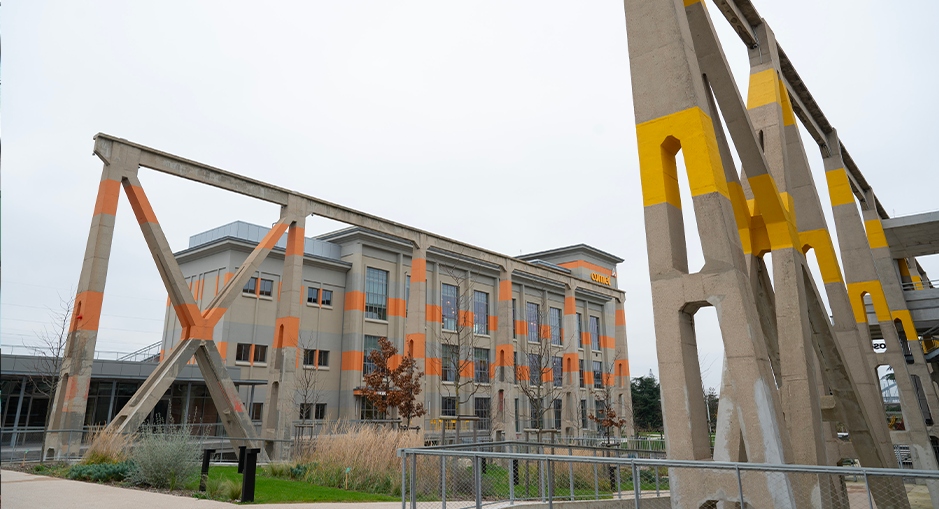
Back in 1904, media tycoon Jean Dupuis established a state-of-the-art printing press in Nanterre, west of Paris. 120 years later, his vision of technological innovation and business acumen is incarnated in the Arboretum, Europe’s largest campus, largely built with solid wood yet with a minimal carbon footprint. Appropriately, it was this site which hosted the fourth session this academic year of the CDL Climate stream, welcoming participants from around the world.
Since its launch in 2020, HEC’s CDL Climate program has provided a structured environment where early-stage deep tech startups receive mentorship, strategy guidance, and investor exposure. The Climate program is one of five focus streams the business school has invested in the past five years, the others being Artificial Intelligence, Space, Next Generation Computing, and Carbon Removal.
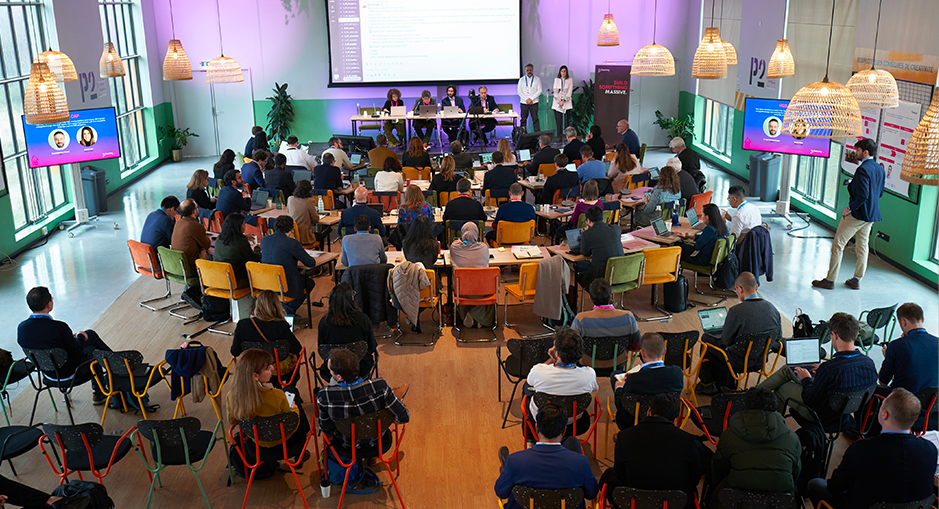
This December 2024 session saw 17 climate tech startups scrutinized by a panel of experts, with 15 ultimately moving forward in the program. Each startup benefited from close engagement with HEC MBA students, who acted as business support throughout the year. The startups also benefited from the critical insights and support of seasoned mentors.
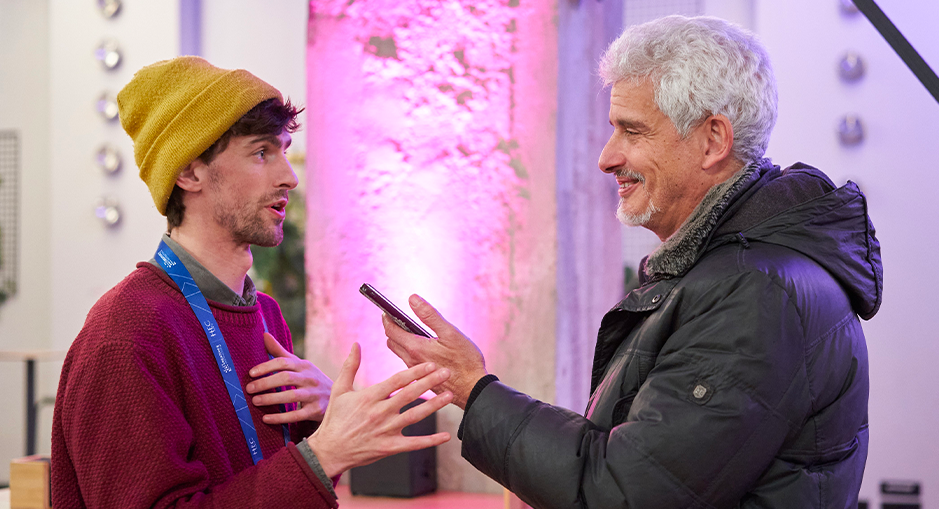
A defining aspect of the CDL Climate program is the relationship between startups, MBA students, and mentors. The startups - ranging from battery innovation firms like Red Cap to carbon capture pioneers such as Yama - are typically founded by scientists with deep technical expertise but limited business experience. The MBA students, many with backgrounds in consulting, engineering, or finance, bridge this gap by helping startups refine their market strategies, pricing models, and investor pitches. During a coffee break, MBA student Imanol Mondragon, who advised Red Cap, described his experience as a defining moment: “The company has incredible technology - a metal-free battery that’s safer and more sustainable than conventional lithium-ion batteries - but needed help defining their go-to-market strategy. My role was to help them identify the most promising markets in Europe and understand how to approach customers. I helped them find what we call a beach
As for the pedagogical value of his experience, the academic has no hesitation: “Classes are classes, they’ve been amazing at HEC. But this is where the rubber hits the road, right?”
Invaluable Experience for Students
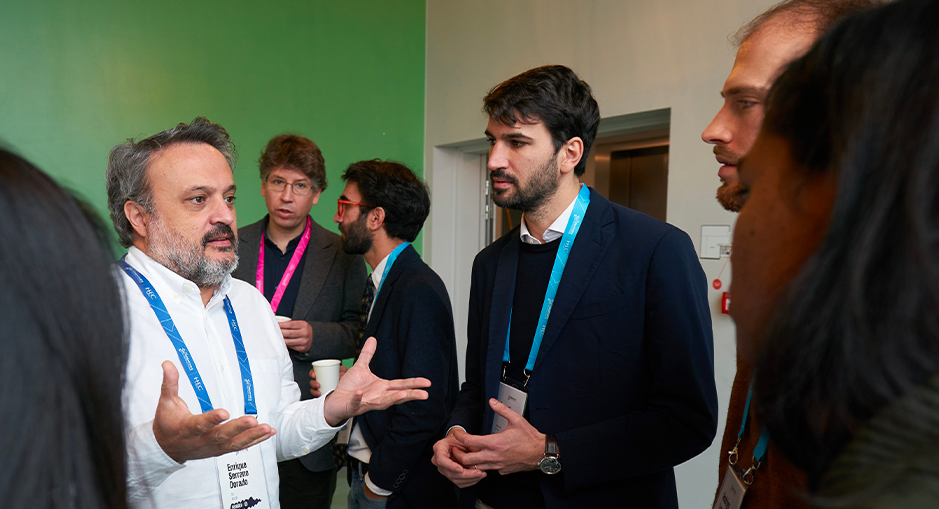
This kind of hands-on collaboration is precisely what makes the CDL program so impactful. Louise-Marie Rakotoarison, another MBA student, worked with Altrove, a startup leveraging AI to develop alternative materials for critical industries. “It wasn’t just an academic exercise,” she confided. “The pricing model we developed is already being used in investor discussions.”
For Magali Anderson, the MBA students have everything to gain from this yearlong experience. She’s a board member of Anglo American and former Chief Sustainability and Innovation Officer at Holcim: “I think it’s a great learning exercise because they rub shoulders with the demanding realities of starting up a company,” she explained. “I’m sure they learn a lot. But even if they don’t decide to enter the venture world, they need to be aware of the growing presence of startups in the corporate world. So, I think this is great exposure for them.”
The Role of Mentors and Business Angels
Mentors like Anderson have always played a crucial role in the CDL programs, offering expertise from a variety of sectors. Many are successful entrepreneurs or executives in industries relevant to climate tech. Anderson explained why she chose to mentor CDL startups: “I love working with these new companies because they keep you sharp and force you to think in contemporary and agile ways. My role is to open my network to them and provide strategic guidance.” Anderson has been supporting Canadian startup RL Core Technologies from the start, honing their approach to drinking water and wastewater treatment through pioneering technology. “My role is not only to share my expertise but also my network. So, I focus on startups with links to my domain of competencies.”
Similarly, investors bring not only financial support but also the same industry-specific knowledge. Renaud Visage, a veteran climate tech investor, highlighted the value of the CDL Climate program: “I’ve seen firsthand how CDL accelerates startup growth. The structured mentorship and access to investors create an environment where real business happens. I’ve seen close up just how connections are being made to help startups emerge through the program.” Visage has been investing in some of these nascent companies, like Sirona Technologies, which uses engineering technology to remove CO² from the atmosphere and restore it to the Earth.
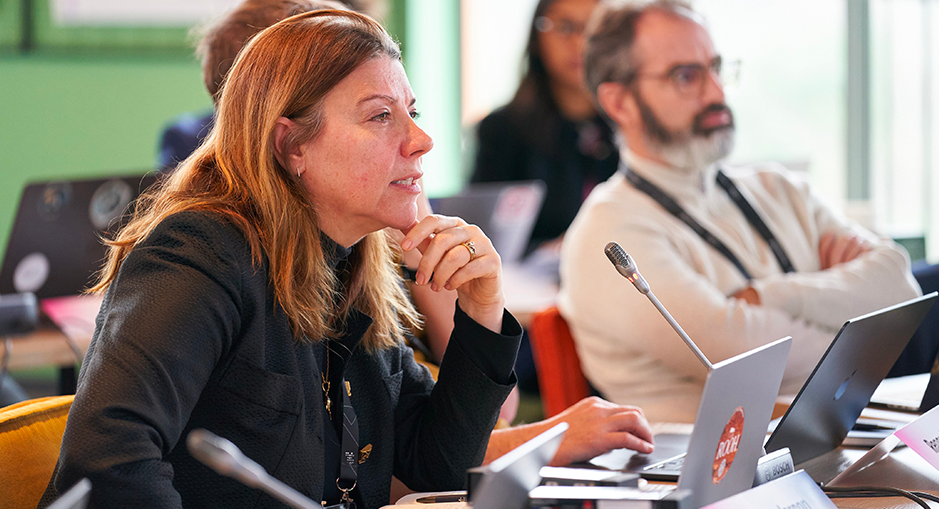
Similarly, investors bring not only financial support but also the same industry-specific knowledge. Renaud Visage, a veteran climate tech investor, highlighted the value of the CDL Climate program: “I’ve seen firsthand how CDL accelerates startup growth. The structured mentorship and access to investors create an environment where real business happens. I’ve seen close up just how connections are being made to help startups emerge through the program.” Visage has been investing in some of these nascent companies, like Sirona Technologies, which uses engineering technology to remove CO² from the atmosphere and restore it to the Earth.
Why In-Person Matters
The daylong gathering in Nanterre was enhanced by these first in-person exchanges, changing the dynamics between the players. Maximilian von Düring, an entrepreneur-turned-mentor, described the energy in the meeting: “CDL is a no-nonsense program. The in-person format brings out a raw honesty that’s invaluable. Founders get direct feedback, and you can sense their drive in a way that’s just not possible over a screen.”
This view was echoed by Eden Harrison, co-founder of Carbon Cell, a startup working on carbon-negative biomaterials: “We had tough but fair feedback, and that’s what we needed. There’s a momentum to these discussions that pushes you to sharpen your pitch and focus on what really matters.”
For Magali Anderson, the learning curve for the startups has been rapid and steep: “I look for three elements in the progression of these companies,” said the veteran mentor. “Firstly, they have to reflect a strong team cohesion. Then, there’s the notion of being ‘coachable’. They have to be receptive to advice and criticism, which we always share in a constructive spirit. Finally, startuppers must have a product which is in some way unique. In a very competitive landscape, what is their value proposition? We want to understand their potential and try to verify that it’s already been well harnessed.”
The Future of CDL Climate
Such perspectives were apparent throughout the day of exchange. For Carbon Cell’s CTO, Eden Harrison, the recommendations made were both constructive and intense: “The objectives set at the previous session pretty much governed our workflow over these past eight weeks,” he admitted. “But it’s helped us grow as a company. You have to remember there are only three of us in the company. Today, the objectives they’ve set for us are, well, even harder. But that seems to be the nature of the program: setting increasingly stringent targets.” The recommendations for his startup included developing a go-to-market strategy for the next 18 months, measuring and improving team productivity through OKR settings at the individual level, and many more. A relatively new vocabulary for the scientists behind this venture.
Qarbotech uses highly refined technology designed to enhance photosynthesis using biocompatible compounds from agricultural waste. This boosts crop productivity by up to 60% and helps improve plants’ ability to capture sunlight and absorb more C0². But despite the originality and importance of their scientific work, admitted that it would come to nought without some entrepreneurial know-how: “Science and management have really different sets of perspectives that we need to acquire. That’s the world we’re going into. At CDL, it’s high-end, with very powerful investment people working in this space. Being guided by experienced professionals is demanding but super beneficial. Our mentors these past eight weeks have been amazing.”
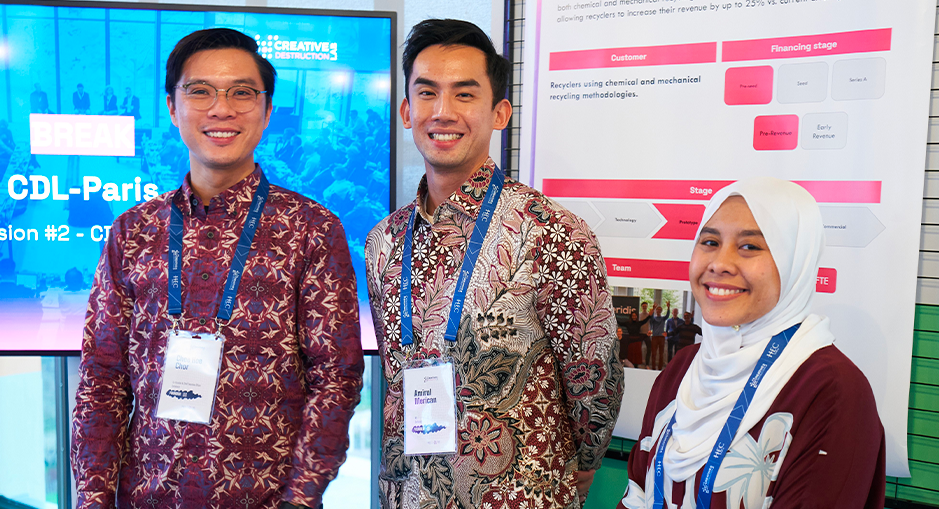
One of the startup companies in the CDL Climate stream.
No Sugar Coating at CDL
The intensity of the CDL program is exactly what drew Maximilian von Düring to participate. His youthful looks belie his long entrepreneurial experience, yet he remembered being in the same shoes as the CDL startuppers present as if it were yesterday. “I cofounded a company called AISight barely a decade ago and went through the startup life cycle quite quickly,” he said modestly. “It’s an AI and IT company that focused on predictive maintenance. We were measuring vibration to forecast machine failure.” So, what happened to AISight? “Oh, we exited the company successfully to a Swiss sensor manufacturer in 2021. And, since then, I’ve been a business angel investing in around 10 companies, mainly in climate, deep tech, and AI space. That’s why I’m here at CDL.”
Düring elaborated: “What I love about the program is that its no-bullshit approach; It cuts through the superficialities, there’s no sugar coating, we give and hear very direct feedback.” On this occasion, the entrepreneur was particularly drawn to the Yama and Graphec companies. “They both have very solid teams. And the latter has great traction solving one of the world’s most urgent problems, chemical pollution.”
With 15 startups moving forward, the CDL Climate program continues to serve as a launchpad for groundbreaking innovations in sustainability. This second session underscored the increasing sophistication of the French climate tech ecosystem, benefiting not just from young scientific talents but also from a global network of investors, business experts, and students, all willing to engage with startups at critical early stages. The Director of HEC Paris Deep Tech Center, Aymeric Penven, who has been present pretty much from the start of the school’s engagement with the CDL has underlined the unique nature of the program’s approach: “Our job is to apply a process-minded, macroeconomic approach to expand the problem space for these science-based solutions beyond first- and second-use applications,” he told P&Q in 2023. Little if anything has changed since then, underlining another point he made: “We see which doors should stay open, which doors should close, and which doors do we have to experiment with to find the best use case and business model. It’s kind of starting from the opposite end. That’s why we cannot support deep tech startups in the same fashion as we would for a traditional incubator-born company.”
CDL Climate continues into 2025 with a final and fourth session in Marseille on April 23-25. It will share its concluding sessions with the other HEC streams in a sort of mini-super session at Tangram, CMA-CGM Group's new center of excellence, focusing on the future of sustainable transport and logistics. The program’s unique model of structured mentorship, academic rigor, and entrepreneurial dynamism is part of a larger picture aimed at cementing France’s position as a leader in climate innovation. The growing collaboration between startups, business leaders, and HEC Paris students is not only accelerating the development of new technologies but also fostering a generation of entrepreneurs equipped to tackle the world’s most pressing environmental challenges.