
Business & Human Rights: HEC Paris and Schneider Electric Pioneer a New Research Clinic
HEC Paris and Schneider Electric have successfully completed a pioneering pilot research clinic involving six students from the MSc Sustainability and Social Innovation, paving the way for new forms of collaboration between business, academia, and future leaders.
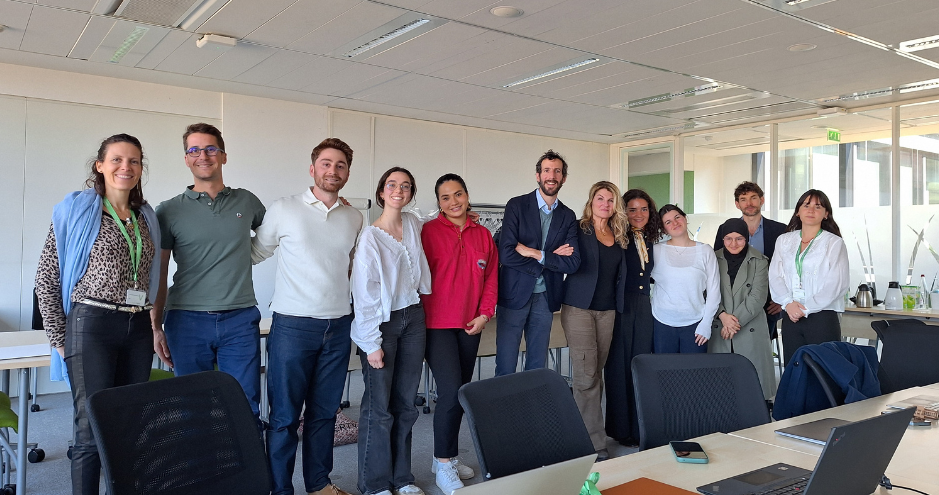
In the 2024-2025 academic year, HEC Paris launched its first Business & Human Rights Research Clinic, in collaboration with the multinational energy leader Schneider Electric. Led by the Sustainability & Organizations (S&O) Institute, the clinic was designed by a pedagogical team composed of Charles Autheman, HEC Paris Lecturer; Brian Hill, HEC Paris and CNRS Professor and Academic Director of the Inclusive Economy Center; and Maureen Sigliano, Executive Director of the Impact Company Lab. The project benefited 6 students from the HEC Master in Sutainability and Social Innovation who participated in this transformative educational experience.
This innovative clinical program reflects HEC Paris’ commitment to experiential learning in sustainability and social innovation, by immersing students in the real-world challenges businesses face when engaging with complex human rights issues.
Clinical Education with a Focus on Business and Human Rights
Clinical education is a form of practical teaching where students are immersed in concrete challenges presented by external stakeholders. Medical students have long been familiar with this aspect of their training and, more recently, law students have been doing casework on behalf of different interest groups. At HEC, interest in clinical education started in 2014, when HEC law professor Alberto Alemanno launched the EU Public Interest Clinic for students enrolled in various legal programs.
This new clinical program introduced key innovations. Firstly, it focused on business and human rights (#BHR), inviting participants to scrutinize complex interactions between business operations and the protection of human rights, notably within global value chains. Before embarking on their fieldwork, students followed a dedicated course on #BHR to familiarize themselves with the relevant frameworks and deepen their understanding of these multifaceted challenges.
Bridging the Gap Between Theory and Practice
According to Charles Autheman, who teaches the Business and Human Rights course, the clinic addressed a growing interest among students eager to engage with human rights and sustainability beyond theoretical studies: “In the past, some students following the #BHR course had expressed frustration when studying these topics exclusively from a theoretical perspective. Combining teaching in the classroom with concrete applications in the business world is the ideal formula to foster greater student interest and engagement.”
In addition to bridging the gap between theory and practice, the clinic offered students the opportunity to carry out problem-driven empirical research in response to questions raised by Schneider Electric. The students conducted an online behavioural experiment on consumer attitudes towards products with varying human rights credentials. Professor Brian Hill contributed his expertise in consumer attitudes related to inequality and fairness to guide the research.
Hill emphasized the unique value of embedding research in such a partnership:
“Some business problems throw up challenges for which the relevant scientific and management knowledge doesn’t exist. Bringing the research angle was a win-win for all sides: it gave a new perspective to the firm, it allowed the students to enrich their skill set and their critical thinking, and it provided an interesting scientific question for academics and researchers.”
This multidimensional learning experience gave students direct exposure to the complexities businesses face when addressing human rights across diverse regulatory and cultural environments.
A Student’s Transformative Experience
For participating student Albane Marion, the clinic was a pivotal moment in her academic and professional journey: “This clinic gave me real insight into how businesses can drive progress on human rights, well beyond what you read in textbooks. Working with Schneider Electric and seeing our analysis translate into practical solutions convinced me that I want to be part of this field. The project was challenging, but collaborating with passionate teammates and experts made me look forward to contributing to business and human rights in my career.”
Her experience also revealed the demanding realities of this field, from navigating fragmented supply chains to dealing with incremental progress on systemic issues.
A Corporate Perspective on Collaborative Research
The clinic started in October 2024 and concluded with a final workshop in mid-April 2025. Over this seven-month period, students and faculty collaborated closely with Schneider Electric’s human rights team.
Reflecting on the collaboration, Schneider Electric’s Vice President of Human Rights, Frédéric Pinglot, shared: “From our perspective, the clinic was a very interesting experience. It helped our team advance on one of our sustainability-related commitments and bring together internal and external perspectives on a complex human rights topic.”
Maureen Sigliano also highlighted the strategic value of this approach: “The Clinic allowed us to explore complex but critical Human Rights questions in very pragmatic ways. We harnessed diverse expertises and perspectives to build a potential roadmap for moving forward, including the tools required to do so. We now believe that this format is particularly effective to drive transformational collaboration between researchers and business leaders on key multi-disciplinary questions.”
Looking Ahead: Expanding Clinical Education at HEC Paris
The success of this inaugural Business & Human Rights Research Clinic marks an important milestone in HEC Paris' commitment to experiential and impact-driven education in sustainability. By immersing students in real-world challenges alongside a global corporate partner, the clinic exemplifies the potential of academia-business collaboration in addressing critical human rights issues.
Building on this experience, the S&O Institute aims to expand and diversify such clinical programs, engaging a broader range of students, industries, and pressing global topics. These initiatives not only enrich the learning experience at HEC Paris but also contribute to shaping the next generation of responsible leaders, equipped to drive positive change at the intersection of business, sustainability, and human rights.
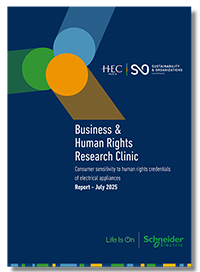
| Business & Human Rights Research Clinic
|
About the Inclusive Economy Center