
Where Academic Excellence Meets Industry Transformation – Inside the HEC Paris Master In International Finance
In a world where finance is being reshaped by rapid technological disruption, global uncertainty, and the rise of artificial intelligence, the need for rigorous, forward-looking education has never been greater. At HEC Paris, the Master in International Finance (MIF) has been designed to meet these new challenges head-on. Combining academic excellence, cutting-edge innovation, and deep connections with leading financial practitioners, the program equips students with the expertise and adaptability required to thrive in a rapidly evolving sector.
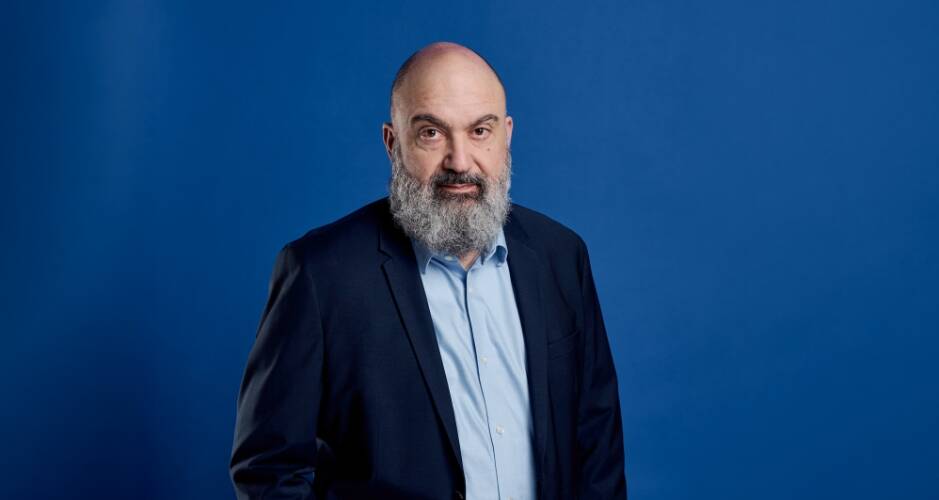
To learn more about what makes the program truly distinctive, how it has evolved in recent years, and how it prepares graduates for top careers across global financial hubs, we reached out to Professor Evren Örs, the Academic Director of this world-leading program.
What makes the Master in International Finance (MIF) unique?
We believe that the MIF program stands out thanks to its three core strengths - firstly the rigor of its academic foundations taught by the research faculty of the Finance Dept of HEC Paris, secondly the integration of state-of-the-art AI and machine-learning tools into the curriculum, and thirdly a strong practitioner perspective shared through more than 30 elective courses that are mostly taught by industry professionals.
I believe that a deep understanding of the theoretical foundations of financial economics and the economic intuition that the academics provide is essential for long-term professional success. All the more so in the age of disruptive technologies, such as Large Language Models - before making use of them, you need to understand the weaknesses of the valuation, portfolio allocation, and asset pricing models prompted on LLMs.
In what ways has the program evolved over the last few years? Why have you made these changes?
The program’s structure has been streamlined to make it more coherent across degrees. This simplification enabled the standardization of ECTS requirements across the Major in International Finance that is offered within the Master in Management (Grande École), the Master in International Finance, and the X-HEC Double Degree in Data & Finance program that HEC offers with Ecole Polytechnique, the top French engineering school. All three programs now share the same core curriculum (offered in two tracks depending on whether the students know enough accounting and finance or not) and specializations (in capital markets and corporate finance), differing only in the number of elective courses. The MIF additionally includes at least one AI-focused workshop and an HEC Paris certificate.
Within this framework, the standardization of the two foundational tracks (the Accelerated Track for non-business students and the Business Track for students with a management degree), the two specializations (Capital Markets and Corporate Finance), and the organization of approximately half of the electives around the chosen specialization have strengthened the course offering.
In parallel, the mandatory research component has become more demanding given the requirements of the accreditation by the French Ministry of Higher Education and Research. The research papers, which are written by pairs of students, must contain not only a relevant research question, but also must involve data collection and analysis, under the supervision of HEC Paris’s world-renowned research faculty in finance. As such, the program both solidifies the focus of our students’ studies in line with their professional aspirations and increases flexibility in elective choice. The research paper gives our students an opportunity to generate an original work that allows them to examine questions and dilemmas that are at the heart of the financial industry.
How important a role do AI and Machine Learning now play in the program?
AI/ML-based tools are transforming many sectors, including the financial services industry in a very broad sense. Whenever possible, many repetitive tasks that can be standardized have started to be transferred to tools based on these “disruptive technologies”. In this context, in my opinion, it’s very important for our students to understand the basic principles behind these new tools, understand how they can be applied in specific areas of finance (forecasting, compliance related reports, financial analysis, etc.). Students should be able to engage in constructive discussions with those who will be developing these tools on the IT side. They need to have a very good grasp of the technical aspects, as well as the finance aspects. As AI and ML tools gain in power, they are expected to replace some of the junior positions. It is therefore crucial that MIF students have a solid understanding of the AI and ML tools.
All MIF students are now required to have a basic understanding of Python programming (an online course is provided if they lack such a background), and to follow a mandatory empirical methods course for capital markets or corporate finance depending on whether they specialize on the former or the latter, and take at least one elective course on AI/ML and finance among the 8 on offer.
What are the major transformations that are reshaping the finance industry? How are they impacting the skills that young professionals now need?
While the core function of the finance industry, to provide capital to the real economy, investment opportunities to households and financial intermediaries doesn’t change, the industry will continue to evolve in the face of many challenges and opportunities brought on by changes in the global economy and technology.
Within this framework, MIF graduates develop a deep knowledge of the theories and models of finance, understand the reasons why financial regulation exists, and acquire a solid understanding of the modern tools provided by disruptive technologies (including GenAI, LLMs, and ML). For the latter dimension, the program provides an offer tailored to the students’ backgrounds and career objectives. In the AI-era, a decisive advantage lies in combining deep-level field-specific expertise with broad, cross-disciplinary understanding of new technologies, which we believe MIF combines into a value proposition for the students who will need to navigate a professional environment that is rapidly changing.
What enables HEC Paris to both understand and adapt to these changes?
We draw on the extensive alumni network of the MIF program to get their input on the latest industry trends. During the London Study Trip, I make an effort to talk with the senior MIF alumni who have a broad overview of the changes that are taking in place in the City. A similar effort is also made with our contacts in Paris.
Another highly useful source is the HEC Paris UK House in London, whose senior staff are ex-senior bankers - the latest trends and changes that they observe in the UK’s financial services industry is an invaluable resource for the MIF program to keep abreast of the developments on the ground.
How does the MIF prepare students for the challenges that await them in the job market?
We are extremely lucky that recent MIF alumni wholeheartedly agree to serve as mentors for the incoming students. We also draw on the rich set of seminars, tutoring, and workshops offered by HEC Talents, our school’s career center. We organize a learning expedition called the London Study Trip during which the students visit financial companies that range from bulge bracket banks to small boutiques. We are delighted that, thanks to the active involvement of HEC’s UK House, we are able to offer to every student a choice of seven visits among the 60+ on offer during four days.
What career opportunities does the MIF open up?
As a top-ranked program, the MIF offers various career opportunities in large “Bulge Bracket”)banks and small “boutique” financial intermediaries in financial centers across the world (London, Paris, Milan, Madrid, Luxembourg, Zurich, New York, Hong Kong, Shanghai, Singapore, etc.) through its two specialization areas.
The Capital Markets Specialization is for those interested in Sales & Trading, Asset Management, Wealth Management, Financial Data Analyst, “Strat” and “Quant” positions.
The Corporate Finance Specialization is for jobs in Mergers and acquisitions (M&A), Private Equity (PE), Venture Capital (VC), Equity Research, Equity Capital Markets, Debt Capital Markets, various consultancy positions (e.g., M&A Advisory), etc.
What is your role as Academic Director? What are the challenges and what gives you the most satisfaction?
The role of an Academic Director at HEC Paris is inherently multi-dimensional. It involves understanding how the industry changes, defining the academic content and the level at which it is delivered, recruiting faculty and external lecturers, overseeing student selection, and ensuring the smooth day-to-day functioning of the program in close coordination with HEC Paris staff.
Together with my colleague, Dr. Alina Roşu, we work on a daily basis to ensure coherence and smooth evolution across the courses offered within the different tracks and specializations. We devote particular attention to the articulation of course content during various stages of the master’s degree: we want to ensure that classes are well aligned, progressively built toward more advanced topics, and minimize unnecessary overlap. Achieving this often requires adjusting course content, discontinuing certain offerings, and launching new courses, which in turn involves identifying and recruiting lecturers with the appropriate expertise. We also constantly look for and assess new pedagogical tools.
The ultimate measure of success is achieved when faculty and lecturers value the intellectual engagement of the students they teach, when recruiting firms consistently assess our graduates favorably in comparison with those from peer programs, and when, over time, alumni recognize the lasting relevance and usefulness of the academic training they received.