
Philippe Aghion Celebrated at HEC Paris for Rethinking Growth
The 2025 Nobel laureate received an HEC Paris honorary doctorate for research that placed innovation, institutions and creative destruction at the heart of economic growth.
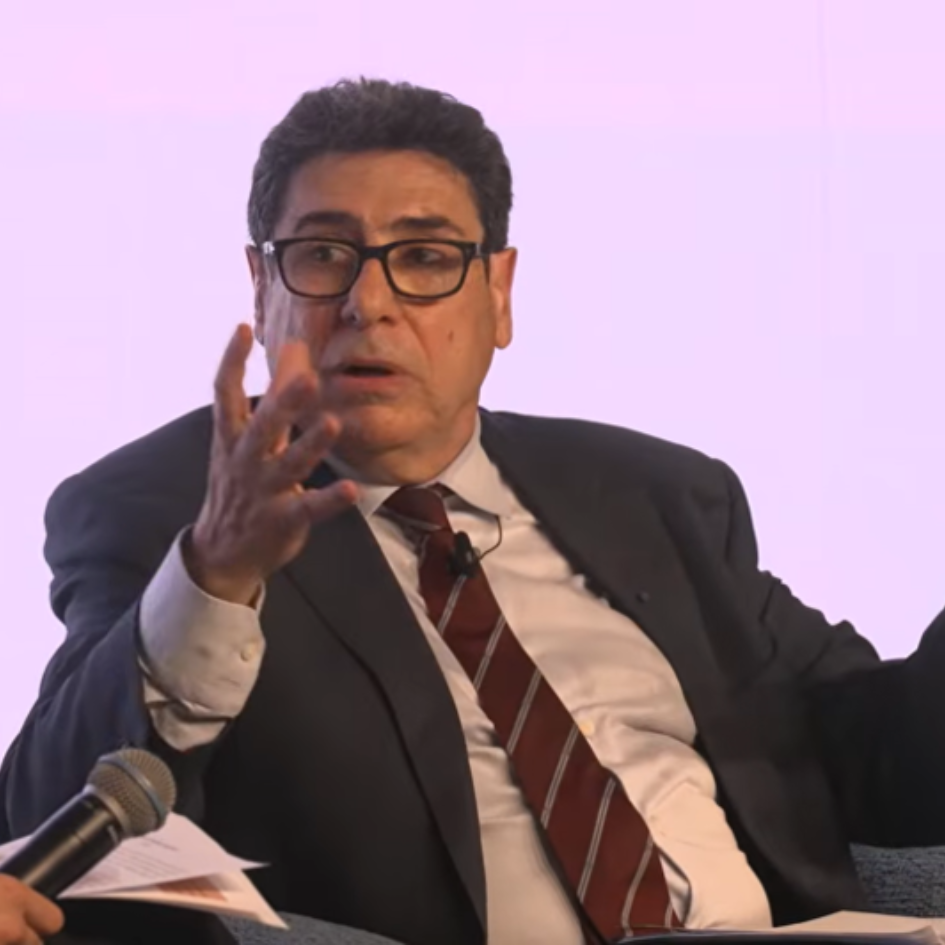
Nearly four decades ago, Philippe Aghion and Peter Howitt built a model in three months. Fast forward 38 years, and the French-Canadian duo were to receive economics’ highest distinction for his efforts. In front of a packed HEC Hall d’Honneur on September 14, Aghion recalled that when the pair derived the equations behind their theory of innovation-led growth, he told Howitt: “We are on for the Nobel Prize.” In 2025, the prediction came true. The Royal Swedish Academy of Sciences awarded Aghion and Howitt half of the Sveriges Riksbank Prize in Economic Sciences for their theory of sustained growth through creative destruction; Joel Mokyr received the other half for identifying the conditions that allow technological progress to become self-sustaining.
In rewarding Aghion an honorary doctorate, Andrea Masini, Dean of Faculty and Research, insisted the distinction recognized more than a landmark contribution to economics. It honored a scholar able to show how institutions and public policy can foster innovation, while asking who benefits from disruption and who bears its costs. “Academic excellence is not an end in itself,” Masini said at the ceremony. It is a means of contributing to “shared prosperity” by supporting innovation, growth and better policy.
Opening the black box of growth
Aghion and Howitt’s breakthrough was to turn Joseph Schumpeter’s idea of creative destruction into a rigorous theory of long-run growth. In their model, entrepreneurs invest in research because a better product or process can displace an incumbent and capture its profits. That private contest also advances the technological frontier. Growth is therefore generated not simply by accumulating more capital, but by successive waves of innovation in which new firms and ideas replace old ones.
The model also made growth policy more concrete. Competition, education, research funding, finance and social protection all shape whether new ideas emerge, scale and spread. At HEC Paris, Aghion stressed the tension at the center of the process. Innovators, he said, need the prospect of reward, yet successful firms must not be allowed to use their power to block the next generation. Europe, he argued, needs both stronger competition and “competition-friendly industrial policy,” including greater computing capacity, data access and long-term support for research.
That intellectual lineage was given a personal touch by Antonin Bergeaud, HEC Associate Professor of Economics and a former doctoral student of Aghion. At the ceremony, Bergeaud explained how the model connected firms’ incentives to innovate with economy-wide growth. Aghion returned the tribute. Once a scholar has won a major prize, he said, the real hope is to see a student win one. If he had to bet on a former student “in the race,” he added, he would “undoubtedly bet on Antonin.”
A theory at the center of political debate
Aghion’s influence has never meant unanimity. He helped shape Emmanuel Macron’s original economic program and defended policies intended to stimulate entrepreneurship, labor-market mobility and investment. Critics on the left saw this agenda, including his opposition to broad taxes on entrepreneurial wealth, as too favorable to capital and too confident that growth will translate into shared gains. Critics on the right and far right have cast him as part of a policy establishment associated with France’s high deficits.
Yet the label of big-business conservative fits his work poorly. Aghion’s framework is hostile to entrenched corporate power: incumbents can protect their rents by buying competitors, controlling essential inputs or lobbying against entry. His answer is assertive competition policy, investment in education and research, and a social state strong enough to protect people rather than particular jobs. Nor has his proximity to Macron prevented disagreement. At HEC Paris, he criticized the rigid handling of France’s 2023 pension reform, called for greater flexibility and attention to arduous work, and insisted that innovation must be directed toward inclusion and a greener economy.
The honorary doctorate therefore celebrated an economist whose central argument is both optimistic and demanding. Ideas need not run out, Aghion told the audience. But turning them into prosperity requires institutions that open markets to challengers, finance risk, educate widely and cushion disruption. As Masini put it, Aghion’s academic life has linked the study of growth to the practical question of how policy can make its benefits more broadly shared.