 Sustainability & Society

What does the green transition look like inside a cement plant, an aluminium smelter or a steelworks? And what happens when the promise of lower emissions meets the pressures of cost, quality and competition?
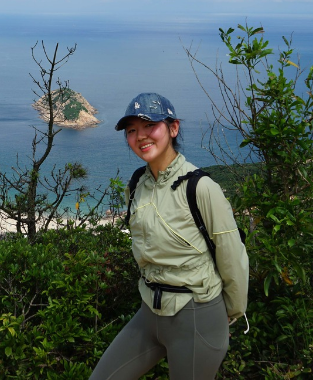
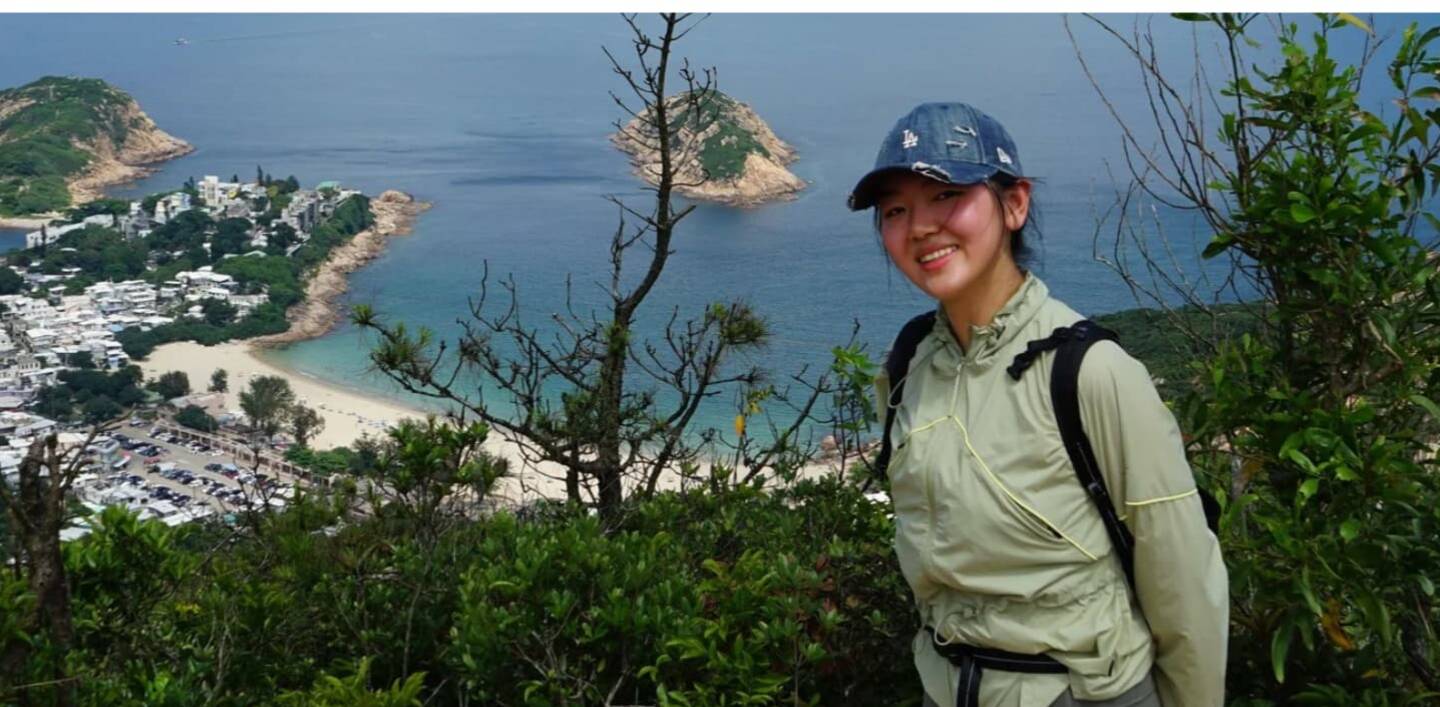
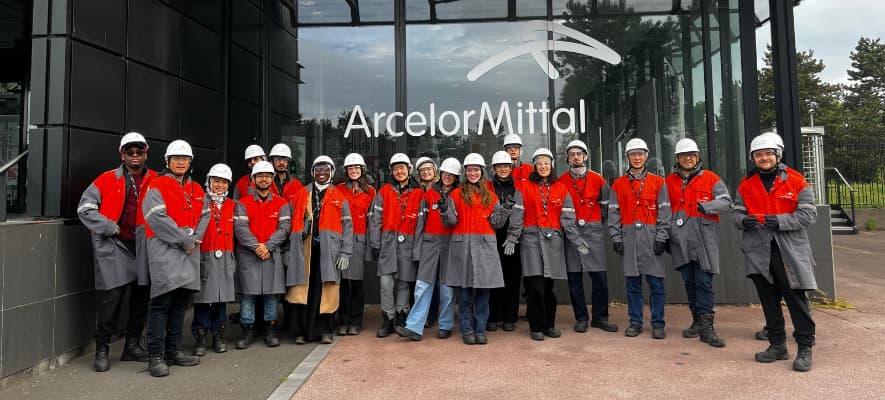
For Jiajin Lexi Li, a learning expedition to Dunkerque as part of HEC Paris’ Climate and Energy Transition Certificate brought these questions into focus. Visits to Ecocem, Aluminium Dunkerque and ArcelorMittal, alongside discussions with local actors, revealed the practical challenges behind industrial decarbonization.
Why visit factories in Dunkerque to study the climate transition?
Dunkerque offers a firsthand view of one of the climate transition’s toughest challenges: how to cut emissions while maintaining industrial competitiveness. One of France’s strategic industrial and energy hubs, its industrial basin has been estimated to account for around one-fifth of the country’s industrial CO₂ emissions. This concentration makes it a particularly valuable place to explore both the urgency of decarbonization and the practical challenges of delivering it.
The three companies visited illustrate different pathways towards lower-carbon production. ArcelorMittal, Europe’s largest steel producer and one of the largest worldwide, and Aluminium Dunkerque, the European Union’s largest aluminium smelter, are working to transform established, energy-intensive manufacturing processes. Ecocem develops low-carbon cement solutions, including materials that turn steelmaking by-products into resources for construction—a practical example of the circular economy. Together, these sites provide a window into the technologies, investments and partnerships needed to reshape heavy industry.
From Theory to Reality: Rethinking Sustainability
With a background in construction and infrastructure, Li arrived with a particular interest in low-carbon materials and left with a broader understanding of what makes transformation possible. The following reflections explore how this encounter with industrial reality challenged familiar assumptions about sustainable business.
Here's how she describes that experience and how it changed her perspective.

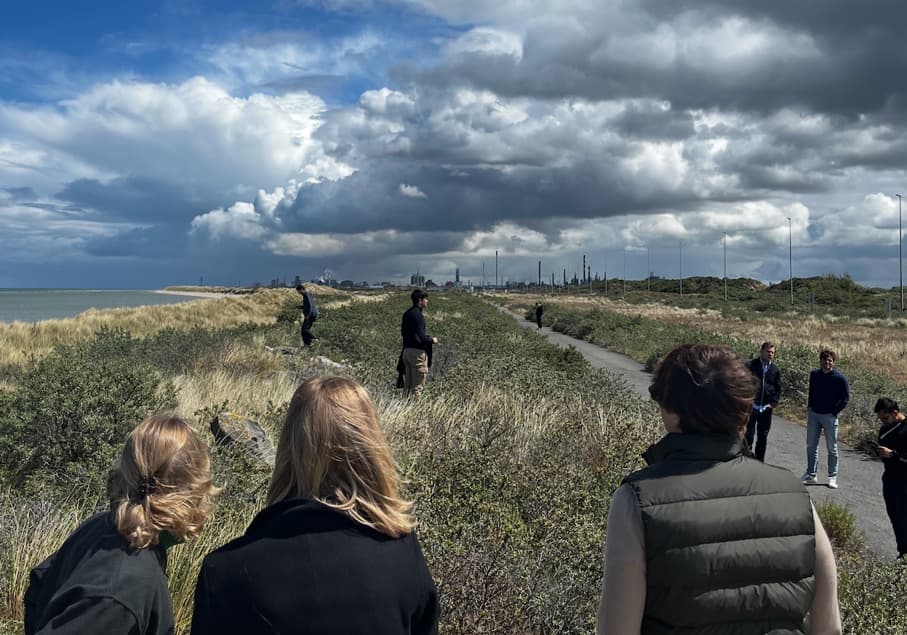
Before the learning expedition to Dunkerque, I had a relatively abstract understanding of industrial sustainability. Like many business students, I often encountered the transition through concepts such as decarbonization, ESG reporting, green finance, circular economy or energy transition. These concepts are useful, but they can also make sustainability sound cleaner and more linear than it actually is. Dunkerque changed this perception for me.
What surprised me most was not simply that companies were trying to reduce emissions. I expected that. What surprised me was how concrete, physical and commercially difficult the transition is. In Dunkerque, sustainability was not presented as a moral label or a branding exercise. It appeared as a set of operational constraints: energy supply, production processes, product quality, logistics, customer trust, capital expenditure, public support and territorial coordination.
"The expedition made me realize that the central question is not only 'Can industry become greener?' but also 'Who will pay for it, who will trust it, and how can a whole territory absorb the risk of transformation?"
Low-carbon products still need to prove themselves
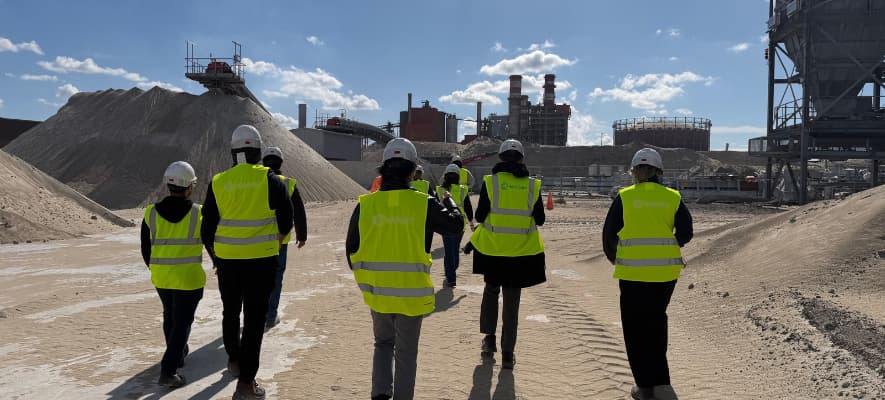
The first major surprise came from Ecocem. Coming from a construction and infrastructure background, I was particularly interested in the low-carbon cement discussion. Cement is one of the most carbon-intensive materials in the built environment, so a lower-carbon alternative should be attractive. However, the reality described by the company was more complicated.
In construction, a lower-carbon material is not automatically perceived as better. In fact, it may first be perceived as riskier. A client, engineer or contractor may not be willing to pay more for a product simply because it is greener. Even worse, the word 'low-carbon' may create suspicion: is the material as strong, as durable, as reliable and as easy to use as conventional cement? For Ecocem, one of the most important commercial challenges is therefore not only to show that its product reduces emissions, but to prove that it performs like the traditional material that the market already knows.
This challenged one of my previous assumptions about green demand. I used to think that if a product had a better environmental profile, the market would progressively reward it. In reality, especially in construction, sustainability has to pass through a conservative technical ecosystem. Engineers, contractors, developers, public clients and procurement teams all have different incentives. No one wants to take responsibility for a material failure. This means that low-carbon innovation must first fight for legitimacy before it can fight for market share.
What I found interesting in Ecocem's approach was that the company seemed to understand this very well. Its commercial strategy is not only about selling cement through a normal procurement channel. It also involves technical support, formulation assistance, training, and discussions with engineers and project owners. In other words, it tries to influence the project upstream, where specifications and technical choices are made. This is a more difficult route than simply competing on price, but it may also be more powerful. It shows that in some sectors, sustainable business transformation is not only about having a better product. It is about changing the decision-making chain around that product.
Decarbonization is a transition made of thousands of micro-decisions
Another surprise came from Aluminium Dunkerque and ArcelorMittal. I had imagined industrial decarbonization as something driven mainly by large technological shifts: hydrogen, electrification, carbon capture, renewable energy or new production routes. These technologies are of course important. But what struck me on site was how much of the transition also depends on very small operational improvements.
At Aluminium Dunkerque, the production process is heavy, energy-intensive and highly technical. Yet many of the environmental improvements seemed to come from detailed process control: energy management, emissions monitoring, water consumption, waste treatment, recycling, and the continuous optimisation of industrial operations. The same impression appeared at ArcelorMittal. Steelmaking is physically massive: raw materials, blast furnaces, slabs, coils, heat, noise and logistics. But inside this massive system, performance depends increasingly on precision.
One thing that genuinely surprised me was the role of digital tools and algorithmic control in industrial operations. I tend to associate AI and advanced analytics with software, consumer applications or financial modelling. In Dunkerque, they appeared in a different form: not as a flashy interface, but as a quiet layer of industrial optimisation. The idea that small variations in temperature, timing, quality control or energy use could be monitored and adjusted through internal models made me see AI differently. It is not only a technology for white-collar productivity. It can also become part of the physical transition of heavy industry.
This changed my understanding of decarbonization. The transition is not always spectacular. Sometimes it is made of thousands of micro-decisions inside a plant. A small efficiency gain, a better process control, a more stable production parameter or a reduction in waste may look modest from the outside, but at industrial scale it can become significant. Sustainability, in this sense, is very close to operational excellence under carbon constraints.
Heavy Industry decarbonization Needs Territorial Coordination
The most distinctive aspect of Dunkerque, however, was not any single company. It was the territory itself. The expedition made me understand Dunkerque less as a city with factories and more as an industrial platform.
The port, the LNG terminal, the steel and aluminium plants, the cement producer, energy infrastructure, future battery projects, logistics assets and public institutions are not isolated pieces. They form a system. This is what makes the region interesting. ts transition rely on the efforts of different actors, can coordinate around energy, land, logistics, labour, infrastructure and investment timing.
This territorial dimension is important because heavy industry cannot decarbonise alone. A company may want to electrify, but it needs access to sufficient low-carbon power. It may want to change its production route, but it needs infrastructure, permitting and capital. It may want to sell low-carbon products, but it needs customers who are ready to specify and purchase them. It may want to attract new industries, such as batteries, but it needs land, skills, transport links and public credibility.
This is where EcosystemeD and the local innovation institutions seemed important. Their role is not simply promotional. They help create a narrative and a coordination structure around the territory. They connect industrial projects, public policy, investment and infrastructure planning. I was impressed by this because it showed a more practical version of sustainability governance. The local authority is not only regulating from outside. It is actively trying to organize the conditions under which industrial transition can happen.
At the same time, this also raises a critical question. If the transition depends heavily on public coordination, subsidies and policy support, how can it become commercially self-sustaining over time? During the discussion with the innovation team, I was interested in whether the territory could go beyond classic public support and develop more financial tools, such as local industrial funds, shared infrastructure vehicles, or public-private investment mechanisms. In other regions, especially in some Asian industrial development models, local governments sometimes use investment funds to take part in industrial upgrading and capture part of the value created. Dunkerque already appears strong in coordination, but the next question may be how to convert that coordination into durable financial mechanisms.
Sustainability is not a clean story
What I take away from Dunkerque is a more realistic understanding of sustainable business. The transition is not a clean story in which green technologies naturally replace old industries. It is a messy process full of trade-offs.
Low-carbon aluminium may be strategically important for Europe, but it still faces cost competition from other regions. Low-carbon cement may reduce emissions, but it still needs to convince a risk-averse construction market. Steel producers may invest in cleaner processes, but they still operate in a global commodity market with intense price pressure. LNG infrastructure may support energy security, but it also reminds us that the transition still depends on fossil energy systems during the intermediate phase. Battery projects may symbolize the future, but they also depend on geopolitics, raw materials, demand certainty and industrial financing.
This complexity makes the transition more meaningful, more serious. Dunkerque impressed me because it did not feel like a polished sustainability showcase detached from industrial reality. It felt like a territory trying to transform while still carrying the weight of its industrial past and present. That is much more difficult, but also much more relevant.
For me, the expedition shifted sustainability from an abstract business topic to an industrial coordination problem. A sustainable business is not only a company with lower emissions or a better ESG report. It is a company that can redesign its operations, convince its customers, finance its transition, work with public actors and remain competitive in a constrained market. At the territorial level, sustainability means building the infrastructure, trust and governance that allow many companies to transform together.
The learning expedition at Dunkerque makes me believe that the industrial transition is possible only if we look directly at its bottlenecks. That was the most valuable lesson of the expedition.
Find out more