


 Geopolitics & Public Affairs
 Strategy & Leadership

- Citizen lobbying offers a new model of democratic participation
- It counters corporate overreach and provides meaningful policy influence
- Digital tools now make lobbying accessible to all citizens
- Participation boosts democratic legitimacy and trust in institutions
- Civic lobbying may be a democratic antidote to rising populism
How Lobbying Became a Civic Necessity
"How to make a better society? Turn all of us citizens into lobbyists." This is the guiding principle of our book, Lobbying for Change: Find Your Voice to Create a Better Society (Iconbooks), which has been presented at the Royal Society of Arts in London, and in cities including New York, Melbourne, Tokyo, São Paulo and across Europe.
Many democratic societies today face a crisis of faith. Citizens increasingly express frustration with their supposedly representative governments, which often appear driven by the interests of powerful individuals, corporations, and well-connected lobbies. Elections have become tightly scripted performances, driven by data and political marketing. It is not surprising, then, that our belief in democracy – and in our own political power – is eroding.
Yet recent history offers hope. From Emmanuel Macron’s victory to the Brexit referendum and the rise of #MeToo, we see a growing public desire for unconventional, assertive, and meaningful civic participation. Research supports this trend. Societies that empower citizens to be vocal and critical tend to govern more effectively. What better way to empower citizens than to invite them to lobby?
Why Citizen Lobbying Works
Most people associate lobbying with Big Tobacco or powerful corporate interests. But lobbying can also be a force for good. In fact, lobbying is not only legitimate – it is essential to a functioning democracy. Historically, organized interests monopolized lobbying. But the same forces that gave rise to direct democracy and online petitions have now opened lobbying to everyday citizens.
The internet has lowered the cost of entry. Today, lobbying is no longer the prerogative of wealthy associations or insiders with political access. This new, bottom-up form of lobbying has already proven effective in Europe and beyond.
Take the case of Max Schrems, the Austrian law student who took on Facebook over privacy violations – and won. At HEC Paris, our students joined the movement to eliminate roaming charges in the EU. Their petition to the European Commission helped tip the balance in a long-standing debate, leading to a historic policy shift. These cases illustrate that citizens who organize, research, and advocate effectively can shape public outcomes.
How to Become a Citizen Lobbyist
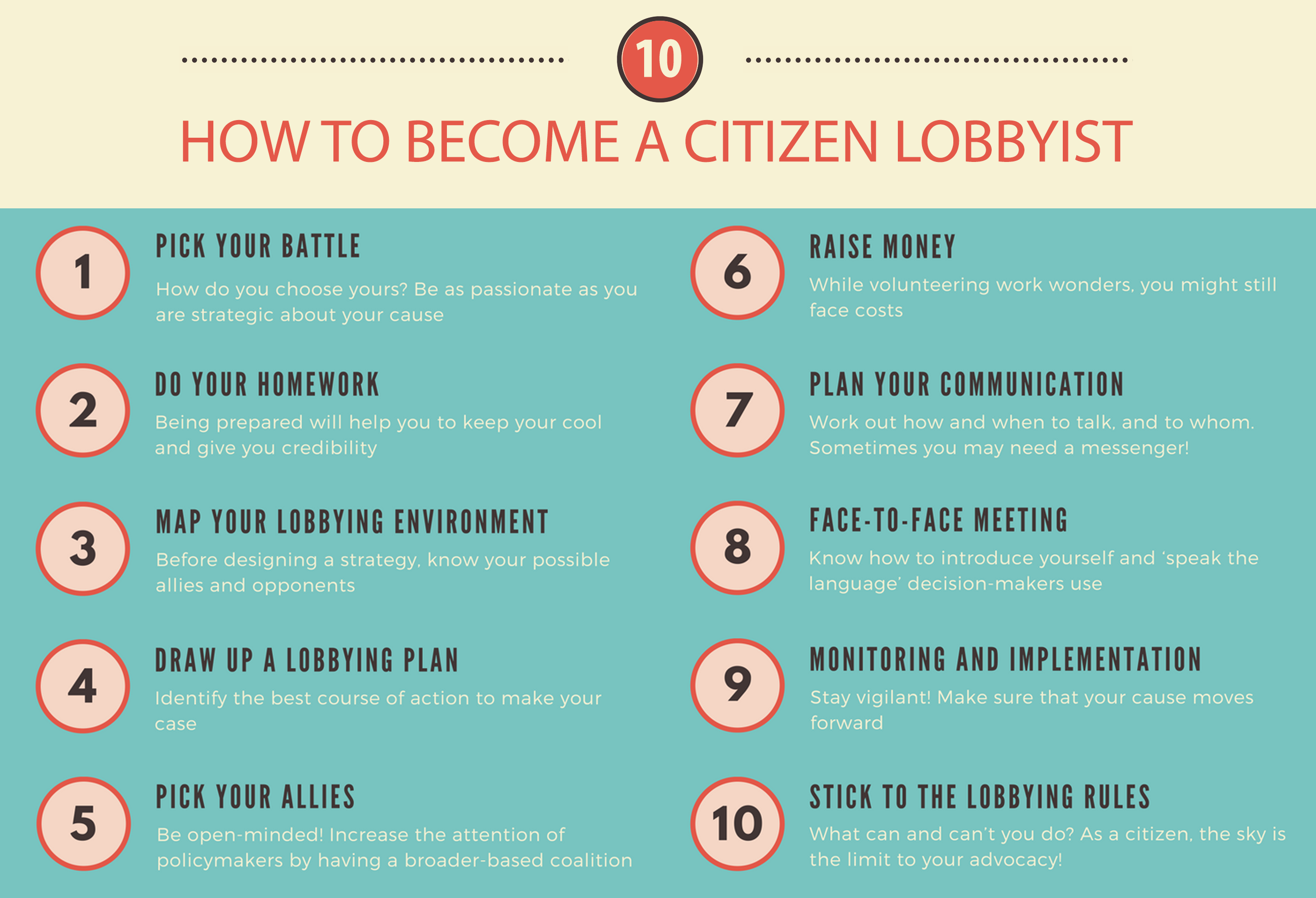
A citizen lobbyist learns and applies the tools of professional advocacy. But unlike professional lobbyists, they promote causes they care deeply about. This is not about voting once every few years, or liking a campaign on social media. It means setting the agenda, identifying decision-makers, filing access to information requests, and responding to proposed legislation with concrete solutions.
Citizen lobbying involves preparing a real advocacy strategy. It is strategic, intentional, and above all, democratic. It transforms passive discontent into actionable influence.
10 steps to become a citizen lobbyist
Why This Approach Matters Now
There are several reasons to promote lobbying as a civic skill. First, lobbying creates a feedback loop between voters and elected representatives. It is one of the few remaining trust-building mechanisms in modern democracies.
Second, it is an equalizer. Citizen lobbying can counterbalance the disproportionate influence of private lobbies and help decision-makers stay connected to public interest. Third, it is pedagogical. The process of lobbying teaches citizens how government works and exposes them to the complexity of policy decisions. This leads to more informed, responsible engagement.
At its core, citizen lobbying is not just about giving everyone an equal voice. It is about offering a credible, legitimate form of participation that complements – not undermines – representative democracy.
What Citizen Lobbying Can Achieve
Citizen lobbying can help address one of the most pressing challenges of our time: populism. Populist movements have flourished in the absence of credible channels for civic engagement. If lobbying by citizens becomes widespread and effective, it could reshape the voter-representative relationship.
It could also breathe new life into fragile civic cultures, making political participation more meaningful on a personal level. As I argue in the book, “We need effective citizen lobbyists – not just likers, followers, or even marchers – more than ever.”
Sources
Based on the article "Lobbying for Change: Find Your Voice to Create a Better Society" by Alberto Alemanno.


 Brands & Behaviors

 Sustainability & Society