
Fahima Di Federico: From the Lab to Business Development — the Masterful Leap of a Passionate Scientist
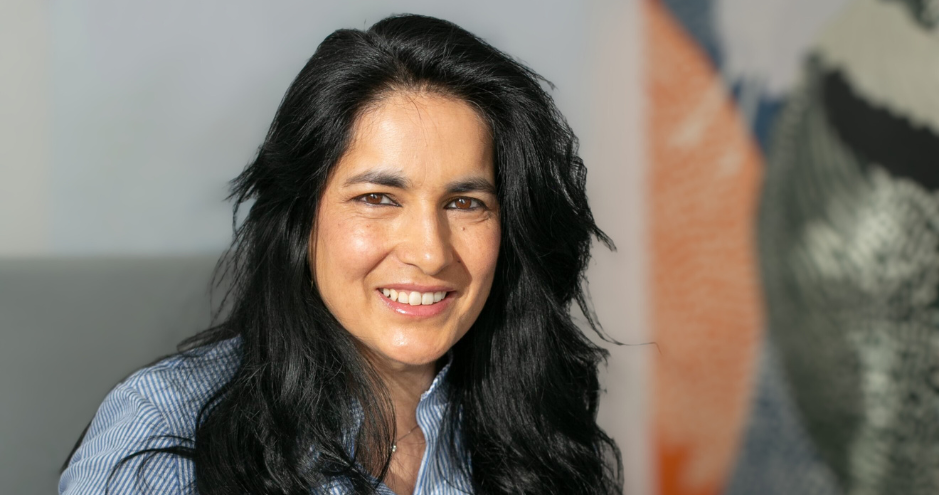
To mark the International Day of Women and Girls in Science, we meet Fahima Di Federico—a molecular biologist whose passion for science took root in childhood and flourished into nearly two decades of research excellence. In 2023, despite an exemplary career, Fahima sensed the initial spark beginning to fade. She made a decisive pivot toward Business Development, a transition she navigated successfully... but not without sacrifice.
When Scientific Passion Is No Longer Enough
It all began in eighth grade, when a teacher posed a riddle about genetics—specifically, about eye color. Fahima became fascinated with biology, and her curiosity swiftly transformed into vocation. After completing her scientific studies with distinction, she joined the CNRS and spent fifteen years at Institut Curie, where she developed a Molecular Biology services platform for physicists, before moving to Institut Pierre-Gilles de Gennes. There, she trained in organ-on-a-chip (OoC) technology—a method of replicating cellular architecture in microfluidic chips to mimic organ tissues. Though the work was humanly fulfilling, her expertise firmly established, and her passion still present, Fahima could no longer find that "certain something" that had first drawn her to this path. She recalls:
"I was in a comfortable situation: the teams knew me, I no longer needed to prove myself, everything was going very well—but I felt I needed to reshuffle the deck and start over."
Aware of this sense of "cerebral dormancy," as she calls it, an opportunity arose within the NABI unit (Nanomedicine, Extracellular Biology, Integratome, and Health Innovations) at Université Paris Cité—a sign, perhaps: "What if the moment has come to put everything back on the table?" she thought. At that time, NABI was developing IVETh, a platform since designated an "Integrator in biotherapy and bioproduction" under the France 2030 program—the first dedicated to extracellular vesicles. It serves as a bridge between research and industry.
More precisely, IVETh brings together researchers and cutting-edge equipment to accelerate the transformation of new nanomedicine technologies into treatments and diagnostic tools for patient benefit. The platform positions itself as a link among clinicians, academics, and industry partners to accelerate and de-risk technology maturation, facilitate market access, and maximize impact for patients.
Though hesitant to leave her comfort zone, Fahima became its Head of Business Development. « I sensed there was potential in this role, without really identifying what it could offer me. But at a certain point, I told myself, 'all right, go ahead, take the risk! », she remembers.
Upon joining NABI, Fahima first familiarized herself with new research domains and techniques before assuming commercial responsibility for IVETh, the platform dedicated to extracellular vesicles. In this position, she came to appreciate the magnitude of value created by academic research—and the potential loss when that value never reaches the industrial world. She felt it deeply: developing this platform and becoming the connecting link between academic research and industry was what she wanted to do. Her ambition was clear: to accelerate technological maturation—from research laboratory to patient bedside—while fostering knowledge creation and its concrete impact on society.
But a significant obstacle emerged: how could she assume a Business Development role after eighteen years of scientific career without mastering its codes, language, and tools? Doubt crept in. Fahima feared she lacked structure and, above all, credibility. "I was accomplishing certain missions instinctively, but things weren't formalized. I needed to enhance my skills and feel legitimate in this new role..." she explains.
For Fahima, the answer became obvious. She had to relearn, structure this career transition, and gain credibility through solid training. It was at HEC Paris Executive Education that she would legitimize this ambition.
Back to "School for Grown-ups": A Life Project
This project of joining IVETh—at the frontier between research, pre-industrialization, and therapeutic innovation—required building an economic model, engaging with industrial partners, and securing partnerships. These were all missions Fahima hoped to fulfill successfully by developing her skills at HEC Paris Executive Education.
Yet she knew: enrolling in a degree program is not a trivial choice—it is a commitment that is both professional and deeply personal. Fahima chose to join the Executive Master in Management - Marketing & Business Development to transform her technical profile into strategic strength, gain credibility with decision-makers, and master the logics of marketing, finance, and contractualization.
A new chapter began—but not without struggle. Gone was the comfort of recent years, replaced by upheaval, apprehension, sacrifice, pressure, exhaustion... For eighteen months, in addition to her HEC training, Fahima faced her new professional challenge at IVETh head-on, with the feeling she had to prove herself, be proactive, perform... all while learning to walk. Stretched thin on all fronts, she refused to give up: "They gave me the opportunity to train for this position—I didn't want to disappoint, so I tended to put pressure on myself."
Still, Fahima focused on the positive:
"The stress, the intellectual and physical fatigue—I felt them many times, especially during my doctoral thesis—but at the same time, it is galvanizing to tell yourself that this time, you are dedicating to yourself. And it is that pleasure that keeps you going."
Moreover, this decision to return to school was not made alone—it was built as a family. Mother of two boys aged five and seven at the time, Fahima explained to her children that she was going to "school for grown-ups," that she would be less present, that she would work evenings and weekends, and that she would not go on vacation because she would need to study. Her husband accepted this "sacrifice" and fully supported the project; he himself had returned to studies several years earlier.
Fahima recounts that "it was painful to have to tell my children 'no, I don't have time for you,'" but she persevered because, more than anything, this commitment was an act of transmission:
"Showing my children that there is no age limit for learning, that stepping outside your comfort zone is part of life, and that effort is a value in itself—that is what motivated me all the more."
Her efforts paid off. Today, Fahima describes this training as a true "visa" enabling her to engage as an equal with industrial partners and to champion a business vision in service of public research.
From Lab to Strategy: A New Legitimacy
For Fahima, more than anything, the program at HEC Paris profoundly transformed her professional stance. First, it enabled her to translate scientific value into proposals legible to industrial decision-makers, to structure sustainable economic models and "win-win" contracts between public and private sectors. She explains: "Thanks to my thesis, I was able to develop modular, customized contracts with our supervisory bodies (CNRS, Inserm, and Université Paris Cité), thereby creating fluid connections between the scientific world and industrial partners despite their differences in language and objectives."
Fahima also gained newfound confidence, implementing more structured working methods in an academic environment sometimes resistant to change, and asserting herself as a key interlocutor in negotiation phases. "Since the training, people's perception of me has changed, and this greatly facilitates the adoption of my ideas," she notes.
The HEC Master enabled Fahima to develop solid competencies across multiple business domains, giving her easy command of business plan development, marketing strategies, and contractual management.
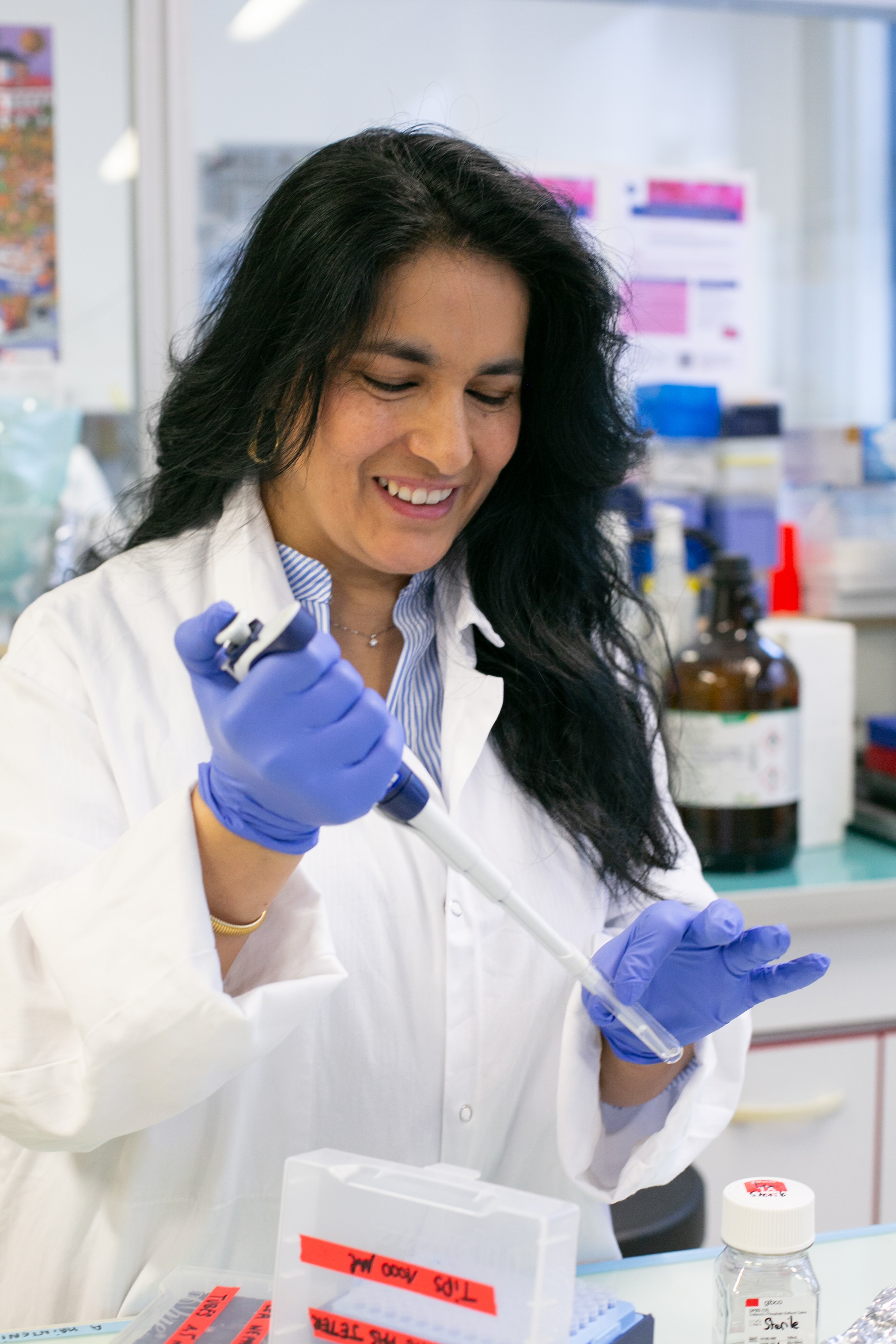
Today, as Head of Business Development at IVETh, Fahima works to make the platform financially autonomous while accelerating technology transfer to industry. The extracellular vesicles on which IVETh focuses, often described as "the biomedicines of the future," represent a promising alternative to current cellular therapies: their targeted action allows them to act locally with precision, while being up to ten times, even a hundred times less expensive.
"In short, my mission is to de-risk R&D for industrial partners, reduce the time between laboratory discovery and the arrival of medicine at the patient's bedside, and above all, help build a 'model for the future' where academic research could become partly and sustainably self-financing."
This future model presupposes that public research valorizes its own innovations through bridges created with industry, which would then be responsible for deployment. This new approach would enable a genuine paradigm shift: public research could reap the fruits of its innovations without depending solely on public funding to operate.
Woman, Scientist, Leader: Occupying Decision-Making Space
At the interface of science, strategy, and business, Fahima evolves in environments still largely masculine, where decision-making positions remain predominantly held by men. Having witnessed the difficulties faced by female executives in imposing their vision throughout her career, she knows that legitimacy is often built at the cost of additional effort. The daughter of Afghan immigrant parents, raised in the Clermont-Ferrand suburbs with the conviction that education is an opportunity but that a diploma alone never guarantees success, she sees her path as a demonstration of resilience and ascent through work, perseverance, and commitment.
Without adopting an overtly activist stance, Fahima shares a powerful message: one can be a scientist, a woman, and a strategic leader without renouncing any of these dimensions. As she likes to point out:
"Nothing predestined me for HEC Paris, but life does not assign you to a single trajectory as long as the desire to learn remains."
Her story speaks to seasoned executives and questioning leaders alike: the real risk is not reinventing yourself—it is stagnating too long. And sometimes, all it takes is one step: an opportunity, a decision, or a return to the classroom, to set motion back in motion and restore meaning to a career.