
Handcrafted Futures — One Year with Barbara Stöttinger, Dean of Executive Education at HEC Paris
One year after stepping into the leadership of HEC Paris Executive Education, Barbara Stöttinger has had time to take stock — not through a grand speech, but through the quiet clarity that follows a year of building, listening, and learning. What she found on campus, she says, is a community driven by determination and curiosity, an institution in motion, and a world asking new things of business schools.
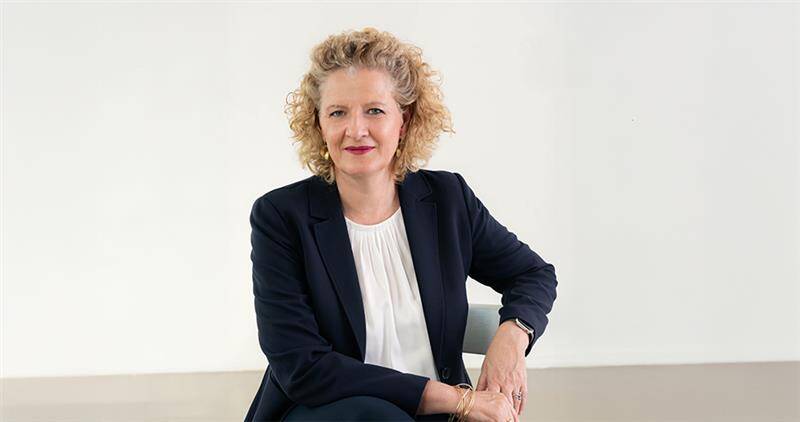
Barbara, how are you? Was machst du grad Schönes?
Barbara Stöttinger: Well, your German is charmingly off — but I get what you meant. Right now, I’m working on several year-end projects and starting to think ahead to next year. It’s that moment when you look back and forward at the same time.
A year later, how has all that “new” taken root? What surprised you most about settling in?
Barbara Stöttinger: I’d split my answer into two parts. Marking this first anniversary made me reflect not only on the past year, but also on the decision-making process that led me here — and on the trust placed in me.
At the time, you don’t fully grasp how much a decision will reshape your life. A year on, I realised how many layers of “new” there really were. The only familiar element was the role itself, coming from another executive education environment. But the move was still a significant step.
What helped was of course the amazing support of my colleagues throughout the organisation and particularly in the ExEd team. In addition, I would say something I’ve experienced throughout my career: being surrounded by our participants in Exed who come with high aspirations and a willingness to change. Many take bold steps — sometimes by choice, sometimes because life forces it. Their courage and growth mindset has always inspired me, and it did so again this year.
As for the year itself… yes, I feel a little tired — but that’s the season talking. It has been a long and inspiring year.
The people I met, the topics we work on, the ecosystem around us — all of it surprised me in the best way.
And I’m deeply grateful for how warmly I was received. The level of commitment in the Executive Education team, and across HEC, creates an energising environment despite any challenges. Looking back now, it could not have gone better.
Nearly a decade after your 2016 reflection on uncertainty and the shift from transactional to relational learning, how has your thinking evolved? How have today’s seismic shifts reshaped your perspective — and HEC’s?
Barbara Stöttinger: It’s interesting that you highlight that piece — it is almost ten years old. Back then, when we spoke about “transactional” executive education, we meant something very specific: you came to campus for a four-day module, you left again, and that was it. Not much room for relationships. Of course, even then, it was never only transactional — but the relational dimension has grown dramatically.
When you look at what has happened between 2016 and 2025 — almost 2026 now — the world has shifted a lot. You mentioned geopolitics. It was a topic already then, but the developments since —have reinforced it. And then there is COVID. We tend to forget it quickly, but it wasn’t that long ago. And during that time, it became very clear that when things get tough, social bonds and human connections become even more important, and people actively seek them.
In executive education, we saw it immediately. As soon as it was possible to return, nobody wanted to sit in front of a screen for hours anymore. People wanted to be back in a physical environment. And that applies to open programs and to custom programs.
Many of the companies we work with still put a strong emphasis on having some on-site moments. Participants come from all over the world — with a lot of effort — which makes those moments precious. So we’ve learned how to use them carefully to foster relationships. Because yes, networking in a classroom is easier when you’re physically together — during breaks, after sessions, in informal conversations.
And there’s something else I want to stress: serendipity. We plan our programs carefully, but things also need space to happen between people.
Humans are social creatures, and those unplanned interactions which unleash new insights matter. They are part of what makes learning meaningful.
I don’t think the relational aspect will disappear — and I hope it doesn’t. In times when many people are online, often in their own bubble, physical encounters give you the chance to exchange, to debate different or even controversial ideas. Without that, you lose some connection to perspectives outside your own bubble.
In a world marked by polarization and gloom, does the “French touch” still help solve global problems? Or does it need reinventing?
Barbara Stöttinger: First of all, I think education is an amazing lever — for many things — but probably not an immediate one to solve global problems. What we can do, and this goes back to relationships, is bring people together from different nationalities, political orientations, backgrounds, and professional trajectories, and offer them a space to exchange ideas.
This is what I meant earlier. If you meet someone whose politics you might not agree with, but with whom you build a personal connection, you begin to understand how that person sees the world. You may even find similarities. You move away from stereotypes. And I think this is where executive education and education in general can really make a difference.
When you say “French touch,” I see several dimensions. The first is the artisanal aspect that France is known for. Think about haute couture: everything is carefully crafted, handmade by people who are masters of their métier. I find that a very fitting analogy for how we design our programs. It’s not one-size-fits-all. It’s built around our clients’ challenges and needs — in custom programs, of course, but also in open programs.
No program is exactly the same. That’s a very French quality, and it doesn’t go away.
Another dimension is the cultural and philosophical heritage. Think of the major French thinkers and how their ideas have shaped education. A solid grounding in philosophy, in schools of thought, is part of the French DNA. And I’m not sure you find that everywhere in Europe. This intellectual stimulation — the way ideas are brought to the table — is something very unique in France.
It also connects to broader European values: social justice, sustainability, diversity. Those are not only French, but European. And they clearly differentiate us from, for example, the United States or China. In Europe, we have a very distinctive position that stems from this value system.
Linking this back to geopolitics: I recently heard our Dean speak, and he said — I’m paraphrasing — that when countries or societies are on fire or disrupted, it’s not a good foundation for companies to do business. So companies and leaders have a responsibility that goes beyond their own organization and extends to society.
If people in a society have a decent standard of living, companies benefit. But it doesn’t work the other way around. So even if someone has no personal interest in social justice or social peace, they should at least see it as a business interest. CSR, sustainability — all of this matters because stable societies create stable environments for business.
So when you ask whether the French touch needs to change, I don’t think so. It evolves. It rests on the pillars I described, and those pillars find new applications and representations. But it absolutely brings value — immediately to our clients, and to any participant we work with.
Could you share a short example of what inspired you in Exed's signature methods?
Barbara Stöttinger: Let me give you some examples of what we would consider the HEC signature in research and pedagogy, what sets us apart from others.
When people ask, “How do your professors teach leadership — and what makes it different?”, I find our faculty teaching leadership has really brilliantly articulated it.
Leadership at HEC rests on five scientifically substantiated pillars, and the metaphor of a signature works beautifully — your signature is your handwriting, and leadership is similar. Like every handwritten signature is unique, there is no universal way of leading; you have to find your own.
But the five pillars help you see where you want to develop further, and diagnostic tools support that reflection.
The first pillar is self-awareness — understanding your strengths, your blind spots, your preferred styles. Without that foundation, it’s difficult to lead yourself or others.
The second is situational intelligence. You can’t say, “This is my style, take it or leave it.” You adjust your leadership to the specific situation, to the people in front of you, and to what is needed right now.
The third is embracing leadership paradoxes: being detail-oriented to understand what is happening on the ground, but also being able to look ahead; having tough KPIs to meet, but at the same time being an inspiring and understanding leader. These tensions are real, and they’re not easy to reconcile — but you need to navigate them.
The fourth pillar is purposeful and sustainable leadership — understanding how you make sense of your work, how you help teams make sense of theirs, and how purpose anchors decisions and actions.
- And the fifth is leading major transformations. With AI entering the workplace, for example, we know things will change substantially. Leaders need to understand how to guide change, not just manage day-to-day operations.
Taken together, these five pillars are rigorous, research-based, but also intuitive. They resonate with participants, and they clearly show what distinguishes our approach from others.
In addition, it is also how we teach leadership, for example: The Art of Leadership. One of our professors takes participants out of the classroom — literally — to the Musée d’Orsay.
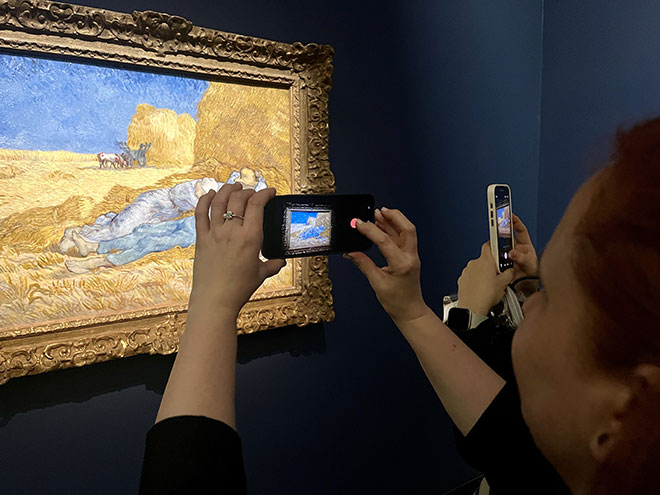
He selects a few paintings and uses them to explore leadership concepts and frameworks, as reflections of real leadership situations. Participants work with what they see, what they feel, and what they interpret. It’s quite unique pedagogically, and yes, speaking of the French touch — it’s something you can only really do in Paris.
A recent study shows a troubling paradox: women reach top executive roles earlier than men, yet leave them sooner — and not because of performance. How do you read this, and how can executive education help women not only break through, but stay and thrive?
Barbara Stöttinger: That’s a question that has kept me busy for at least ten years — personally and professionally.
Coming back to the study you mention, is the finding striking? I’m not sure I’d call it striking, but I do have an explanation — or at least an assumption.
First, companies have understood that diversity matters. For many reasons. It’s important for employer branding, especially for younger generations. We also know diverse teams perform better. And diversity is increasingly pushed by investors and by the public.
Now, when you look at female careers, we still see what’s called the leaky pipeline. At several stages of a career, women disproportionately drop out. So the women who do make it to the top are extremely smart and resilient — they’ve had to overcome quite a few barriers.
Because there are fewer women in that final pool, companies sometimes promote them earlier. If you want a woman leader and you don’t have many candidates, you’re simply drawing from a smaller pool — and that often means younger profiles.
But once they’re in the role, we also see something else: the glass cliff. Women are often promoted when things are already difficult — when the men have, frankly, “screwed up.” I’m putting it bluntly, but that’s what studies show. Women are appointed when the situation is already critical, when no one else in the usual networks wants the job, and then someone says: “Let’s try with a woman.”
This puts women in a tough position. You are visible 360 degrees. You inherit a situation where others have already failed. The chances of immediate success are no better than for your predecessors, yet the scrutiny is much higher.
And that might explain why women leave earlier. Not because they fail — many do succeed — but because these roles require enormous energy and personal sacrifice.
In my own network, women my age who have taken up top roles often say at some point: “I’m stepping away. I’m fed up.”
If you are a woman at the top, you’re scrutinized on everything — your lipstick, your dress, your wrinkles, your weight — and not everyone is thrilled to see you in the role.
The level of commentary and competition can be exhausting. So some simply decide: “I’ve had it with the red dress.”
That would be my explanation. Women are often placed in extremely challenging situations — sometimes set up to fix the near-unfixable. And then one of three things happens: they end up like their male predecessors, they succeed but at great cost, or they decide the overall package simply isn’t worth it.
So can HEC Executive Education help? Can it support women with the mental load and the challenges you described?
Barbara Stöttinger: When you look at what we do, yes — we have dedicated programs like Leadership au féminin. But I’m a little torn, to be honest.
I don’t believe there is such a thing as a female leadership style. You lead through the same five pillars we discussed. You craft your own leadership signature. You bring your personality. You bring your way of doing things. And all the stereotypes aside, I’ve seen women leaders where, if you didn’t know the person, you wouldn’t necessarily identify their style as “female.” So I struggle with the idea of a distinctly female way of leading.
Either you’re a great leader, or you’re not. Your gender doesn’t make the difference for me.
On the other hand, these dedicated programs can be helpful because they highlight the specific challenges women face. They help you realise you’re not alone. In situational leadership terms, when you hear colleagues in the same program describe similar experiences, you recognise: “It’s not just me — it’s systemic.” That can reduce the sense of loneliness.
But we also have to acknowledge that women lead in diverse environments. And if you isolate yourself too much in the “female corner,” you risk missing out — on interaction, on learning, and frankly on visibility.
Decisions for future roles are made in diverse networks, predominantly still by men. If you’re not present in those spaces, you limit your opportunities.
So the compartmentalisation has advantages, but also risks. From my experience, and there is research to support this, women need two networks:
a women-only space, where you can discuss issues specific to women — mental load, care-taking responsibilities that still fall disproportionately on women in many countries, discriminatory situations, fears you might share more easily with someone who relates to them;
- and a diverse network, where you build relationships, gain visibility, and open pathways to future opportunities.
This is something we can build into our executive community. A safe space for women to exchange — yes. But also ensuring access to broader networks where decisions are made.
So I would think in terms of relationships and networks, rather than in terms of content. I wouldn’t say I’m unconvinced by female-focused programs, but I don’t think there is such a thing as “female leadership” in itself.
If we were to imagine your next “100 days,” what would be your key priorities for the year ahead?
Barbara Stöttinger: When we talk about strategic axes, these are usually not matters of months but of years. So it won’t be surprising that internationalization will remain a major focus for us.
Another ongoing priority is the work on our signature elements — bringing to the surface what truly differentiates HEC Executive Education. That includes our centers of expertise, our faculty, and everything that makes this ecosystem so special.
A third priority concerns the relationship between on-campus and digital learning. We’ve defined very clearly what the on-campus experience can offer. Now we are also tackling the digital environment. We have a full portfolio of digital programs — from short formats to degree programs — but the question is: What is the role of digital today?
We’ve gone through several transitions in recent years, not least because of COVID, and now we need to give each modality its proper place. When do you use on-campus presence, and for what reasons? How do you make those moments truly valuable? And on the digital side — which offers flexibility and is more resource-conscious in terms of time and travel — how do you create a learning experience that is equally meaningful?
If we manage to blend these two components well, I think we can substantially enhance our learning journeys. So that would be my third pillar.
And then, of course, all of this fits into the new strategic plan of the school that was announced recently.
When you look at the strategic axes in that plan — Nouvelles Responsabilités (2025–2029) — they resonate strongly with what we do in Executive Education.
The first axis, Éclairer et inspirer, focuses on research: ensuring that HEC’s research not only advances knowledge but also inspires, informs, and contributes to the public debate. This is something we can support directly in Executive Education. The on-campus experience becomes a place where people exchange, debate, and practice critical thinking — which feels particularly relevant in times of AI and misinformation.
The second axis, Changer des destins, naturally speaks to younger people, but not only. Even for participants in their late 30s or 40s, we see profound transformations — people taking on new challenges, starting businesses, relocating with their companies. We have a real impact on these trajectories, and I think Executive Education plays into this axis very well.
And the third axis, L’École des solutions, is about bringing solutions to major global challenges: geopolitical, technological, societal. It reinforces the idea that HEC is not just a management school that teaches management. We work with a holistic perspective of the world. We bring multiple disciplines and lenses together. And we create a space — inside and beyond the classroom — where all of this can happen.
So for me, these school-wide priorities align very naturally with our own focus areas in Executive Education.
In this ever-evolving, complex environment, how do you see the role of business schools evolving?
Barbara Stöttinger: I think the answer aligns very closely with the three strategic axes outlined above.
We often think of universities as places and spaces — and with our new campus, this becomes even more true. They are environments for networking, engagement, meeting people, moving out of your comfort zone. But they should also be places where polarisation has no space — or at least, where it can be challenged.
In that sense, business schools can become lighthouses for the future: spaces where constructive dialogue can happen, where perspectives meet rather than collide. And I think that role is more important than ever.
What also motivates me — and fascinates me — is that the school is opening up to target groups you would not traditionally find at a business school.
We come from a tradition where these institutions were largely reserved for elites. Now, with initiatives around social mobility at HEC Paris we’re making sure the spaces we provide are accessible not only for those who were already entitled.
All of this contributes to the evolving role of a business school. And I find it extremely powerful as a purpose — for the institution, and for us within Executive Education.
Finally, as we close: what’s one word that has stayed with you throughout your first year at HEC?
Barbara Stöttinger: Pride. Pride in what we accomplished together as a team last year, pride in tackling the challenges ahead of us, and thus contributing to all the ideas and strategic priorities I mentioned.
About Barbara Stöttinger
Barbara Stöttinger is Dean of Executive Education at HEC Paris and Professor of Marketing. Before joining HEC, she served as Dean of the WU Executive Academy at Vienna University of Economics and Business (WU Vienna), where she spent more than two decades shaping executive education programs and international partnerships.
Her academic work spans global marketing, international management, and executive learning. She has taught and advised leaders across multiple continents and has been involved in program development for major corporations worldwide. At HEC Paris, she oversees the Executive Education portfolio — from open-enrolment programs to custom-designed learning journeys for global organisations — and contributes to the institution’s strategic priorities in leadership, lifelong learning, and internationalisation.
She holds a PhD from WU Vienna and has held visiting positions and teaching engagements in Europe, the United States, and Asia.