
From Disney Magic to HEC: The Inspiring Career of Sandrine Mies
«Where do your dreams and desires call you? Listen to that inner voice that makes you want to move forward, to dare… » – Sandrine MiesIn this interview, Sandrine Mies, a former Disney for nearly 20 years, shares her career transformation - from the world of childhood to robotics and on to the Longevity Economy, with one unwavering thread running through it all: her desire to combine what matters most to her - the art of storytelling, technology, and human connection. Her journey weaves together executive positions, consulting roles, learning experiences, and even an internship.
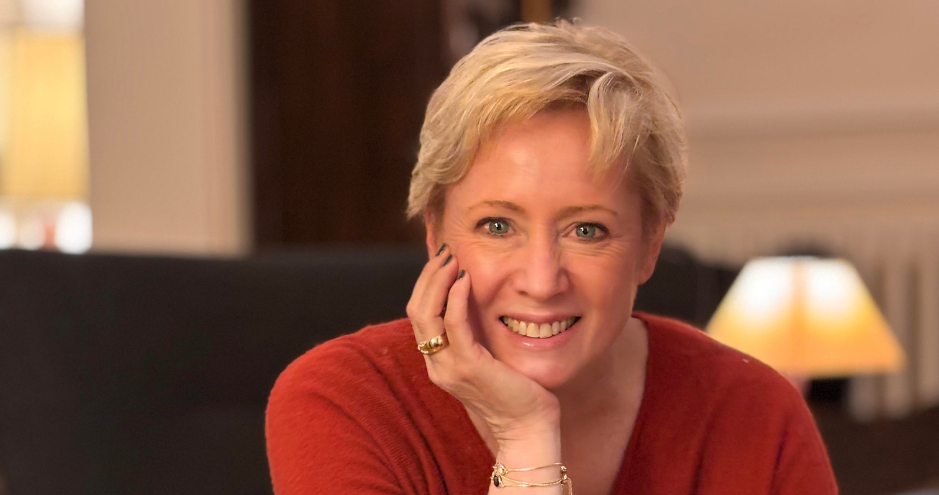
Sandrine Mies shares her story: from her corporate career at Disney to the pivotal moment that shifted her trajectory, and how she solidified her new professional chapter through an Executive Master at HEC Paris.
At Disney, you learned the importance of storytelling. How has the essence of this magic shaped your professional approach?
Sandrine Mies : Storytelling is a powerful way to present an idea, discuss a project, and engage your audience. I have a particular fondness for metaphors who bring depth to the narrative and give substance to the messages you want to convey. They create mental images, awaken emotions, and set the mind in motion. It's that spark you see in the other person's eyes - and that moment is magical: it's the sign of a connection being established, the beginning of an exchange where you journey together to build something meaningful.
At Disney, I discovered the power of storytelling to unite partners from diverse sectors - film, music, retail, theme parks - around major projects, all sharing the same vision: empowering children! High School Musical, Hannah Montana, Star Wars Rebels, Disney Channel Talents, Les Grands Prix de l’Imagination - all these stories gave birth to unforgettable experiences and memories for countless children.
After closing the Disney chapter, you turned toward consuler technology with the Cozmo robot. What this adventure teach you about the human-machine relationship?
Sandrine Mies : Indeed, I passionately contributed to the growth of Disney channels in France until they reached "adulthood" - for exactly 19 years - from satellite deployment to the early days of streaming platforms. In the late 2010s, Silicon Valley was buzzing with excitement in another filed: robotics and AI. That's when I encountered Cozmo's debut in the U.S. - a sweet little robot, part Wall.e, part Eve, and a marvel of ingenuity designed by Anki Inc., an American startup.
I joined them to open the French market. It was a return to the startup spirit of Disney Channel's launch. There were two of us launching this innovation in four months in France, before building an agile team. At the time, we had to introduce the general public to this technology straight out of the labs, and prove that a human-machine relationship could be both accessible and beneficial through a little companion robot with quite the personality. Cozmo was a smash hit for two consecutive years, earning dedicated showcases on the Champs-Élysées and at Le Bon Marché for the holiday season - an icon! It also proved to be an excellent tool for introducing children to programming and developing their STEAM skills (science, technology, engineering, arts, and mathematics).
Your journey then led you to the world of older adults and to the classrooms of HEC. What motivated these choices?
Sandrine Mies : After Anki, and then some wonderful startup development projects - Lunii (the storytelling box for children) and then Tonies France (the TonieBox) - I needed something new, fresh challenges in uncharted territories waiting to be explored and transformed. Technology supporting the aging process, particularly AgeTech in service of 4P health (personalized, preventive, predictive, participatory) and well-being, was still largely unknown.
When I mentioned my interest in a sector that touched me personally, I faced headwinds: "Are you crazy? You spent 20 years at Disney. Why are you interested in older people?" If we listen to our fears on those of others, we live trapped by preconceptions that suffocate us. I decided to listen my inner voice and make this turn.
First, I returned to school at HEC with a Certificate in Finance, then another in Strategic Business Unit Management. I learned for the joy of it, and the experience was a real energy boos! Particularly through the encounters, the teachings, the exchanges, and the challenge of questioning yourself... I then built on these two certificates by enrolling in the Global Executive Master in Management - General Management and chose as my thesis topic: robots as vectors of social connection in the daily lives of older people, at home and in residences.
Beyond the thesis - for which I still thank my advisors Philippe Greco and Bernard Cardona, who pushed me to exceed my limits, I remain deeply grateful to Christopher Hogg and Dominique Rouziès for the richness of the curriculum and the quality of the teaching. And then there's Laurent Maruani, the unforgettable professor emeritus at HEC Paris, who opened the hatches of our thinking. With him, impossible to stay in one channel: philiosophy, arts, science... He offered us a great breath of intellectual fresh air to strengthen our curiosity and reconnect with storytelling in our leadership.
Speaking of which, you went even further in your role as a learner. You deliberately traded your executive hat for that of an intern at Epoca. How did you experience this shift in position?
Sandrine Mies : Indeed, as part of the Master's program, we had to conduct projects in Sustainability and Business Development. I chose to take on the role of intern at Epoca Health, a startup that provides remote monitoring of patients with multiple conditions using connected devices. Epoca is also an extraordinary team of doctors, nurses and engineers who enable elderly people to leave the hospital to be monitored at home. This status allowed me to delve into the reality of the healthcare system, in the field, where everything happens.
By following doctors and nurses in their daily work from hospital to home or nursing facilities, I was able to observe caregivers' challenges, listen to the patients' needs, and engage with residents. I a very short time, I discovered use cases for a variety of technological innovations coming to support a critical sector in distress. I gained incredible insight into understanding the healthcare market, both through applying what I learned in the Master's at the Epoca - gathering material for my thesis - and through the knwoledge shared by people who trusted me. This knowledge serves me every day at Enchanted Tools as I build strategy and engage with stakeholders in both the French and the American markets.
Indeed, your current position at Enchanted Tools is the perfect meeting point of storytelling, technology and human engagement. How do these three dimensions work together to create impact for seniors?
Sandrine Mies : Absolutely, my current role allows me to bring together a value-driven narrative and physical AI at the people's service. In a world where robotics has long focused on replacing humans, creating a solution that serves care staff, enhances residents' well-being, and maintains social connection in assisted living facilities is both visionary and profoundly human. The teams at Enchanted Tools have imagined and designed the Mirokaï robots (Miroki and Miroka) in France. These are true characters - extremely expressive and accessible - designed to enhance caregivers' operational efficiency, support them in their daily tasks, and improve residents' engagement and experience.
We work the Broca Lab Institute and residences for more or less autonomous elderly people in France and the United States. The robot's acceptance by people in Memory Care is intuitive and immediate for most residents. Its presence revives memories of being an engineer, of science fiction fans, or simply the pleasure of a joyful, animal-like presence. In independent living residences, seniors are curious, full of ideas and desires. They bring their knowledge and become demanding contributors and co-creators of Mirokaï's features? The oldest Boomers are celebrating their 80th birthday this year - technology is part of their lives. This generation is creative, curious, bold and far from silent - quite the opposite, in fact. They're going to push us to make things happen. It's time to innovate for them and with them, and to change the dusty perspective we hold of our elders.
To conclude, if you had to convey one strong message to those who hesitate before changing paths, what would it be?
Sandrine Mies : For those hesitating: cultivate your curiosity and dare - a value deeply rooted in the HEC spirit. You must dare to take the first step into the unknown, accept not having all your bearings.
My value comes from diving in and evolving across multiple words: between multinational and startups, between corporate and entrepreneurial, between children and elders... and my path is still full of dreams and desires to bring to life.
Where do your dreams and desires call you?
Listen to that inner voice that makes you want to move forward, to dare, to smile, to feel more than alive. Perhaps that's also the connection between the soul of a child who dares and the elder who tells himself they still have so much to offer this world.