
From Passive Learning to Real Change: Inside Ilona Boniwell’s Approach to Executive Education
Executive training faces a well-documented challenge: retention. Research suggests that passive learning formats can lead to retention rates as low as 10%. In high-stakes environments, this gap matters. Time is invested, energy is mobilized, yet what is learned does not always translate into action.
So how do you make executive education actually stick?

Executive training fails when it treats complex business challenges with generic solutions. The cost? Low retention, unchanged behavior, and wasted investment. Research confirms this: passive listening yields a mere 10% retention rate. For executive training to tackle unique organizational challenges, stick, and deliver measurable impact, it requires two elements: specialized speakers and active methodologies that transform learning into doing.
This quest drives the pedagogical approach of Ilona Boniwell, Associate Professor of Management at HEC Paris, and key contributor to its Executive Education Custom Programs. Her methodology addresses a critical gap: lasting learning demands active engagement, not a “school-like” setup. By guiding leaders to uncover their own answers, she sparks deeper involvement—boosting resilience, a better atmosphere, and performance across the organisation.
Bringing Psychology Back to the People
Ilona Boniwell, a leading figure in positive psychology, describes her mission as “bringing psychology back to people.” The connection is clear: psychology and leadership are intrinsically linked. Her goal isn't to turn executives into psychologists—it's to transmit psychological knowledge so leaders can navigate complex business environments, excel at their jobs and thrive in their roles. Indeed, psychology provides key insights into human behavior, motivation, and emotions that leaders can use to inspire teams and drive performance.
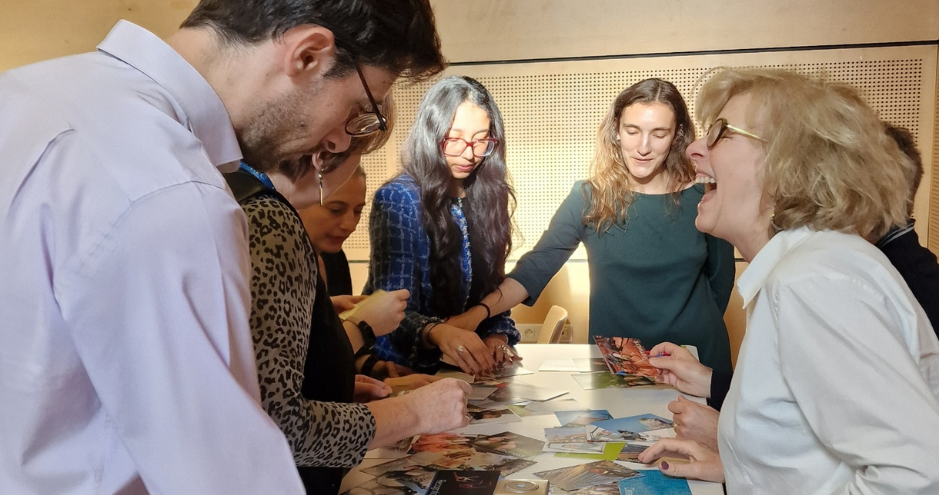
In the context of HEC Paris custom programs, where organizations face specific strategic challenges, this philosophy proves even more valuable. Ilona doesn’t start with a “set menu” of solutions. She begins with a deep diagnosis of the client’s specific pain points before choosing the most fitting tools.
“It all starts with the client’s needs. I need to know which skills they need to develop, the company’s current challenges, the type of population—whether they are middle managers or C-suite leaders—and the space/infrastructure they have.”
From there, she creates a tailored journey based on the dozens of methodologies she has crafted and tested over the years.
The Toolkit: Tangible Tools for Real-World Problems
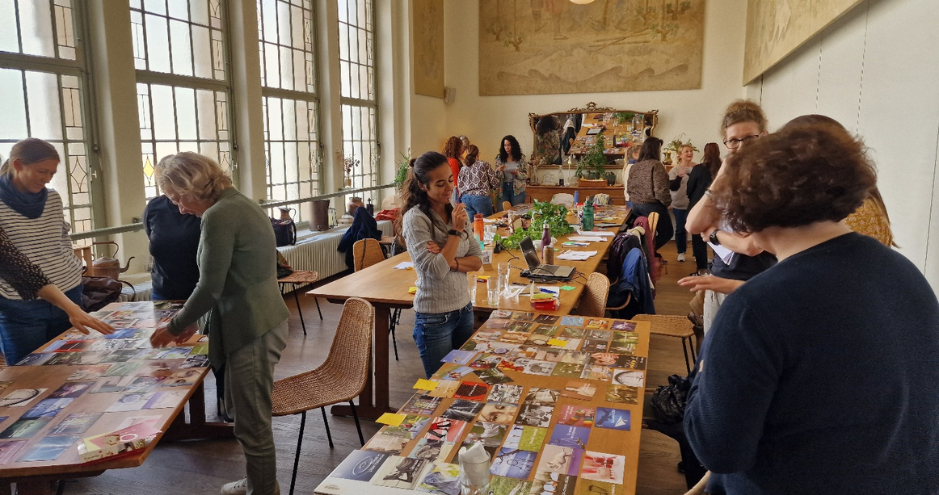
Ilona Boniwell's classroom breaks down cognitive barriers through tangible gamification and physical tools. Over the years, this experiential learning has proven highly impactful, especially in challenging, high-pressure environments. Here's how specific methodologies address common organizational challenges:
Breaking Organizational Silos with Lego® Serious Play®
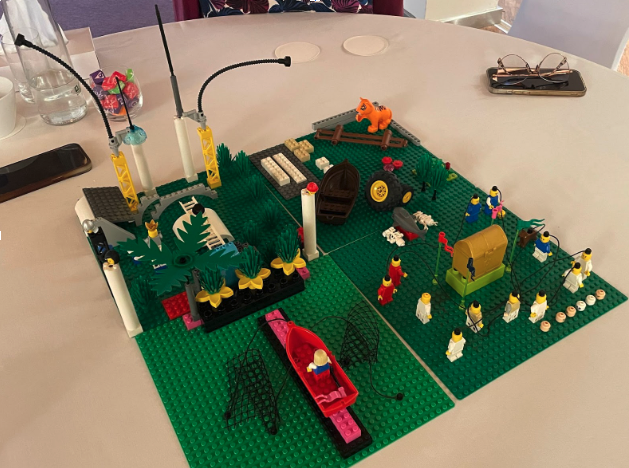
When organizational silos block strategic alignment or team friction undermines performance, traditional meetings often fail to surface the real issues. Ilona invites leaders to think with their hands. By building physical models with Legos, every participant, not just the loudest voice, gains equal say. Some construct barriers between lions and zebras revealing invisible divides between teams and management, truths they would rarely voice in a standard meeting. With this tool, expressing personal challenges and feelings becomes limitless and powerful, especially in customized programs where leaders shape the company’s agenda. She states:
“This methodology creates a democracy of speech, and allows groups to visualize and solve unspoken problems that would likely stay buried in a standard meeting.”
A commission with a ministry in Saudi Arabia, recently partnered with HEC Paris on a challenge: developing ten General Managers from operators to coach-leaders capable of driving organisation transformation.
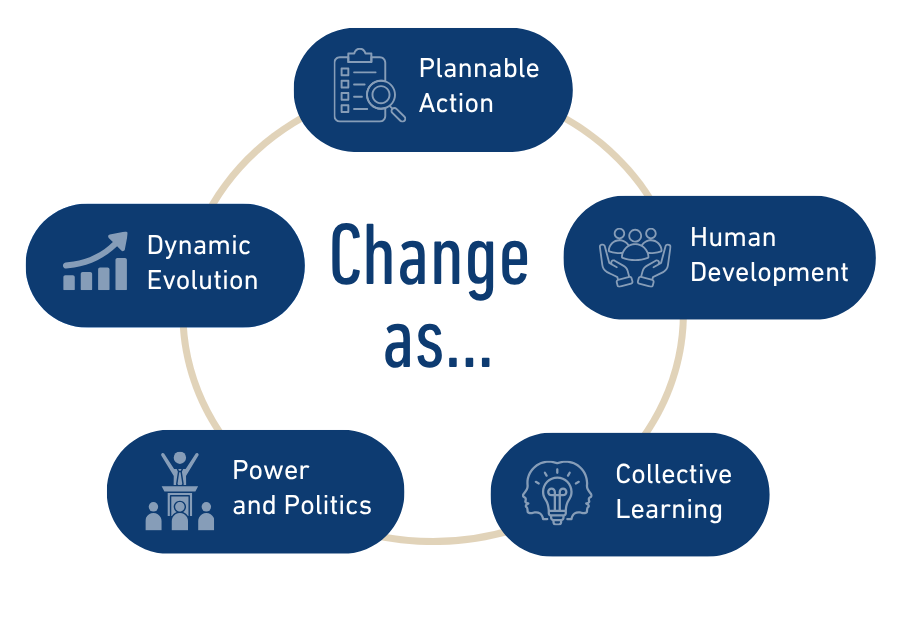
Ilona Boniwell, Academic Director, designed a year-long custom program titled “Making Change Happen – Collaboration for Impact”, guiding GMs through four international modules (Riyadh, London, Paris). The program combined individual coaching, cultural immersions, equicoaching, and Lego® Serious Play®, to build a high-performing team of "Managers-Coaches”.
Lego® Serious Play® proved transformative. Participants identified the questions they needed to answer, such as identifying their group leadership dynamics, built their leadership action plans through hands-on construction, and left with a practical toolbox to implement immediately at work.
Reducing Turnover Through Job Crafting ("Hack Your Job")
When turnover costs spike and engagement surveys decline, companies recognize that motivation and fulfillment directly impact retention.
Adapted from the work of psychologists Amy Wrzesniewski et Jane Dutton, the “Hack Your Job” module allows participants to audit their daily tasks and relationships, and assess them through three lenses: the emotions felt, the strengths leveraged, and the sense derived from each task. This methodology allows participants to craft action plans, pinpointing what to amplify, reduce, delegate, or swap with colleagues. The result: work that “fits like a glove”, driving both performance and retention.
Avoiding Leadership Blind Spots: Emotional Intelligence in Action
Leaders who misread, misunderstand, or ignore emotions invite serious problems, from failed negotiations to team dysfunction.
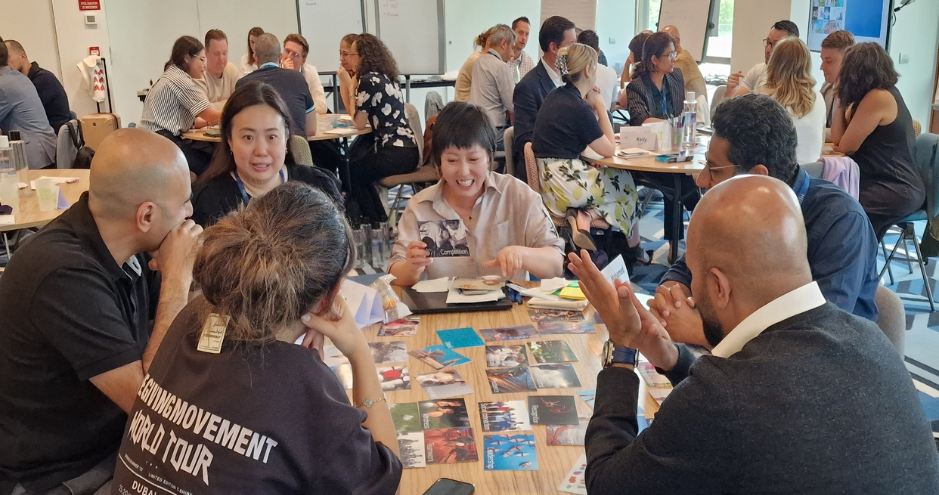
Ilona’s “emotional intelligence labs” target four skills: perceiving, using, understanding, and managing emotions, according to the MSCEIT model of emotional intelligence. During this often hilarious chaotic workshop, participants mime emotion cards for the group to guess—sharpening their ability to read facial cues and express feelings non-verbally in a way that reveals subtle distinctions like “happy vs. excited”. The workshop continues with coaching tools for empathy, trigger mapping on the floor, and action planning with cards and briefings, keeping everyone active even at scale. These aren't soft skills; they're essential capabilities for high-stakes leadership decisions.
Shifting from Problem-Solving to Possibility Thinking: Appreciative Inquiry
In sectors facing heavy constraints, such as defense, pharmaceuticals, or government, leaders often get trapped in problem-solving mode, which drains energy and limits innovation. Ilona uses the Appreciative Inquiry method to shift the mindset from “problem-solving” to “possibility thinking”.
“For example, we work on how to cope with constant change and find the resources to thrive in it, rather than merely endure it”, she explains.
For a major French industrial and technology group operating in aerospace, space and defense, she used the 5D Appreciative Inquiry model to empower leaders with a strengths-focused mindset and actionable tools to elevate team performance, build collective intelligence, and create lasting positive change.
The approach focused on what’s already working well, a concept known as positive deviance. By identifying successful patterns within the organisation, Ilona shifts energy from deficits to strengths. Teams grow happier, dream bigger, and design innovative future solutions.
“We unleash creativity through poetry slams, songs, and wall paintings”, she notes, and grounded in this positive vibe—fueled by past successes and future dreams—we pivot to reality, brainstorming bold, practical proposals that spark revolutionary group solutions from within, not outside.”
From the Classroom to the Boardroom: What Changes
The true measure of this method is found in what happens after the program ends. The “wow” effect of a game is worthless if it doesn’t translate to the office. Boniwell employs a rigorous “Learning Review” process, asking three vital questions: What? So what? Now what?
The impact becomes visible when leaders return to their organizations and replicate these tools with their own teams. Behavioral change is concrete: an executive uses strength cards to reassign tasks based on actual capabilities, not just titles. Meeting structures evolve: a leader starts sessions with gamified check-ins that surface real concerns. Decision-making quality improves: teams use visual tools to expose hidden assumptions.
In custom programs, where participants are seeking survival strategies in fast-paced environments, this practical transfer of methodology is the ultimate measure of success.
For the French industrial and technology group’s top managers, the Appreciative Inquiry workshop culminated with practical application exercises, equipping leaders with actionable tools to embed the approach in their daily leadership. The result: strengthened ability to influence, inspire, and sustain long-term transformation.
The Paradox of Progress: Why Human-Centered Learning Matters Now
Companies face relentless challenges: team friction, emotional resistance to change, and the urgent need for resilient, high-performing leaders. Custom programs from HEC Paris address these directly through tailored, experiential learning that sparks intrinsic motivation, collective intelligence, and lasting impact.
Among these challenges, Ilona observes a growing paradox from tech acceleration.
"While Artificial Intelligence and new technologies promise to save us time, they often result in leaders filling that free time with even more work—validating AI’s outputs, trying to keep up with new developments, testing, learning, moving on to the next tool, etc. This leads to unprecedented pressure and burnout.”
In our era of acceleration, Ilona Boniwell’s pedagogy offers a vital counterbalance. By grounding learning in human connection, emotion, and tangible play, she equips teams to endure change, but to embrace it with resilience. This is why forward-thinking organizations are investing in human-centered methodologies that don't add to the noise—they cut through it.