
What If the Best Leaders Were Chief Congruence Officers?
William Ast: What If the Best Leaders Were Chief Congruence Officers?Late 2025. A decisive year-end negotiation, a strategic internal decision-making chain, mounting pressure. A few weeks earlier, William Ast may have forced the issue: escalated, pushed harder, raised his voice by nature. This time, he did something different.
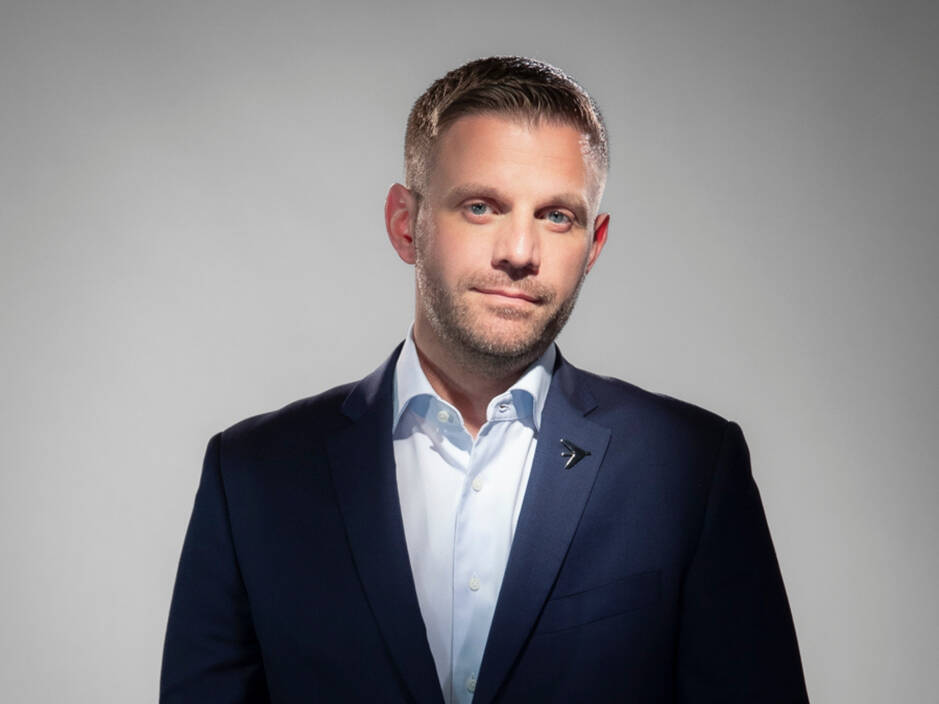
Drawing on the Taoist approach to leadership he had just studied with Véronique Nguyen, Affiliated Professor of Leadership and Strategy at HEC Paris, he chose to step back. Not to retreat, but to redirect.
“Where I might have blown up in the past [...] I managed, by pushing back 'softly,' to hold people accountable, to have them make a decision that was truly theirs, and to move forward in a shared direction”.
The contract closed. His leadership praised his approach. And something shifted in how he chose to act on it.
Sixteen Years at Altitude: A Career Built Through Action
William Ast joined Embraer as an analyst intern. That was sixteen years ago. He never left. Today, he serves as Regional Vice President of Sales for Europe, overseeing the commercial strategy for small narrow-body aircraft - the sub-150-seat segment in the aircraft manufacturing world.
The career path reads like a textbook progression: market analyst, sales director in the Netherlands, vice president in France - but the method behind it is anything but formulaic: William sells planes the way he leads people: by listening first. “Trust is not something you can fake”, he says. “You have to bring the right attitude and genuinely care about the other person's problems.”
In 2025, that approach helped Embraer capture 75% market share in its segment - its strongest commercial year in a decade. A collective result, William insists, “the fruit of years of work, resilience, and persistence in the face of successive crises.”
The Problem with Influence Without Authority
On paper, William had everything: experience, results, recognition. In practice, he was hitting a friction point that no amount of commercial success could resolve. Aircraft sales are truly cross-functional wins, involving matrix-based organizational structures. On any given day, he works with analysts, marketing teams, legal, contract and finance departments - none of whom directly report to him. Getting things done meant persuading without commanding, aligning without controlling.
“The critical challenge I had identified is that you often have to get people moving without being their direct manager. It's comfortable in some ways — no HR headaches — but it requires a different set of skills. I needed tools to maximize my impact and make it happen.”
That tension, between informal influence and real accountability, is what brought him to HEC Paris’s Executive Education Leadership for Executives program. Not to learn something new from scratch, but to give structure to what he already sensed it was true.
Putting the Pieces Together at HEC Paris
The program, a four-day immersive designed for senior executives preparing to take on broader leadership responsibilities, worked on William at two levels. First, as a rare space for deceleration.
“We find it harder and harder to make time for time itself. Losing time can help you gain it later. That concept had been presented to me before, but here it took on its full meaning.”
Then, as a place where scattered intuitions suddenly cohered.
The DISC behavioral profiling model helped him map his human environment with greater precision - understanding not just his own instincts, but the communication patterns of the people around him. The “bamboo framework” developed by Véronique Nguyen, Affiliated Professor of Leadership and Strategy at HEC Paris, offered a model of flexibility-as-strength. The “Taoist approach” reframed the very notion of control.
What surprised him most was the cumulative effect. “There was an enormous amount of common sense in everything we did. But once brought together, written down, shared with others, it took on a whole new dimension. And you realized you weren't alone in having these ideas — they are recognized leadership principles from around the world!”
As an unexpected bonus his cohort was largely composed of Saudi participants. William came away genuinely impressed. “It was certainly a different culture, which clearly pushed me out of my comfort zone, but I discovered a country in total explosion, with a business mindset of rare intensity and a long-term vision that commands respect.”
Chief Congruence Officer
William calls himself a “Chief Congruence Officer”. It’s a self-assigned title, half-ironic, fully serious. And it captures something that the usual leadership vocabulary doesn’t quite reach.
Congruence, for William, means refusing the split between the person and the professional, between what you believe and how you behave under pressure, between leading a sales team at Embraer and running a volunteer association with no budget. The principle stays the same: you earn people’s trust not by exercising power over them, but by being consistent enough that they choose to follow.
That consistency shows up everywhere. At Embraer, every analyst who has worked with him over the past ten years has been promoted. Not by coincidence, but because William systematically puts people in the spotlight and entrusts them with visible responsibilities.
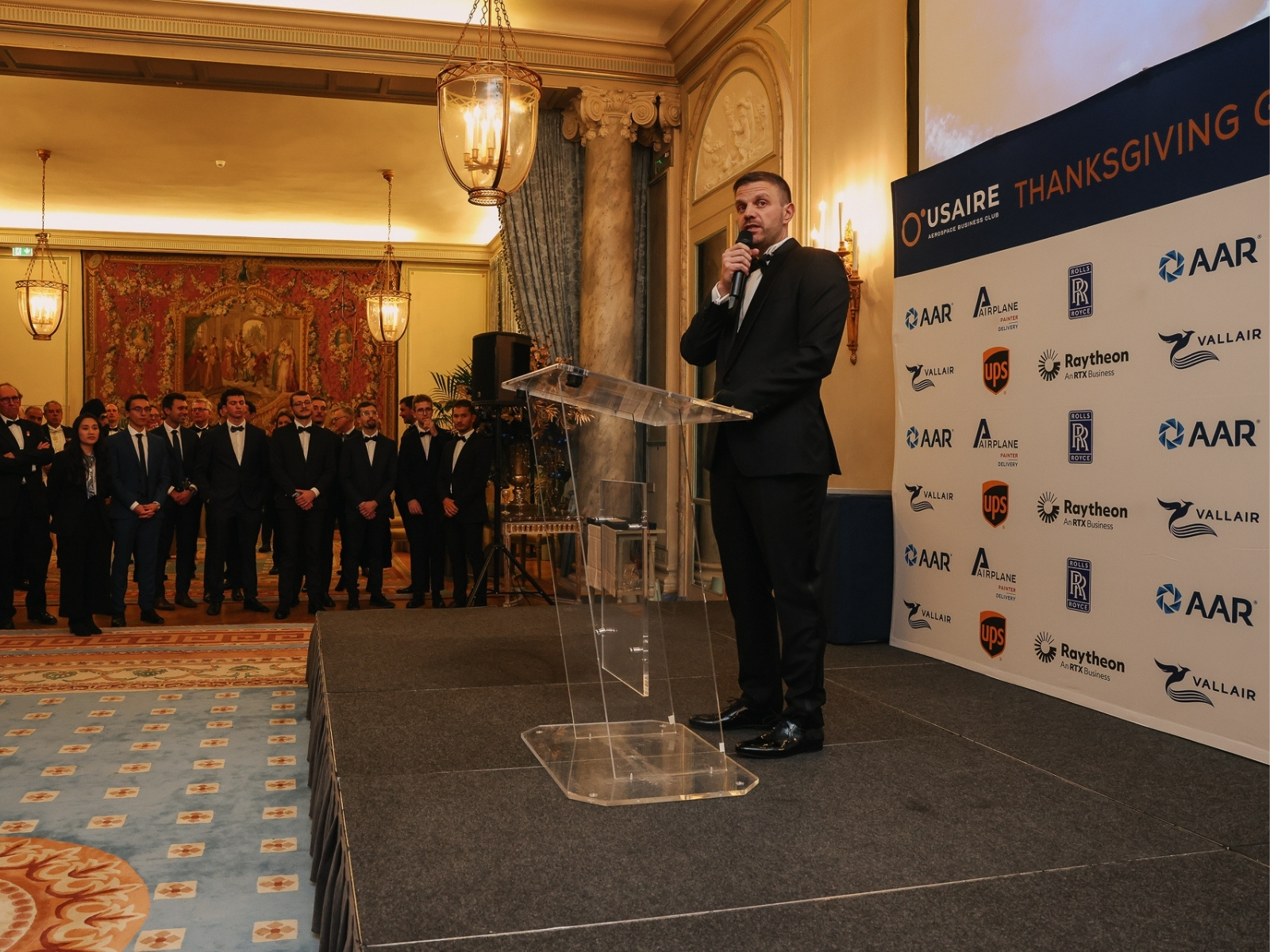
At USAIRE (Union of Aeronautical Companies and Associated Industries Represented in Europe), where he is serving as president since last September after being part of the board for three years, he leads lunch debates, networking events, and an annual pan-European student competition - with no hierarchical authority and no comfortable budget or resources. “It's a fantastic training ground for cross-functional collaboration and leadership, exactly the same challenges as in a company, but with none of the formal levers, he says; We share a common vision and the collective efforts of the team make things happen!”
Even rugby, which he played and still follows closely, feeds the same conviction: “Nothing gets done without a team. Results are collective, never individual. Even the family is a central part of the team.”
The Only Reliable Compass
“You need to know where you come from to know where you're going. Never lose your North Star, no matter the headwinds.”
In commercial aviation - a sector buffed by geopolitical shifts, health crisis, and technological disruption - that kind of steadiness is not a soft value. It is an operating principle.
William Ast’s time at HEC Paris didn’t teach him new values. It gave him the distance to see the ones he already held, the frameworks to articulate them, and a cohort of peers who confirmed that coherence, not charisma is what holds leadership together over time.
His story will resonate with every executive who senses, at the height of a successful career, that something still needs to click into place.
Not to start over - but to finally make the whole picture legible.
Leadership for Executives
A 4-day immersive program for senior executives and managers preparing to take on greater leadership responsibilities. taught on the HEC Paris campus.
Next session: October 12, 2026, November 30, 2026
Language: English