
Genomines: Cultivating the Future of Nickel Production
Genomines, a deep tech startup leveraging biotechnology to reinvent the mining industry, has announced a $45 million Series A funding round. Congratulations to the team, whose hard work has brought them to this new milestone! This capital infusion will help Genomines move from laboratory success to scaled-up operations. What does this mean for society? It signals that the future of metal extraction could be transformed, with your next electric car’s battery potentially containing plant-based nickel produced by Genomines. Let’s dive into this pioneering deep tech startup, its story, and see where the new funding will take Genomines.
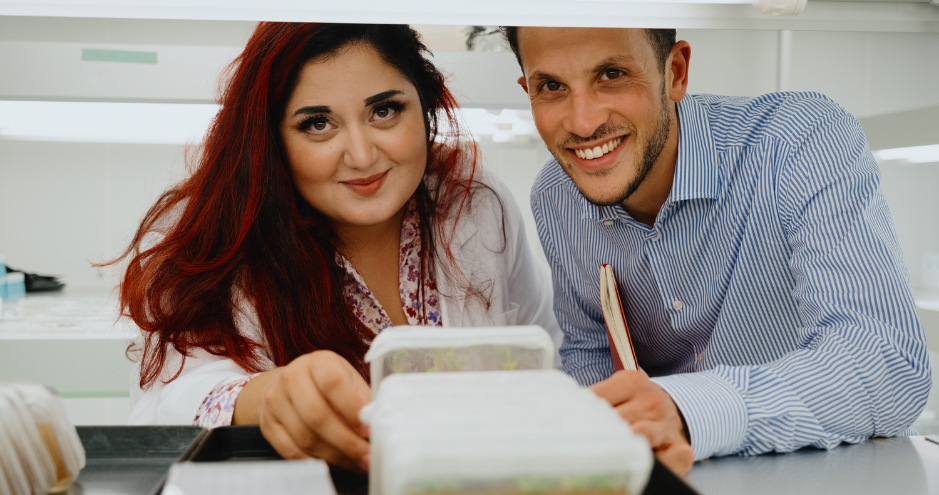
Dr Dali Rashid and Fabien Koutchekian, co-founders of Genomines
Genomines: Harnessing The Power Of Nature
The Deep Tech company Genomines, founded by Fabien Koutchekian and Dr. Dali Rashid, uses genetically enhanced plants to extract critical metals such as nickel from the soil. Their solution offers an innovative alternative to traditional mining methods that are often slow, expensive, and environmentally damaging as Fabien Koutchekian explains: “Genomines allows for the production of metal in a decentralized, more competitive, and more eco-responsible way [than the mining industry]. Above all, it's a technology that allows metal to be produced in a more modular way.” Indeed, the company has significantly lower unitary CAPEX for projects than those that the mining industry can offer.
By 2030, Genomines aims to produce 150,000 tonnes of bio-nickel per year, which could supply batteries for up to three million electric cars.
Current clients already include global automotive leaders like Hyundai and Jaguar Land Rover, and partnerships are in place to transform mixed hydroxide precipitate (MHP) into nickel sulfate hexahydrate (NSH) for battery precursor production.
How does this all work? Let’s jump into their lab.
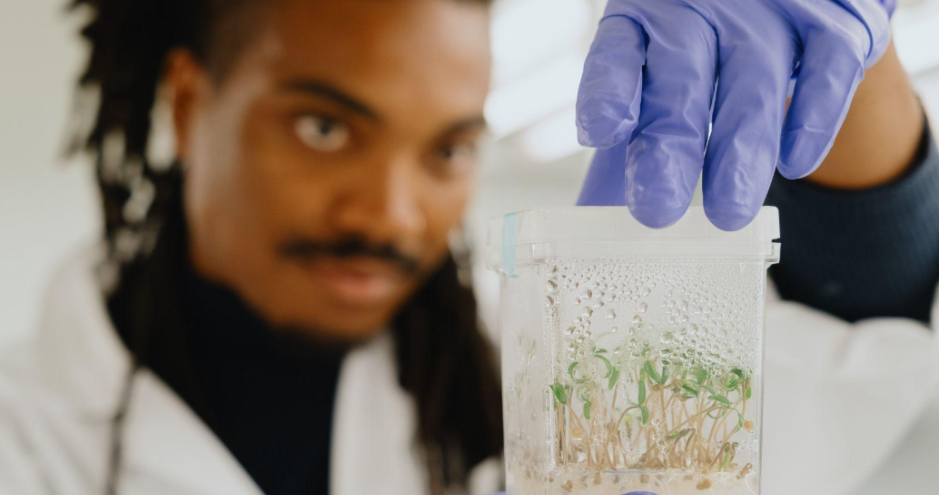
Plant clone
Genomines produces nickel through phytomining. The process starts with the cultivation of specific plants from the daisy family (Asteraceae) known as hyper-accumulators, which naturally absorb metallic ions through their roots from nickel-rich fields (otherwise considered toxic to other crops). The metal is then transported and stored in high concentrations, reaching up to 7.6% of the plant's total biomass, within the vacuoles (cavities inside the cell that serves as a reservoir) of the leaf cells.
To maximize efficiency, Genomines has enhanced these perennial plants (which can live up to 15 years after planting) for increased size and by developing a targeted soil microbiome. The plants are typically harvested after six months, yielding up to 2.5 tonnes of nickel per hectare per year, a process which simultaneously helps to remediate the land. Once the biomass is harvested, the recovery is achieved using a combination of techniques, including bioleaching, and significantly, a patent-pending method that involves heating the plant material in the absence of oxygen. This technique avoids previous industrial practices, such as incineration, and prevents CO2 emissions by retaining the carbon, resulting in a concentrated biochar instead of ash.
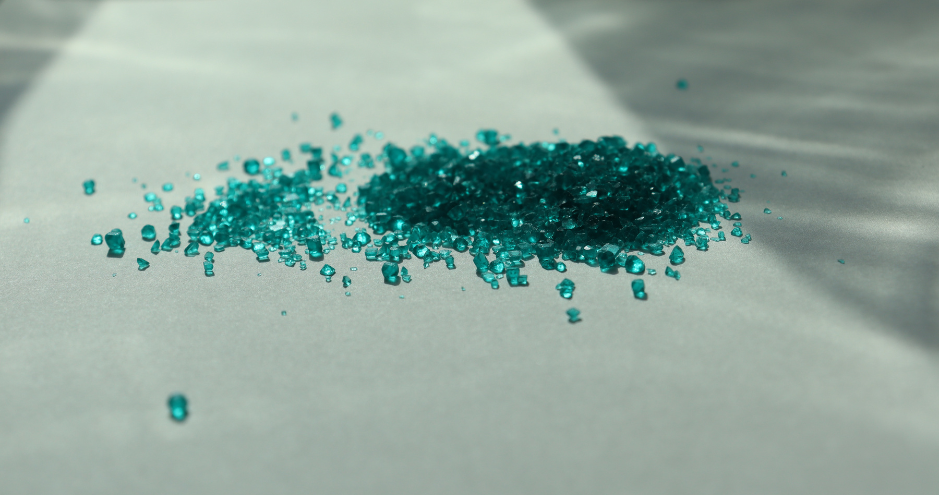
Nickel crystals
This solution was born from the meeting of two distinct backgrounds.
From Mining Engineering to Botanical Innovation: The Genesis of Genomines
Genomines’ journey began with an unexpected encounter between Fabien Koutchekian, a mining engineer with a background in resource extraction and purification, and Dr. Dali Rashid, a PhD in plant biotechnology. Always aspiring to entrepreneurship, Fabien who complemented his education with business and political science degrees from Audencia and Sciences Po Paris, was advised to work in consulting in order to become an entrepreneur. That’s exactly what he did for two years before launching his first venture with two other co-founders. This experience, which turned out to be unsuccessful due to a misalignment within the founding team, provided invaluable lessons. “The first thing I learned as an entrepreneur was to be very careful about who you associate with,” Fabien recounts.
It was for the best as it allowed Fabien to jump into a new entrepreneurial venture in March 2021 through Entrepreneur First, a program renowned for connecting individuals with vastly different expertise. This is where he met Dr. Dali Rashid. Their initial discussions, marked by authentic curiosity about each other's fields, sparked an unexpected synergy. Fabien shared his fascination with certain plants capable of surviving the aggressive environments of open-pit mines. Dr. Rashid, in turn, revealed her work on “hyperaccumulators”, that naturally absorb and store high concentrations of metals in their tissues.
Genomines wasn’t born right away. The company was only officially launched after a 6 month-period of intensive iteration and prioritization. Fabien recalls: “We mapped all the problems we cared about, and this is a good ‘passion check’ for future entrepreneurs! And then, we created a prioritization matrix for all the problems and matching solutions we considered, and scored each idea based on its feasibility, the market potential, and our 'right to win'—meaning, are we the right people to build this business?” After looking at regulatory hurdles too, phytomining (the use of plants to extract metals), emerged as the highest-scoring idea.
Navigating Deep Tech’s Treacherous Terrain: “It’s Worth It!”
Launching a deep tech venture like Genomines has been a formidable undertaking, where challenges are unique but surmountable. As a matter of fact, Fabien claims that the whole journey “is worth it! Many people see it as work, but it's truly a passion," he affirms. “When you see the bricks falling into place, materializing, that's gold,” he muses, recalling the profound satisfaction of producing battery-grade nickel for the first time. His optimism remains intact despite all the hurdles Genomines had to clear.
“Overcoming skepticism was the primary hurdle,” Fabien explains, “as there is a narrative issue where you need to convince simply with solutions that can be very technical.” This involves creating compelling models, grounding the narrative in robust scientific documentation, and ensuring seamless communication across business, finance, technical, and operational functions. “Making sure all these people can communicate is not easy”, Fabien notes. Genomines’ team of 25 people is spread across France and South Africa, and includes individuals from diverse backgrounds, including some with extensive academic experience but limited corporate exposure, adding another layer of organizational complexity.
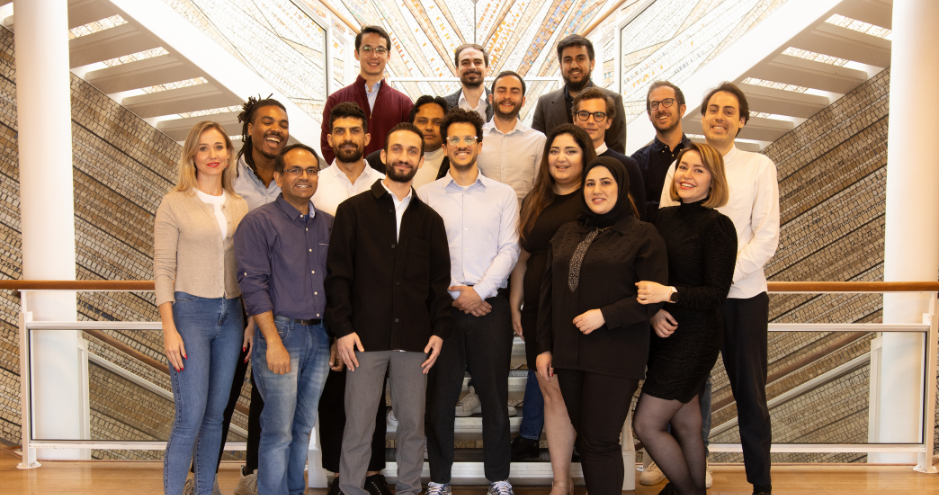
Genomines’ team in France
The very nature of deep tech also implies long development times and substantially high costs. “The slightest piece of equipment, and the hiring of the person to operate it are very costly”, Fabien explains. Fundraising itself proved to be a year-long marathon, involving numerous investors, extensive due diligence, and intense negotiations. This process, while formative, was by no means easy.
Furthermore, “operating in the physical world implies physical problems, such as logistical delays” but also unprecedented challenges such as collaborating with regulators to establish new frameworks for novel technologies. Fabien also points to the common entrepreneurial pitfall of diluting capital by chasing too many opportunities or attempting to deploy in too many countries simultaneously, rather than concentrating on core objectives. This is a hurdle he managed to overcome thanks to the support he received from HEC Paris.
HEC Paris: Enabling Focus and Structure
In navigating these multifaceted challenges, Genomines found invaluable support within the HEC Paris ecosystem. After Entrepreneur First, the startup participated in Creative Destruction Lab - Paris (CDL), Climate stream, a program dedicated to seed-stage, science-based companies addressing solutions for tomorrow's global challenges.
His experience at HEC Paris through the CDL program helped the team in two different ways: “It helped us a lot in terms of structure, and to focus on tangible objectives”, Fabien affirms. “The sprint-mode functioning and very competitive nature of the program makes it very rigorous, but profoundly formative.” Genomines managed to concentrate on "value inflection points" that truly drive progress and create enterprise value. Beyond structural guidance, the HEC Paris network facilitated connections with "incredible people" who contributed significantly to the company's advancement. This disciplined approach enabled Genomines to demonstrate tangible results, such as producing battery-grade metal and successfully operating on test fields.
Later, the company joined the Twenty First program, a joint initiative with Centrale Supélec and AgroParisTech, specifically for its scientific support and access to specialized machinery.
What’s next for Genomines?
With the recent Series A funding, Genomines will work toward a significant expansion, with an immediate focus on scaling up operations in South Africa, expanding their fields and proving the economic viability of their solution. Team expansion is also a priority. “We plan to recruit critical profiles, including a dedicated HR manager covering both France and South Africa”, Fabien explains. Furthermore, Genomines will continue to invest heavily in research and development, equipping their newly relocated 600-square-meter laboratory for advanced scientific work.
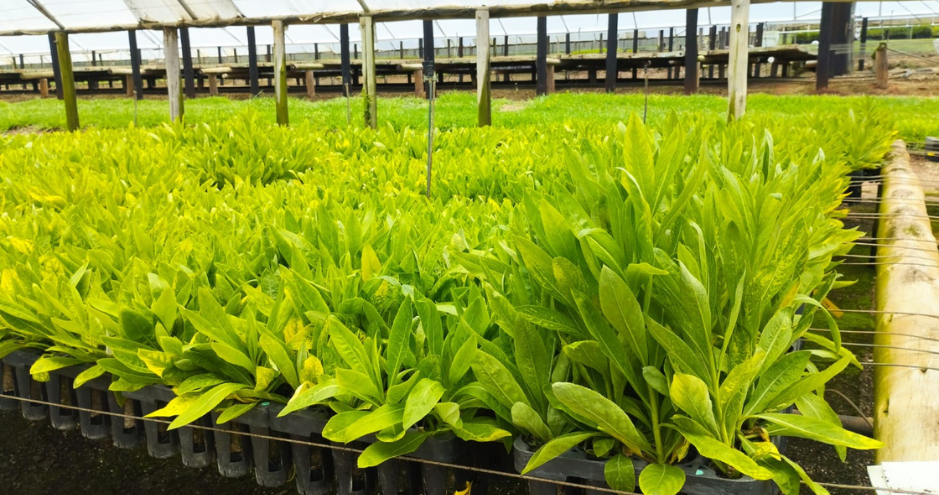
Nursery
The company is strategically progressing through defined development stages. Having successfully demonstrated the technology in the lab, they are currently conducting more massive field tests over several hectares to validate financial performance and achieve cost parity with traditional mining. The objective for the close of Series A funding is to operate on approximately 100 hectares, proving profitability. By Series B, Genomines aims for commercial operations on around 2,000 hectares, securing long-term offtake agreements with major automotive players.
“40%. That’s the cost discount we could achieve compared to the traditional mining industry.” – Fabien Koutchekian
If Genomines wins its bet to supply batteries for up to three million electric cars by 2030, there is a strong chance that your next car might have a bit of Genomines in it.