


 Brands & Behaviors
 Sustainability & Society

Context: Artemis II, A Global Moment of Awe
Launched on April 1, 2026, NASA’s Artemis II mission captured the world’s attention. The first crewed flight around the Moon since Apollo 17 in 1972, it ended a half-century gap in human travel beyond low Earth orbit and marked a major step in humanity’s return to deep-space exploration.
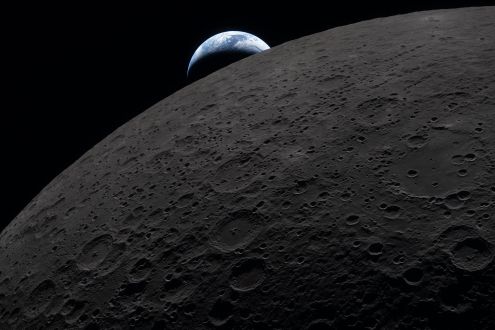
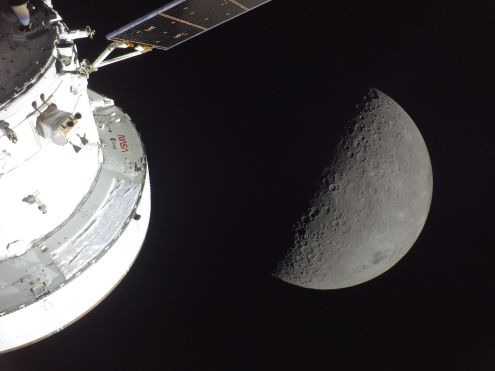
Artemis II was historic not only for exploration and science, but also for what it allowed us to see. In images shared around the world, viewers witnessed “Earthset” and joined the crew in contemplating the Moon’s far side, sunlit craters and the vastness of deep space. A technical test flight became, for many, a shared experience of wonder.
That emotion — awe — was everywhere in the media coverage of Artemis II. But awe is more than a social media reaction, a NASA slogan or a poetic response to the universe. It is a scientifically studied emotion. At HEC Paris, Craig L. Anderson, Assistant Professor of Marketing and specialist in affective science, studies how emotions shape well-being, behavior and consumer choices. “Awe is my favorite emotion to both study and experience,” he says.
His work has reached audiences far beyond academia, leading him to speak at the White House and to take part in National Geographic’s Operation Arctic Cure, which examined whether awe-inspiring experiences could help heal US veterans facing post-traumatic stress and depression.
- The awe inspired by Artemis II and its incredible images of Earth and the Moon is a psychological experience linked to the vastness of space.
- “Moon joy” captures a powerful shared moment, but it is not defined by one emotion alone.
- Everyday awe and the cultivation of mindfulness may offer a more reliable path to well-being than waiting for extraordinary events.
- Big experiences of awe like Artemis II can encourage people to act more prosocially and engage in pro-environmental behavior.
- Awe sparks curiosity and supports learning. For example, the Artemis mission may inspire many young people
How do you define the feeling of "awe" and its psychological effects?
Awe is the emotion we feel in the presence of things that are vast that take some effort to wrap our minds around. Certainly taking in the beauty of the night sky or pondering the vastness of the universe and humanity’s place it in can inspire awe. But I think extraordinary accomplishments of the mission, the bravery of the astronauts, and the teamwork of a massive team of some of the smartest and most capable people on the planet could be other ways that the Artemis II mission inspired awe.
Is “moon joy” the ultimate expression of awe, or a successful communication and marketing operation by NASA?
I love the term moon joy! However, I don’t think it is defined by one emotion, awe or otherwise. As far as I can tell, the phrase comes from a NASA communicator’s gently humorous acknowledgement of an astronaut being, well, figuratively over the moon about literally being over the moon.
It was a beautifully human moment, but as a marketing professor I also appreciate that the NASA communication team knew a good slogan when they saw it.
Can awe be found beyond extraordinary moments like space exploration?
I think that both the popular press and the scientific literature probably focus too much on extraordinary experiences of awe. Evidence suggests awe has a number of positive downstream consequences like curiosity, better well-being, and more prosocial behavior.
I think finding awe in our daily lives is a smarter way to reap the benefits of this emotion rather than depending on extraordinary events. Examining how to find awe in the mundane is a big focus of the research I’m currently working on.
Can the kind of awe triggered by Artemis II have a positive impact on people’s minds in uncertain times?
It certainly was a nice dose of positive affect and feeling good is an important (but not only) part of well-being. It’s certainly possible focusing on such a feel-good story took the edge off of a lot of people’s daily grind.
There are reasons to expect there might be more durable downstream effects of awe as well. For example, in my own work I’ve studied the strong relationship between awe and curiosity. It’s possible watching the Artemis mission may inspire many young people to pursue STEM careers.
Can contemplating the vastness of the universe encourage greater humility and care for the planet?
Research shows that big experiences of awe can certainly motivate people to be more prosocial, act more collectively, and engage in pro-environmental behaviors. National pride and competition between countries certainly have been used to justify funding space programs, but I think that reflects the trickly balancing act that agencies like NASA have to do to navigate political realities.
However, that so many people around the world were so strongly invested and rooting for Artemis speaks to the power of awe to help us recognize what unites us rather than what divides us.
Does NASA’s focus on emotion strengthen or distract from the science behind Artemis II?
My work suggests that awe can help people learn and seek out new information, so I think it actually works seamlessly as a way to stir up interest in science. Anytime I see an astronaut do a little demonstration while in zero gravity it definitely sparks the awe-curiosity link in me!
Does the communication around Artemis II reflect a wider trend in which emotion dominates public life?
I think being drawn to emotional stories is a fact of the human condition. Work published in 2012 for example, show that anger and awe are particularly powerful predictors of whether something will go viral. For this reason, it’s important to understand the effects these emotions have, and how they could perhaps be leveraged to combat widespread misinformation that we’re seeing on social media. We have a long way to go.
How can we cultivate awe without leaving Earth?
Like I said, finding awe in our daily lives has been a focus of my research. For example, in a paper showing that the awe people felt during white-water rafting strongly predicted improvements in well-being, I also included a study showing that the nature that people experience in their daily lives, like appreciating a sunset or blooming flowers, can also improve their well-being via awe.
I think one key to finding more awe in our daily lives is being mindful. That is, paying attention to what’s happening in the moment, in a non-judgmental way. Once we do that, we are better able to notice things around us that take us out of the typical frame of reference we habitually operate in. The beauty of nature tends to powerfully do this, but other people, art and music, or even new ideas can be awe-inspiring.
 More research



 Geopolitics & Public Affairs


 Innovation & Entrepreneurship