



 Innovation & Entrepreneurship
 Sustainability & Society

For decades, we’ve asked people to believe in the power of entrepreneurship. But who does it actually work for?
Since the 1980s, entrepreneurship has gained global traction as a tool for empowerment. In public policy, economic development, and social innovation, starting a business has been framed as the ultimate vehicle for self-sufficiency — especially for those shut out of the formal labor market. From microcredit to startup grants, the narrative has been remarkably consistent: entrepreneurship is for everyone. And yet… reality tells a more complex story.
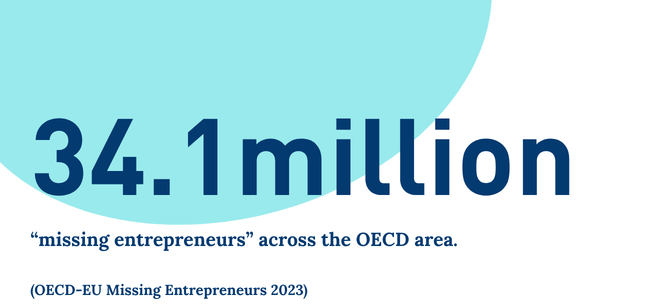
According to the OECD, there is a gap of nearly 34 million “missing entrepreneurs” across its 38 member countries — people who could become entrepreneurs but don’t. Women, youth, seniors, immigrants, and people with disabilities remain vastly underrepresented. Three-quarters of those “missing” are women.
Despite a growing number of programs, inclusive entrepreneurship remains more promise than reality.
- Entrepreneurship is less inclusive than expected, with millions of “missing entrepreneurs,” mostly women
- Policies increased access but often fail to improve economic outcomes for vulnerable groups
- Training programs boost employability more than actual business creation
- Structural and psychological barriers still limit participation
- With proper support, vulnerability can drive resilience and long-term impact
Why the Promise of Inclusive Entrepreneurship Took Hold
In the 1990s and 2000s, as traditional employment models came under pressure from globalization and digital transformation, policymakers turned to entrepreneurship as a response to rising unemployment and economic exclusion.
The UK’s Enterprise Allowance Scheme, the U.S. Empowerment Zones, and Grameen Bank’s microfinance movement all became emblematic of a broader vision: small businesses as engines of innovation, inclusion, and growth.
France joined this movement with the launch of the auto-entrepreneur status in 2008, designed to simplify the process of business creation and open it up to new segments of the population.
But did these efforts deliver? The surge in small-scale entrepreneurship came with limitations.
In France, auto-entrepreneurs generate an average turnover of just €15,000 per year, with a three-year survival rate of 30–36%, well below traditional SMEs. Outcomes are worse when entrepreneurs start with fewer financial resources — raising questions about whether entrepreneurship really improves economic prospects for the poorest.
Decades of Policy — But Limited Transformation
International studies confirm the limits of “entrepreneurship for all.” In 2015, MIT economist Abhijit Banerjee — co-winner of the Nobel Prize in Economics — analyzed the effects of microcredit in developing countries. His conclusion? Microcredit has some positive effects, but little evidence of significant poverty reduction or improved living conditions.
Even when the tools are accessible, structural inequalities persist. HEC Qatar professor Seungah Lee highlights the growing disconnect between the rhetoric of entrepreneurship and real-world outcomes: “Despite the increase in policies and initiatives supporting entrepreneurship, the annual rate of new business creation has declined — even in places like Silicon Valley.”
And when people do launch businesses, outcomes can diverge sharply. Youth entrepreneurs face specific barriers: lack of credibility, limited networks, and minimal experience. These are obstacles that standard training programs often overlook.
Who Still Gets Left Behind in the Entrepreneurial Boom?
Entrepreneurship isn’t just about market opportunity — it’s also deeply personal. Self-doubt, lack of support, family responsibilities, and past trauma all play a role in shaping the journey of underrepresented founders.
Programs like HEC Stand Up recognize this dual reality. Built for women from all walks of life — many without traditional business backgrounds — it blends top-tier entrepreneurial training with a safe space for personal growth. “Our program is built on three pillars: self-development, action, and pragmatic business,” explains Nathalie Riond, Academic Director of HEC Stand Up.
This approach reflects a broader shift at HEC Paris through its HOPES initiative, which aims to reach over 10,000 women and young people aged 18–25 across France with entrepreneurship education and support. Crucially, the program includes a rigorous academic evaluation to measure real-world outcomes — not just good intentions.
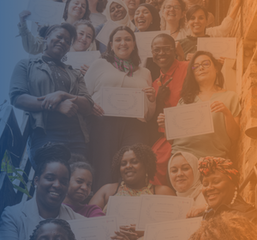
HEC Stand UP offers free support to all women who want to start their own business, whatever their age, background or social horizon.
When Training Helps — and When It Doesn’t
Evaluating entrepreneurship programs is not easy but it is essential. A randomized study by HEC Professor Yann Algan evaluated a French program that supported unemployed youth interested in entrepreneurship. Two years later, the surprising finding was that non-participants were more likely to become entrepreneurs than those who received support.
But that was not the full picture: participants were more likely to find salaried jobs and reported 27% higher earnings. In short, the program helped — just not in the way policymakers had expected.
This echoes earlier findings from a World Bank review of 230 entrepreneurship programs: while such programs consistently improved skills, they had mixed results on actual business creation, especially among vulnerable groups.
Entrepreneurial training can help people become economically active, even if they don’t launch a business. But is that enough?
What New Research and Programs Are Teaching Us
Not all hope is lost — far from it. Recent studies at HEC Paris suggest that entrepreneurs from vulnerable backgrounds may eventually outperform others. Research by Professor Rodolphe Durand, with Romain Boulongne and Caroline Flammer, found that loans given to entrepreneurs in disadvantaged areas delivered superior economic, financial, and social returns, including local job creation and gender equity.
Meanwhile, Professor Denisa Mindruta found that entrepreneurs who launched businesses after unemployment initially performed worse financially — but caught up later. They took more steps, experimented more, and ultimately built resilience.
The key takeaway? Vulnerability can be a source of entrepreneurial innovation — if supported properly.
But many questions remain:
- What makes some support programs work while others fail?
- Should financial and non-financial support be more integrated?
- Can early interventions — even in childhood — foster entrepreneurial mindsets and social capital?
- Could lived experience of hardship become a strength, not a limitation?
The HOPES research program aims to explore exactly these questions — through evidence, not assumptions.
Want to Contribute?
The HOPES initiative welcomes perspectives from researchers, practitioners, and future entrepreneurs. Have thoughts, questions, or ideas?
Reach out at hopes@hec.fr.
Sources
- Banerjee, A., Karlan, D., Zinman, J. (2025), Six Randomized Evaluations of Microcredit: Introduction and Further Steps, American Economic Journal: Applied Economics
- Boulongne, R., Durand, R., & Flammer, C. (2023). Impact Investing in Disadvantaged Urban Areas, Strategic Management Journal.
- Lizunova, E., & Mindruta, D. (working paper (2025). From unemployed to business owner: Exploring entrepreneurial experimentation under failure-tolerant settings. HEC Paris.
- Seungah Lee (2024), The “Gospel” of Entrepreneurship? Entrepreneurialism, Development, and the Youth Enterprise, Academy of Management Perspectives
- World Bank Group. (2014). World Bank Group Support for Innovation and Entrepreneurship: An Independent Evaluation. Independent Evaluation Group.
- Algan, Y., Ceci-Renaud N., Crépon B., Huillery E., Pariente W., Groupements de Créateurs / J-PAL. (2024). Encouraging Youth Entrepreneurship in France.





 Economics & Finance