

 Sustainability & Society
 Innovation & Entrepreneurship
An inherited mission and an early calling
Some life missions aren’t chosen. They are inherited through landscapes, through people who care for them, and through the stark realization that a “love for nature” alone is not enough to protect it. Meaningful nature restoration at scale requires funding, governance and data systems that can sustain it over the long term.
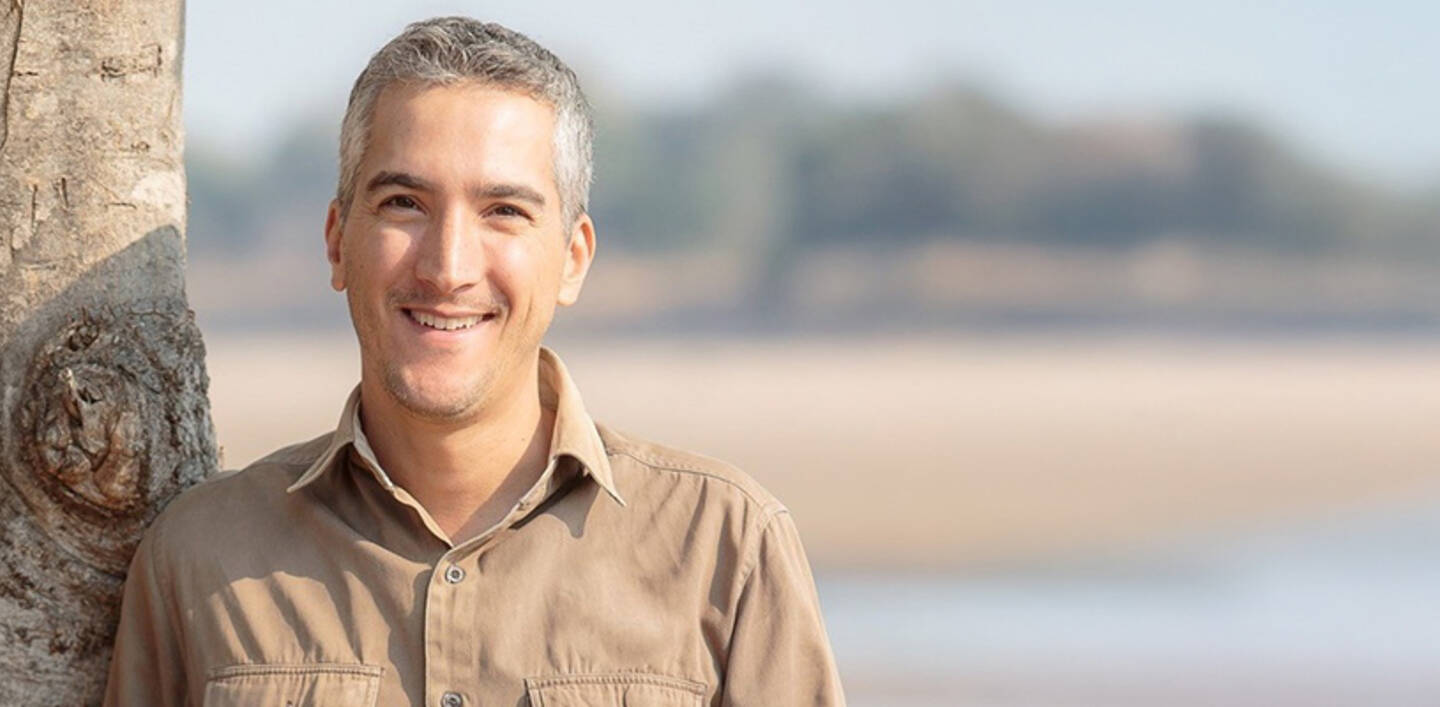
For Dr. Hassan Sachedina (EMBA 2022), that realization came early. Growing up in Kenya, he remembers traveling with his mother to remote places where communities lived and organized their lives around the rhythms of the seasons and the land.
“I must credit my mother,” he says. “I have memories from when I was four or five, traveling with her across different Kenyan rural landscapes.”
What stuck with him wasn’t just the beauty of these places, it was the people, the local stewards who lived in and around these landscapes, managing and protecting them.
By the age of 16, he was already writing letters asking for opportunities to volunteer. He spent school holidays in rural areas, apprenticing and learning how conservation worked on the ground and working alongside the people who keep the ecosystems alive. It was during this time that his sense of purpose began to take shape: a lifelong mission to treat the land not as scenery, but as a personal responsibility.
From field experience to financing insight
Hassan studied environmental management at Middlebury College in the United States and later pursued a master’s in Environmental Change and Management at the University of Oxford. His first job took him straight into fieldwork, where he managed a rhino conservation project in southern Tanzania, before joining the African Wildlife Foundation as a program officer.
“It was a mix of fundraising and getting projects resourced and off the ground,” he shares. It was here that he began to confront one of the hardest truths in conservation: while intention is common, sustainable long-term financing is far harder to secure.
For years, conservation funding had relied heavily on aid or tourism, both inherently unpredictable and vulnerable to political shifts and economic changes. During his master’s program in the late 1990s, he was introduced to the emerging concept of carbon markets.
This sparked a bold idea: What if conservation could be financed like infrastructure – structured, scalable, and performance-based?
“I thought, wow,” he recalls, “if that could ever work in conservation, that would be amazing.”
Scaling conservation through carbon finance
A decade later, that idea became a reality. He witnessed one of the world’s first forest carbon credit projects achieve certification, coincidentally in Kenya. He applied and joined the company as employee number three, even though it was an industry still poorly understood by many.
But Hassan saw a path others were missing: the potential of dryland ecosystems. While these landscapes may store less carbon per hectare compared to other ecosystems, they hold significant social and ecological value. Thus, for Hassan, the solution lay in scale, and in building strong, long-term partnerships with local communities.
This led him to start BioCarbon Partners (BCP), a forest conservation company in Zambia and Mozambique. BCP has grown into one of Africa’s conservation finance players with millions of hectares under improved forest management, proving that carbon finance could create real incentives for communities to protect nature.
Hassan, however, realized that forests are only one part of the climate story.
Farm-to-fork agriculture accounts for a significant share of global emissions. This is also where livelihoods, food security, and land health intersect.
“I thought, if we could accelerate the conversion of the world’s agricultural lands to being more sustainable,” he says, “the top prize would be increased food and nutrition security in the growing population around the world… while enhancing biodiversity, soil conservation, water quality – all just by farming better.”
Sayari Earth: the regenerative agriculture shift
That pivot led to Sayari Earth, the regenerative agriculture and ecosystem-engineering company he founded during his HEC Paris Executive MBA. “I joined the EMBA as I was starting a new company and wanted to make sure that everything I was doing was best practice,” he says. “At every single module, my thesis and my capstone, Sayari Earth became the test case.”
“I saw it as a great way to just build a stronger foundation of a new company.”
Today, Sayari Earth is an impact-driven social enterprise and public benefit corporation headquartered in South Africa, where he is currently based, with 20+ staff members and projects designed to reach meaningful scale. The model is direct: Sayari Earth doesn’t consult, it builds projects in collaboration with landholders, bringing capital, scientific tools, and technical support to help communities restore soil and vegetation, improve productivity, and strengthen livelihoods. This work is financed through high-integrity, high-quality carbon markets.
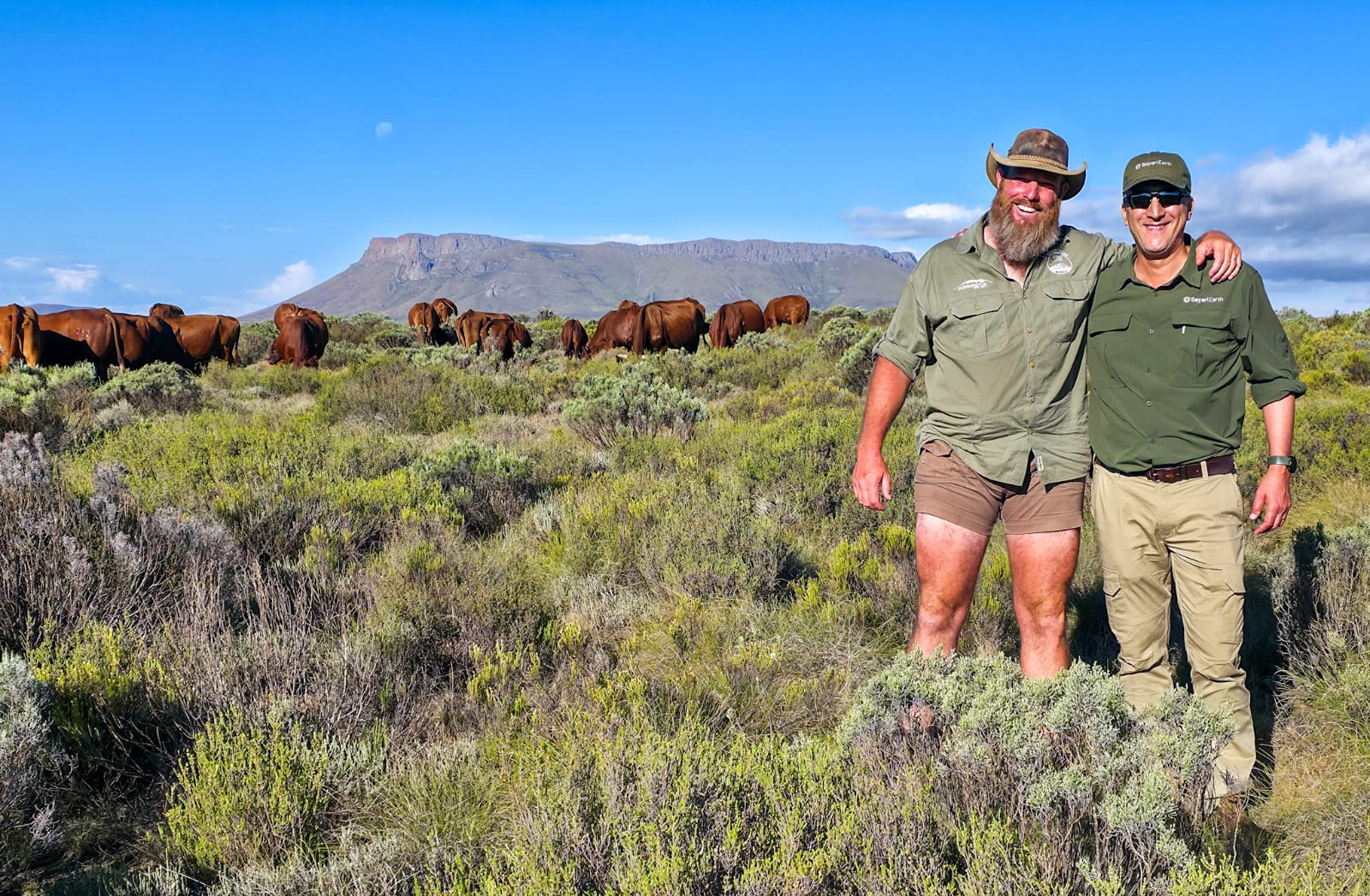
Sayari Earth’s flagship project, the Karoo Sustainable Landscapes Program, was launched in South Africa’s semi-arid Karoo, a vast and ecologically significant region shaped by variable rainfall and extensive livestock farming. This unique landscape is deeply rooted in South Africa’s history and home to generations of farming communities who have lived and worked on this land. The challenge here is not only technical, but also deeply cultural.
“It’s difficult trying to get people to change how things have always been done,” he says, “maybe how things were done by their grandfather. But the land speaks clearly. Landowners can see and feel the decline with lower productivity, poorer soils, and less resilience."
As he puts it, “Sustainable agriculture needs to be a core pillar of climate finance.”
What makes Hassan’s approach unusual is how openly he treats the mission. Sayari Earth has published its strategic plan and begun sharing tools, even encouraging competitors to use them.
“We’re starting to put our tools online… we’re encouraging competitors to use them; we’re encouraging startups to clone it. It’s important for the planet that regeneration becomes an industry. It’s about how to spread it around as quickly as possible.”
In a world often obsessed with defensibility, he believes regeneration needs something bigger: momentum. Climate and biodiversity breakdown, he insists, are not social media “doomism,” but scientific consensus, and the response must become industrial, not niche. “If you clean up your supply chains, you may end up saving, or in the best case, even making money. Which is what Sayari Earth is trying to show.”
A long-term vision – business, nature and responsibility
If the work carries urgency, it is also personal. Recently, becoming a grandfather changed his relationship with time. Watching a two-year-old discover the world with “unfiltered” wonder, he finds himself thinking decades ahead: What will the planet feel like when this child has grown up? His answer is not perfection, but the normalization of a future where it is “business as usual” to care about pollution, waste, people, and wildlife.
“With this sort of vision, maybe it’s a bit idealistic, that industry around the world gets cleaner quickly, and more capital flows to land stewards and globally important ecosystems. Those areas then regenerate; they’re able to produce more, support more people, protect more biodiversity, and remove carbon from the atmosphere.”
He recalls a module by professor Christelle Bitouzet that was about busting the myth of sustainability.
“It was eye-opening for many of my classmates, showing how responsibility to the planet and the resilience of nature underpin most business models, even in manufacturing or IT.” For him, it was a strong validation of everything he is trying to achieve.
Hassan Sachedina’s story is not just about carbon markets or regenerative agriculture. It is about learning to speak two languages at once: the language of ecosystems and nature, and the language of finance and bottom lines. It is about believing that doing good and building a viable business are not opposing goals – and that the planet is not a backdrop to the economy, but a stakeholder in every decision we make.
Feature by Sharlene Lee


 Economics & Finance