


 Innovation & Entrepreneurship
 Sustainability & Society
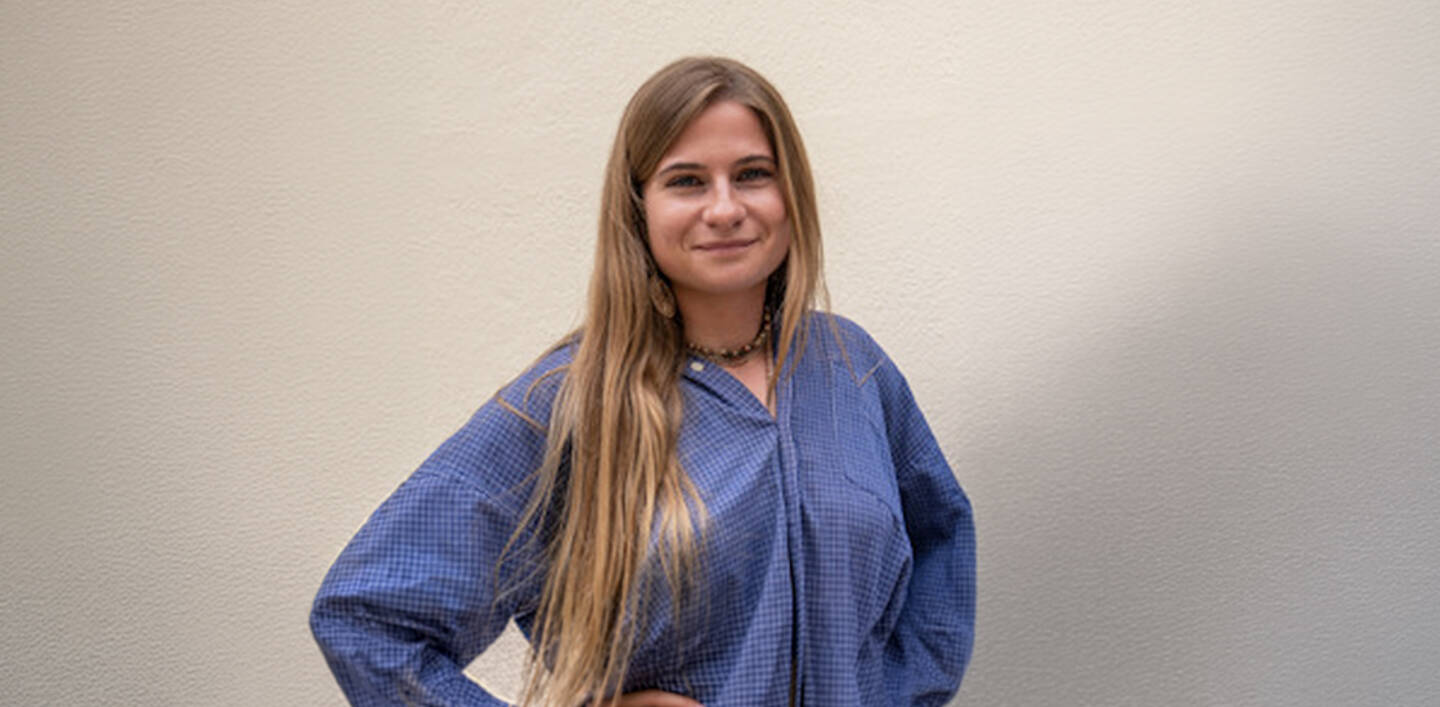
What started as an entrepreneurial project quickly became something more concrete - a way to create opportunities for people whose talents are too often overlooked. With Fika Traiteur, Albane was determined to show that people with disabilities are not defined by limitations, but by skills and professionalism that deserve to be seen
For Albane Lehalle, that conviction became a compass. Through Fika Traiteur, she did more than just launch a company. She chose to tackle an important and sometimes overlooked issue - the inclusion of people with disabilities. Her journey embodies a powerful idea – that entrepreneurship can be a concrete force for social change.
An Academic Journey Shaped by Excellence and Openness
Originally from Nancy, Albane Lehalle pursued scientific studies at high school before embarking on highly demanding preparatory classes to join a top business school like HEC Paris. Beyond the academic intensity, what she remembers most is the collective spirit, the relationships she built, and the discipline she developed. Living in a boarding school environment for two years created a unique “bubble” where mutual support was essential. That first experience of community life would deeply shape the way she works today.
She was then admitted to the prestigious HEC Paris Grande École program, pursuing her studies with rigor while gradually exploring the professional world. Her gap years proved to be a turning point.
During that time, she discovered the events industry, gaining firsthand insights into operational management and the behind-the-scenes realities of organizing large-scale projects. More importantly, she worked for impact-driven companies such as Too Good To Go, where she gained exposure to purpose-led entrepreneurship.
Little by little, Albane began to think about how she could use everything she had learned. The answer emerged naturally - she wanted her work to have a real sense of purpose.
Choosing Social Entrepreneurship
It was in this context that Albane decided to join the X-HEC Entrepreneurs Master of Science program. She not only wanted to learn how to develop a company but acquire a framework that would enable her to transform intention into action. The program provided her with two key lessons that would define her future path.
The first was the “test, learn, repeat.” philosophy.” She discovered that failure is not an endpoint, but simply a stage in the process. Adopting this test and learn culture gave her the freedom and confidence to move forward without expecting everything to be perfect.
The second lesson was deeply human. More than anything, the program provides an amazing ecosystem. Encounters with experienced entrepreneurs and fellow students working on their own ventures created a unique dynamic - a collective energy that made it easier to dare and take risks.
Making the Invisible Visible
The idea to create Fika Traiteur came from a simple but striking observation. While working in the events industry, Albane discovered ESATs - French organizations that provide employment opportunities for people with disabilities. Until then, she had never heard of these organizations. She quickly realized she was not the only one.
What struck her was not only their invisibility, but the gap between the quality of the work produced and the lack of recognition these organizations received. On the ground, she encountered outstanding products, genuine expertise, and above all, people eager to engage with the outside world.
Together with her co-founder Alexandre, who shared the same realization, a vision began to take shape - what if they could build a model that fully showcased these talents?
That vision became Fika Traiteur, an inclusive catering company with a clear ambition - to rethink the entire value chain, from farm to plate. In practice, this means sourcing as many of the raw materials and ingredients as possible from ESATs, ensuring that people with disabilities are in charge of food preparation, and providing the service at events through mixed teams made up of both disabled and non-disabled employees.
The model has quickly proven successful. In less than two years, the company has won over prestigious clients such as Le Monde and the Boston Consulting Group and has provided the catering for major events at venues like Station F and at international summits hosting thousands of participants.
Responsibilities, Challenges, and Moments of Pride
As both a co-founder and CEO, Albane has a pivotal role within the company. She manages client relations, strategy, business development, and brand image. But she is also deeply involved in team management, particularly in supporting employees with disabilities who participate in Fika Traiteur’s events.
This type of management requires both sensitivity and attention to detail. It is not only about organizing the work, but also about supporting individual growth, developing skills, and creating an environment built on mutual trust.
And this is where some of the greatest rewards and satisfactions lie. A team member proudly sharing that they recreated a recipe learned at work at home. Another rearranging vacation plans in order to take part in an event. These moments give the project its deepest meaning. They are reminders that behind every company activity lies a human story.
The challenges, however, are also very real. Fika Traiteur must compete in a highly competitive market, reassure demanding clients, and overcome stereotypes about quality and disability. The company must also navigate the realities of the medico-social sector, which requires constant flexibility and adaptation. Like any young business, it must establish credibility, stabilize operations, and withstand market fluctuations. In this sort of environment, resilience is indispensable.
Aligning Purpose with Action
For Albane Lehalle, entrepreneurship has never been an end in itself. It has always been a means - a way to meet the personal need to feel useful and to make a positive impact. It is also a way to help build a more inclusive society.
Her ambitions now extend beyond Fika Traiteur itself. She hopes to become a spokesperson for the inclusion of disabled people - ensuring that the issue remains part of the conversation and goes beyond temporary awareness campaigns or trends. Inclusion is not something that can be achieved during a single awareness week - it is something we need to work on and build every day.
And perhaps that is the most powerful lesson from her journey - purpose is not something that simply appears. It is something we build. And once found, it becomes a force capable of transforming not only a career, but the world around us.
Feature by Ivan Barnes