
HEC Paris MBA Trek Week: From Exploration to Career Clarity
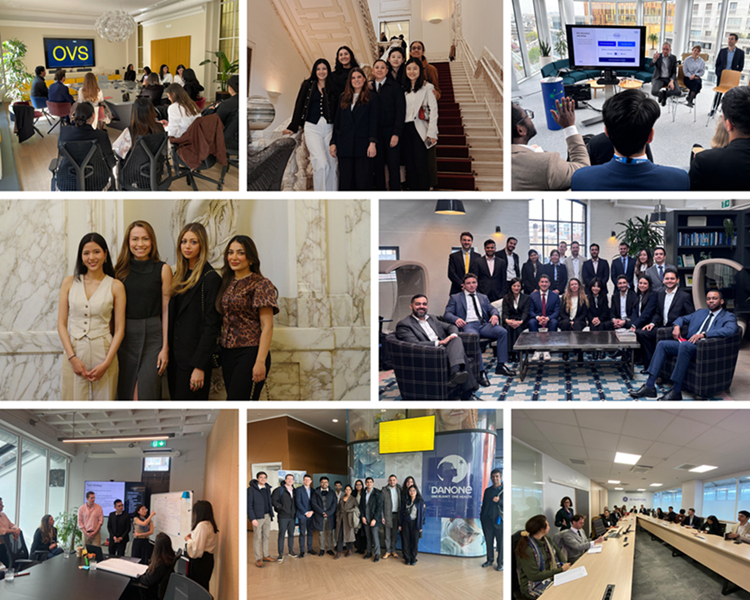
For HEC Paris MBA participants, Career Treks are designed to do more than introduce students to companies. They are intended to help participants better understand industries, strengthen professional positioning, and connect with experts in some of the world’s most competitive sectors.
The multi-day treks immerse students in major global business ecosystems. Milan focused on luxury, London on finance, Paris on healthcare, and Amsterdam offered a multisector experience spanning consumer goods, energy, and technology. Organized by HEC Talents with the collaboration of a few professional clubs, the treks combine company visits, networking sessions, and alumni interactions that help students move from broad exploration toward clearer career direction.
“Treks are a key experience of the MBA career journey,” said Mathieu Chausset, Director Talent Development & Corporate Relations—HEC Talents. “They offer direct exposure to companies, industries, and regional ecosystems. Beyond discovery, treks help participants refine career goals, test assumptions about roles or sectors, and build meaningful relationships with professionals and alumni.”
According to Chausset, the selection of industries and destinations reflects both market realities and student ambitions. The goal is to balance “established sectors” with “high-growth or evolving industries,” while also prioritizing regions with “hiring potential or innovation hubs.” Alumni presence and company partnerships are also central to the process, helping ensure students gain access to high-quality interactions inside companies.
Preparation before each trek is equally important. HEC Talents works closely with MBA participants to help them maximize the professional value of every company visit and networking interaction. Participants receive guidance on networking strategies and professional positioning.
Eva Marugan, Talent Development & Corporate Relationship Manager, HEC Talents explained that students are encouraged to approach each interaction strategically, adapting their communication style depending on the company and sector.
“A networking conversation within a large pharmaceutical company requires a different approach from a discussion with professionals in finance or within a start-up environment,” she explained.
That preparation extends well beyond reviewing company information. Students are encouraged to think intentionally about the objectives behind every interaction. “During these interactions, MBAs are encouraged to be intentional about their objectives in advance — whether they want to learn more about the company, better understand a professional’s career path, or explore potential opportunities,” Marugan said.
For HEC Talents, one of the most valuable aspects of the treks is the way they accelerate career reflection by placing students directly inside professional environments.
“Treks compress months of passive research into a few days of lived experience,” said Prashanth Mani, Talent Development & Corporate Relation Manager, HEC Talents.
In Milan, he observed students gaining a much deeper understanding of the realities behind the luxury industry.
“Companies didn’t just share what they do, they signaled, sometimes implicitly, what they expect: the mindset, the precision, the relentless attention to detail,” he explained. “Participants pick up on that. They start self-selecting.”
For Mani, that process of self-reflection is one of the most important outcomes of the experience. “Some feel energized; others realize a particular path isn’t quite right. Both outcomes are valuable,” he said.
Rittikeat Piyacharoenwatana (MBA ’27) experienced this firsthand during the Milan Luxury Trek. “As someone deeply interested in luxury, retail, and brand building, I wanted to see how iconic Maisons operate in real life.”
One particularly memorable moment came during a visit to Versace, where participants engaged with the company’s Chief Heritage Director. “This session was especially fascinating because it revealed the importance of preserving a Maison’s identity during times of transformation,” Piyacharoenwatana recalled. The experience also helped him define his own career ambitions within the sector. “The trek made my career goals feel more concrete.”
In Paris, the Healthcare Trek exposed students to another rapidly evolving industry where innovation, AI, and business transformation increasingly intersect.
For Vanilla Temtching, the experience provided a clearer understanding of how healthcare innovation moves from research into real-world patient impact. Visits to companies including Lilly, Roche, Servier, and startups at Station F also highlighted the growing role of AI across the healthcare ecosystem.
“What I found especially powerful was seeing how AI is being used in a practical way to accelerate screening in drug discovery,” Temtching said following a visit to Servier’s Paris-Saclay R&D Institute.
For HEC Talents, the long-term value of Trek Week lies not only in the company exposure itself but also in helping students build relationships and make more intentional career decisions afterward. Following the visits, students are encouraged to reflect carefully on which organizations, cultures, and professional environments align most strongly with their ambitions and strengths.
“We recommend sending a thank-you email or LinkedIn message to acknowledge the conversation, highlight key takeaways from the visit, and mention what particularly stood out,” said Marugan.
That continued relationship-building process is central to the philosophy behind the treks, which HEC Talents views as an important bridge between exploration and long-term career strategy.
As Mani summarized: “Treks turn career curiosity into career clarity, by putting participants inside the rooms where excellence is built.”