
HEC Paris Professor Anne-Laure Sellier Stars in and Co-Produces Acclaimed Experimental Film Chronovisor
Anne-Laure Sellier, Professor of Behavioral Science at HEC Paris, takes on the leading role in Chronovisor, an experimental feature film by Jack Auen and Kevin Walker that is gaining remarkable international recognition.
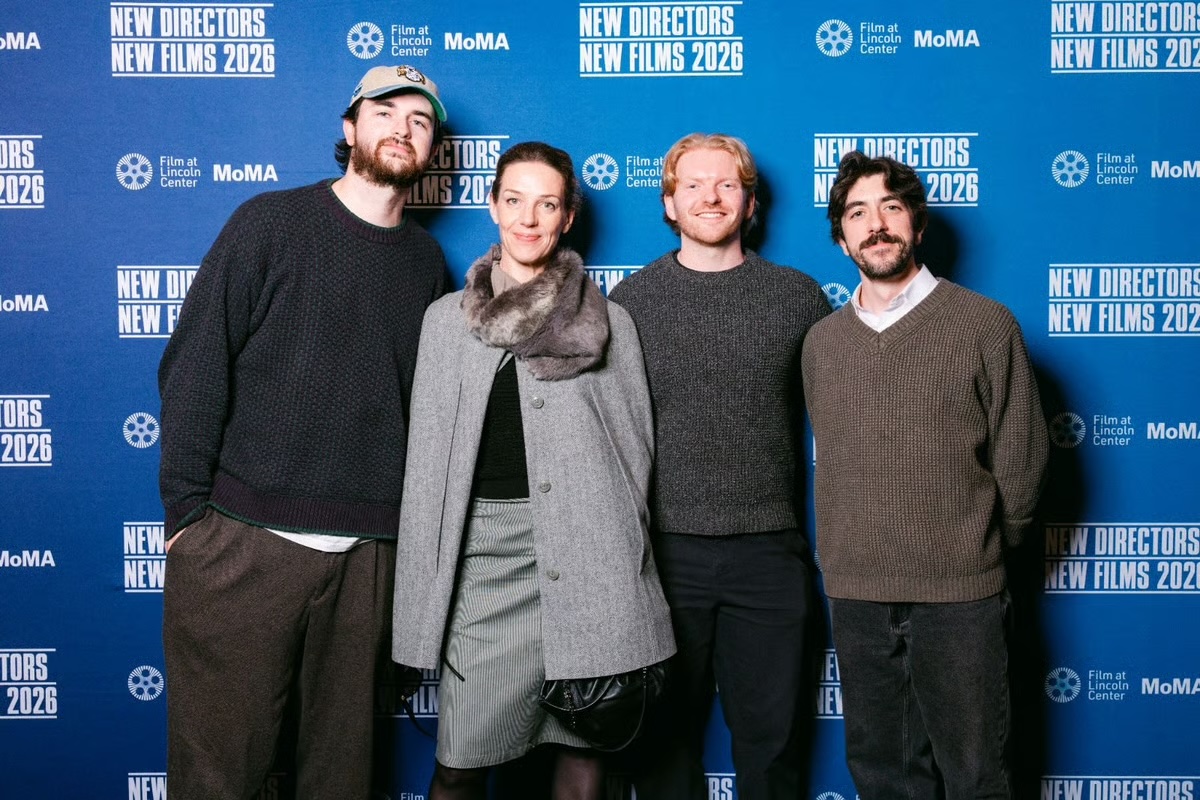
The film has been selected for major festivals including New Directors/New Films 2026, presented by Film at Lincoln Center and MoMA, the International Film Festival Rotterdam, and the Jeonju International Film Festival, where it received the Best Film Award.
A Film Noir About Research, Memory, and Obsession
Chronovisor follows Béatrice Courte, a French academic researching the philosophy and neuroscience of memory. Her work leads her to the story of the Chronovisor, a mysterious machine allegedly invented in the 1950s by Benedictine monk Father Pellegrino Ernetti, a device said to capture and display images from the past.
What begins as scholarly curiosity turns into an obsessive investigation involving forgotten archives, disputed documents, and rumors of Vatican suppression. Inspired by true events, the film transforms the act of research into a suspenseful cinematic experience, in the tradition of Jorge Luis Borges and Umberto Eco.
The Bold Choice of Making Research Cinematic
At first glance, academic research may seem far from the usual material of cinema. There are no car chases, no heists, no conventional action scenes. Instead, Chronovisor builds tension through reading, thinking, connecting sources, and moving through libraries.
Shot on 16mm in the historic libraries of New York, Philadelphia and Baltimore, the film embraces an analog aesthetic: old books, journal articles, tapes, shadows, and archival fragments become part of the mystery. Its directors describe the project as an “academia noir,” a genre they almost seem to invent around the intensity of intellectual obsession.
Anne-Laure Sellier on Becoming Béatrice Courte
In an interview with Film at Lincoln Center, Anne-Laure Sellier recalls receiving the first email from the directors as a strange and unexpected moment. What caught her attention was the announced “academia noir” genre, an idea that immediately resonated with her as a scholar.
She describes the finished film as “an ode to research,” highlighting its ability to capture what usually remains invisible: the inner life of a researcher, the mental connections, the doubts, the intensity, and what she calls the “music” inside a researcher’s mind. Not to mention an insight from her own research: that we should see to protect ourselves from what we want to believe.
A Festival with a History of Revealing Major Filmmakers
The film’s selection at New Directors/New Films is especially significant. Founded in 1972 and jointly presented by Film at Lincoln Center and The Museum of Modern Art, the festival has long showcased emerging directors working at the forefront of cinema.
Over the years, it has presented early works by filmmakers such as Pedro Almodóvar, Christopher Nolan, Wong Kar-wai, Bong Joon Ho, Spike Lee, Denis Villeneuve, Chantal Akerman, Guillermo del Toro, and many others. In a recent New York Times article, critic Manohla Dargis described the festival as one of the most consistently exciting showcases for new cinema.
When Academic Life Becomes a Thriller
Chronovisor is remarkable because it turns one of the most discreet aspects of academic life, the research process, into the source of suspense. The film shows how archives, texts, footnotes, and unanswered questions can become a labyrinth.
With Anne-Laure Sellier at its center, the film offers a rare and fascinating image of academia: not as a quiet world detached from reality, but as a place of tension, intuition, risk, and imagination. In doing so, Chronovisor reminds us that research can also be a story, and sometimes, even a thriller.