


 Economics & Finance


Executive summary
Firms performance increasingly depends on “knowledge jobs”: specialized roles that help companies understand markets, improving quality, fine-tuning product characteristics, adapt to regulation. They are not managerial in nature. These jobs are not just R&D related workers either. They include people working in areas such as marketing, legal services, IT, procurement, consulting, sales, economic modeling and business-to-business services. Their importance has grown steadily as that of production jobs have declined.
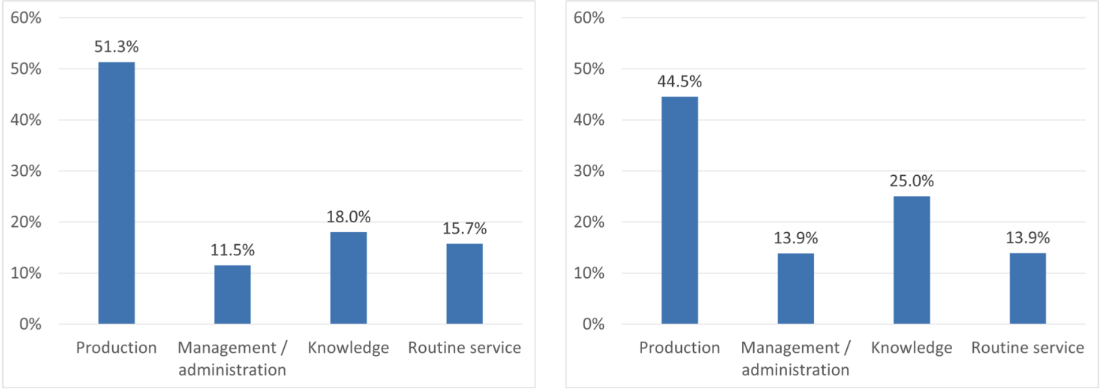
Figure 1: Share of functions within firms (Source: CEPR)
Firms with more knowledge jobs tend to produce more complex, higher-quality and more diverse products. They also charge higher markups, innovate more, and achieve stronger productivity and profitability. These effects are not limited to R&D: non-R&D knowledge roles also make a measurable difference. Competitive advantage now comes not only from producing efficiently, but from designing, positioning, and differentiating products intelligently.
Demand-side capabilities are key for competitiveness
In today's knowledge-based economy, it is not sufficient for companies to produce efficiently to stay ahead. As manufacturing firms have largely outsourced and automated production, competitive edge is no longer a question of rationalized supply chains or rapid delivery at lowest cost. Instead, the most profitable firms are those that shape demand, by designing attractive products, managing quality, adapting to regulations, and deploying effective marketing strategies. What jobs does a company rely on for these capabilities? And how are these organized?
Knowledge jobs drive performance
1/ A large, growing category of jobs
Largely overlooked in the economic literature is an increasingly important group of jobs: knowledge jobs. In French manufacturing firms, they represent around 18% of total hours worked and 25% of the wage bill, and up to 30% of employment in the largest companies. Their share has increased as that of production, often outsourced and/or automated, has declined, and management jobs have remained steady.
2/ Knowledge jobs turn information into competitive advantage
“Knowledge jobs” are not a new label for managers or engineers, nor are they limited to R&D staff. The term encompasses specialized employees engaged in knowledge-generating tasks across a wide range of functions, from marketing and legal services to procurement, IT, consulting, and business-to-business.
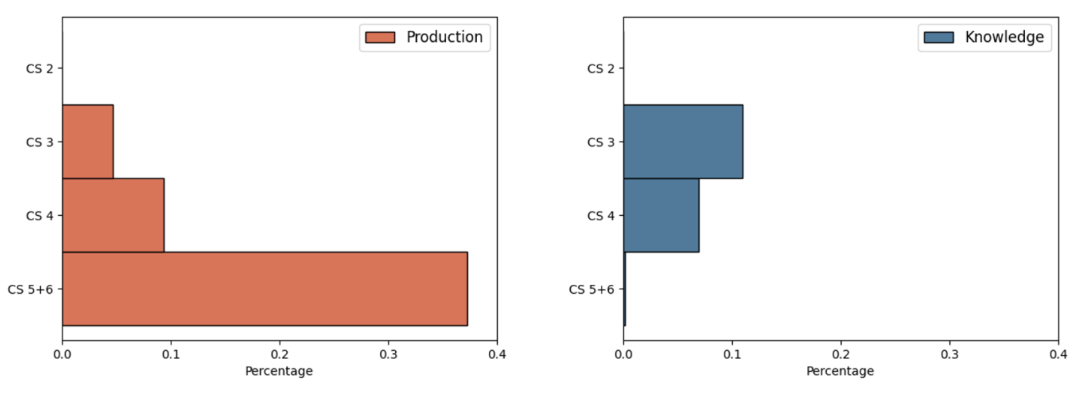
Figue 2: Shares of production and knowledge jobs in hours worked within firms by layers (Source: CEPR)
3/ Knowledge jobs follow a specific organizational logic
Knowledge jobs are usually spatially concentrated within firms and not clustered within management or production teams. They do not appear to follow a pyramidal hierarchical pattern either, but rather form an ecosystem within firms.
4/ Knowledge jobs improve performance
A study focusing on the share of knowledge jobs, and controlling for the effect of other variables, shows that companies employing a higher proportion of knowledge workers perform better: they produce higher-quality, more complex and diverse goods, and respond better to variable market demand conditions.
5/ The rise of knowledge jobs changes market dynamics
Because specialized knowledge, for example in marketing or legal matters, is hard to replicate and represents substantial operating costs, it can create barriers to entry and strengthen the position of dominant players.
6/ Value lies in intangible assets rather than physical products
These findings are in line with the concept of “factoryless firms”: they outsource production and instead, increasingly focus on knowledge-intensive activities. Value now lies not in the efficient production of goods, but in the ability to design, brand, position and adapt them effectively.
Recommendation
Knowledge jobs, being highly skilled positions, may represent a significant portion of the wage bill. Yet they must be treated as a strategic capability. Firms should invest in, organize and deploy these roles to boost innovation, differentiation and long-term competitiveness.
Major firms have already undertaken this transformation
Many companies such have already shifted away from production-centric models by investing heavily in knowledge jobs – this is showcased in many business cases on companies such as Adidas, General Electric, Newell Rubbermaid, and Tetra Pak. By expanding capabilities in areas like data science, marketing, design, and sales, they have been able to upgrade product quality, increase their product complexity, and ultimately improve their financial performance.
Conclusion
Competitive advantage critically depends on firms' ability to mobilize specialized knowledge across multiple functions to innovate and differentiate.
About the authors
Tomasz K. Michalski and Eric Mengus are both Associate Professors of economics at HEC Paris. Their findings are drawn from an empirical study based on the detailed data of a sample of French manufacturing firms.
Eric Mengus is teaching Macroeconomics for Business in the Licence 3 (in French); Macroeconomics of large public debts at the Master in Economics & Finance, and International Economics at the Master in Economics with ENSAE and X.
Tomasz Michalski is teaching Exchange Rate Economics and Globalization and Financial Markets in the Master in Economics & Finance; Macroeconomic Analysis and Country Risk in the Executive Master in Finance, and Business Cycles, Asset Markets and Economic Policy in the Executive MBA.
Sources
“Knowledge jobs help firms to influence demand,” Eric Mengus, Tomasz K. Michalski, 2026, April 6, CEPR.



 Sustainability & Society

 Tech & AI