
Carmen Bertojo: From Intuition to Sustainable Strategy
For small and mid-sized companies, sustainability is not a moral luxury but a question of steering, resilience and, in time, of competitiveness. Carmen Bertojo has spent years proving it: first on the ground, then through research. Winner of the HEC Foundation's Award for best professional thesis, she has built both an argument and a practice around it.
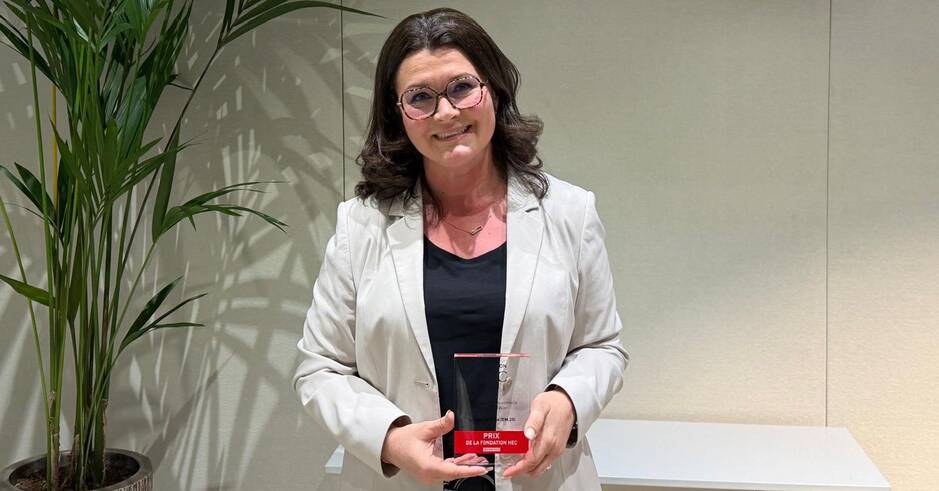
After twenty-five years leading a family business that became a benchmark in French corporate real estate, in 2024 she opened a new chapter with her husband, Félix Bertojo: Best Value, a sustainability strategy consultancy and a mission-driven company (société à mission). Her Executive Master in General Management at HEC Paris gave her the methods and the tools to formalise what she had long been doing on the ground.
One convinction has stayed with her. 'The only meaning of existence is to find one'. For Carmen Bertojo, the line signals neither a break nor a fresh start. It speaks to the coherence of a path, that, past forty, is taking on a new scale.
This is not a career change in the usual sense. It is a tchange of scale: the realisation that what she has built over years could become a transmissible model, useful to other companies.
Twenty-five years of CSR, built on common sense
Carmen Bertojo joined Spirit, a small property-development firm, in the early 2000s. She structured its business development, then its programmes and delivery, before becoming managing director and then chair. Over twenty years, she helped more than 1,500 companies set up their production sites.
« We wanted to build well, build with quality, build responsibly. And we stayed close to everyone around us - employees, partners, suppliers, clients, the whole value chain. »
What she describes today was already CSR in substance, even if the word hadn't yet put to it. The charters signed with the suppliers were a form of responsible procurement. The environmental choices, from the first HQE certification ona French business park to early work on biodiversity, reflected a steady will to build better. Governance showed up in how she set direction: improve the next project, the next operation, and make that demand for continuous improvement a management principle.
« We were doing CSR entirely on instinct - without realising it, without even having a name for it. »
When the war in Ukraine disrupted supply chains in 2022 and strained access to certain materials, steel in particular, the moment worked as a revealer. The crisis was real, but it also exposed the solidity built over the years. This intuitive CSR had done more than earn goodwill or reputation; it had created resilience.
The realisation then shifted in kind. What the crisis revealed for one sector held for many others: as resources grow scarce, energy tightens and market demands harden, sustainability stops being a peripheral concern. It becomes a strategic lever.
Best Value grew out of that continuity. In 2024, Carmen and Félix Bertojo stepped down from their operational roles at spirit to help SMEs structure their sustainability strategy. The venture rests on a simple conviction: what made one company solid can become a method useful to others.
Putting a structure on what she already knew
Given that track record, going back to HEC Paris might seem surprising. It answered a precise need: to put words, markers and methods to a practice already proven by experience.
This need for validation is not a sign of doubt. It reflects a demanding ambition: to test know-how built through practice against academic knowledge, to put her intuitions under pressure and sharpen them against other paths and other experiences.
The programme gave her three things. An understanding of the major sustainability stakes and of the physical limits now redrawing the economy. Their concrete translation into the life of a company. And command of tools that became unavoidable: CSRD, carbon accounting, eco-design, assessment standards such as Ecovadis.
The complementarity with her husband fits naturally into this. An engineer by training, he comes at problems through conception and technique. She brings structure, the shaping of the offer, the client relationship. Two different angles, deeply convergent.
What perhaps marked her most at HEC Paris was her thesis advisor, Françoise Chevalier. 'An extraordinary, passionate woman who managed to pass on her passion for research. My biggest problem, in fact, was getting myself to stop writing.'
What her thesis reveals about SMEs
Her thesis - "CSR in SMEs: what stakes, what practices, what difficulties?" - points to a blind spot in institutional discourse: most SMEs leaders are not opposed to CSR. They are simply at loss as to how to go about it.
She first notes a minority of leaders already commited by conviction. Their strength often lies in a form of anticipatory clarity: they see coming change earlier than others.8 She cites one who had invested in a mill to generate his own hydroelectric power and cover 120% of his needs. Many would have called it excessive; it proved farsighted. Soon after, one of his main clients in pharmaceutics told him that by 2030, only suppliers able to show uo a credible carbon trajectory would stay in the running.
At the other end, a minority remains entirely closed to it. In between sits the large majority: companies that will move once they are shown, concretely, what they stand to gain by acting and what they risk by doing nothing.
« SMEs don't realise how high the price of inaction could be. »
The mechanism is simple enough. Large companies carry regulatory and commercial obligations which they then pass down to their subcontractors. SMEs aren't bound directly by law, but increasingly they are bound by their principals, their banks, their insurers and their clients. If they don't adapt their model, their future weakens and others will take their place.
Another finding concerns early adopters. Industrial SMEs, already familiar with quality processes and ISO certification, tend to commit faster than the rest. As Françoise Chevalier puts it: 'Sustainability today is yesterday's quality'. What once seemed reserved for large groups is becoming a standard for any serious company.
Supporting SMEs ecosystem by ecosystem
The research confirmed a strong intuition behind Best Value: supporting one company at a time is necessary, but it isn't enough to transform an economic fabric for good. To change scale, you also have to work by ecosystems.
The first level of intervention is targeted support. She points to a masonry company of around forty employees, asked by its bank to obtain an EcoVadis rating in exchange for better financing terms. Best Value stepped in.The result: an EcoVadis bronze medal and a first for its sector in the Ile-de-France region. The effects showed quickly. Large principals now expect concrete guarantees from their subcontractors, and the company understood that this was not a compliance exercise but a lever for growth.
Today, that same company wants to go further and work on its carbon footprint. Once underway, the momentum builds step by step, and it holds.
The second lever is more structural. It means working with regional authorities to bring the whole ecosystem of SMEs into a sustainability effort. That requires assessing how mature a territory's companies are, identifying their priorities - decarbonisation, social issues, governance - then rolling out a graduated strategy suited to their reality.
'You have far more impact working with a local authority that cares about the health of its companies. It's much more effective than supporting them case by case.'
2024, the hinge year
2025 brought three major undertakings at once: preparing the operational handover at Spirit, launching Best Value, and following the Executive Master at HEC Paris. All of it alongside family life with three children. More than a year of strain, shee see it as a year of intensity and drive.
'On the contrary, we were living something extraordinary. When you do something you love, it never feels like effort.'
That energy carries into the family too. Her eldest read the thesis; another son, drawn to journalism, follows his parents' public appearances and the path they are tracing with pride.
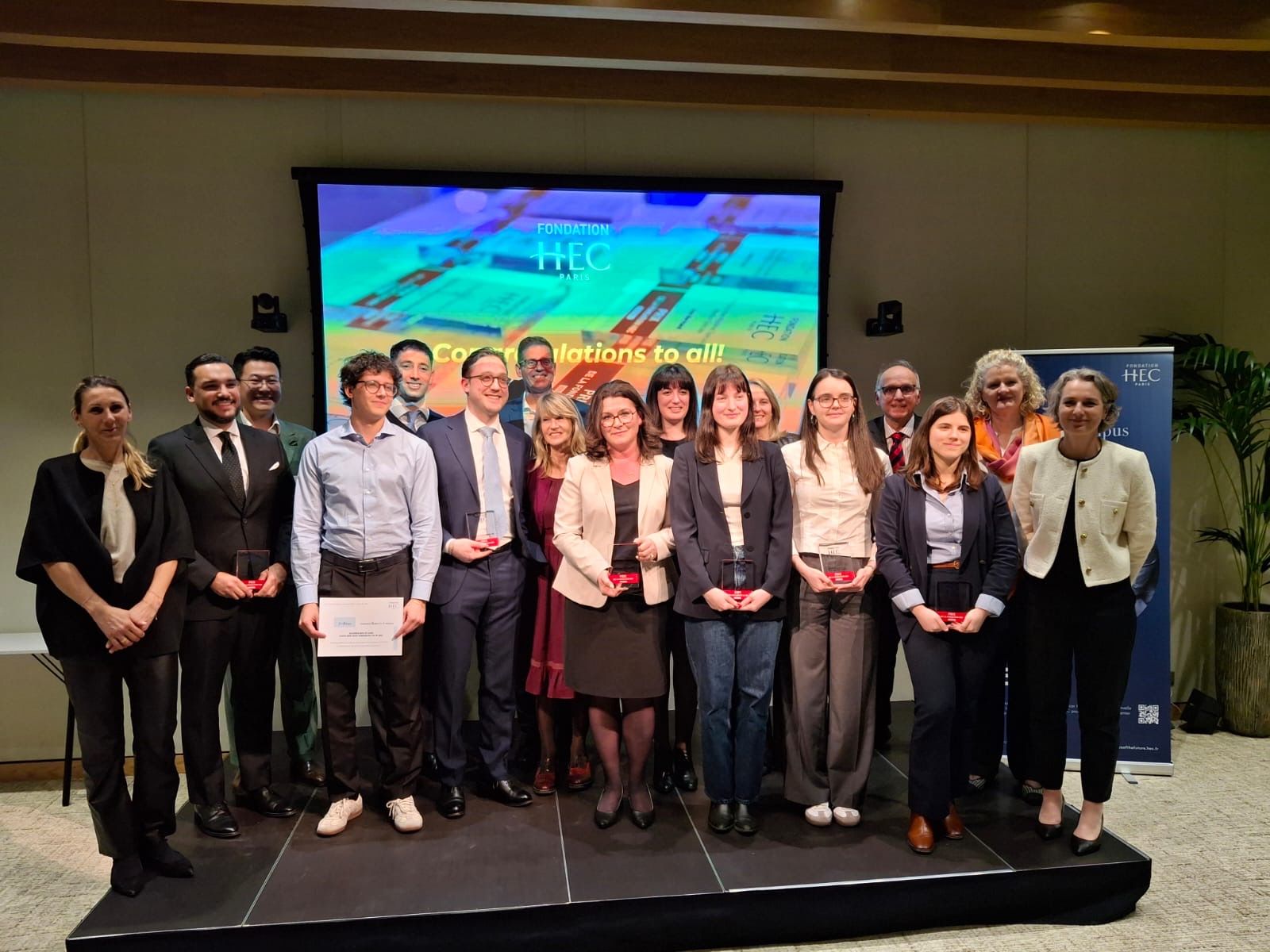
In 2026, the HEC Foundation awarded her thesis its prize for best professional thesis. The research feeds Best Value; field experience feeds the research in turn. The circle is a virtuous one.
What CSR reveals about a company
In her conversations with leaders, Carmen Bertojo makes one essential reversal: she pulls sustainability out of the register of conviction and places it back in the register of strategy.
"This isn't about ecology. It's about never loosing your company's profitability.'
In a world where resources tighten, where principals' expectations shift fast and regulatory pressure spreads along the value chain, models built on abundance grow fragile. A haulier investing today only in combustion vehicles risks no longer meeting its clients' expectations tomorrow.
What Carmen Bertojo helps SMEs see, then, is not only an environmental matter. It is a question of survival, of competitiveness, of staying relevant in a market. CSR is not a box to tick. It reveals a company's capacity to look aheadn adapt and last.
'Take small steps. Never stop.'