
Youth hackathon explores human rights and environmental due diligence in Asia
During the 2026 edition of the Corporate Sustainability and Environmental Rights in Asia conference, students and youth advocates from ten different business schools in gathered in Kuala Lumpur for a business and human rights hackathon.
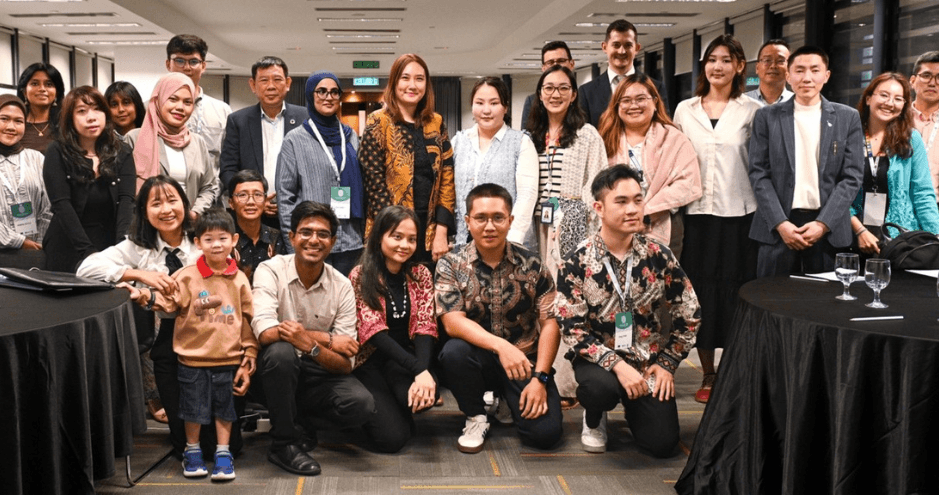
The NextGenBHR Hackathon brings together business school students from different universities to tackle real-world challenges
After a first edition of the NextGenBHR hackathon organized in Bangkok in September 2025, this second edition brought together 17 business school students from five different countries: Thailand, Mongolia, Indoneisa, India, and Malaysia.
The NextGenBHR Hackathon brings together business school students from different universities to tackle real-world challenges
Organized over two days, the participants engaged in deep dives into real-world business and human rights challenges, identifying existing gaps and developing practical and impactful solutions that businesses could adopt. The hackathon was divided into two streams: Sustainable Finance (1) and Tech and Responsible Innovation (2).
Exploring the environment-human rights nexus
The CSERA conference is devoted to unpacking the linkages across Asia between corporate activity, environmental degradation, and human rights impacts. It brings together numerous business actors, BHR experts, policymakers, and civil society, offering the perfect platform for practical activities addressing concrete challenges.
Embedded in the broader “resilience action labs” of the program, the hackathon was organized alongside other interactive activities on topics such as Net-Zero Targets or business and biodiversity. It is a joint initiative of the UNDP Agents of Change project, the Global Business School Network, the PRME Asean+ Chapter and HEC Paris.
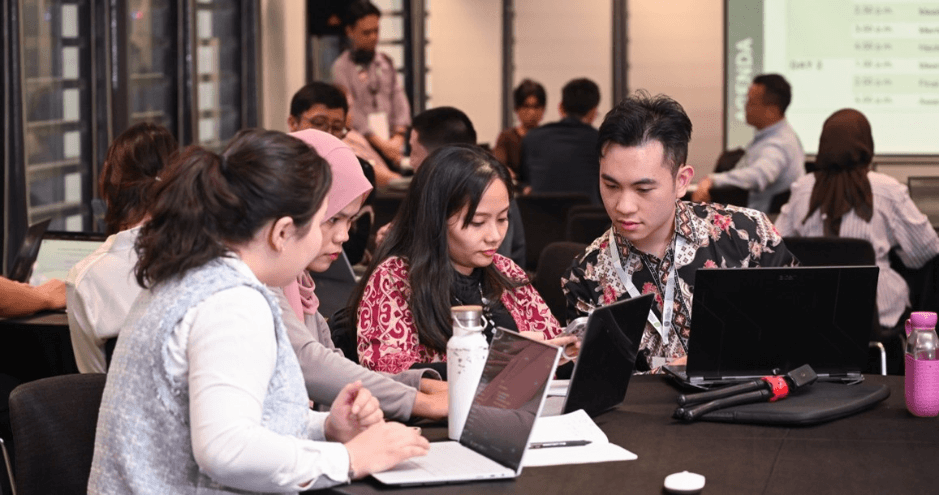
In working on their solutions, students benefit from mentoring by BHR practitioners
The connection between the hackathon and the broader conference proved to be extremely useful, allowing students to benefit from the insights of the conference, while being guided by experts Elizabeth Wu (Independent Consultant), and Eugene Wong (CEO, Sustainable Finance Institute Asia (SFIA)).
Working on concrete cases
For the Sustainable Finance stream, participants reviewed the CIMB Group Sustainability Report 2025. CIMB representatives, Gabriel Chong (Director Group Sustainability) and Michelle May (Assistant Manager Group Sustainability), joined the session to provide a briefing and also served as jury members for the final pitch session. The winning pitch outlined how CIMB could build on its ESG systems to embed human rights and environmental due diligence (HREDD) into its core lending and financial services decisions.
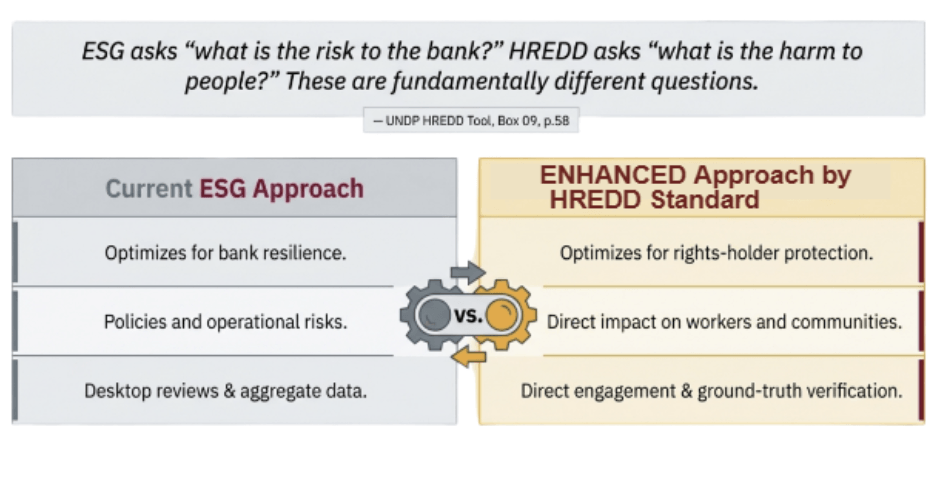
The winning proposal introduces a 10-point Human Rights and Environmental Due Diligence (HREDD) pre-screening checklist to systematically assess borrower risk, stakeholder impact, and compliance, ensuring early identification of projects that require escalation or mitigation.
For the Tech and Responsible Innovation stream, participants analyzed Microsoft’s Environmental Sustainability Report 2025. Walter Hong Hao Lim, Managing Director – Asia, Sedex served as the judge for this theme. A team of three business school students pitch to the jury in the Tech and Responsible Innovation stream.
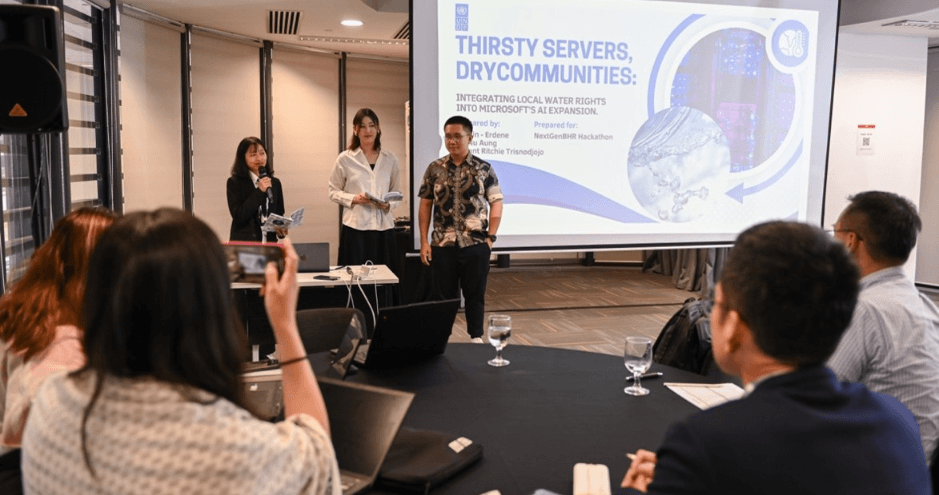
A team of three business school students pitch to the jury in the Tech and Responsible Innovation stream
The presentations for this group put forth 2 solutions:
Solution 1: Localized-Water Equity Impact Assessments
This approach requires a detailed pre-build assessment for each new data center. Moving from broad, overall reports to detailed, localized analysis ensures project plans consider the specific impact on regional aquifers and community water sources. A key part of this process is the mandatory involvement of indigenous and local leaders, giving water rights-holders a say in the project's development from the beginning.
Solution 2: Transparent Environmental Grievance Channels
To avoid escalating local water disputes, this solution creates a simple, accessible feedback system for residents. It offers a dedicated platform to report water shortages or infrastructure issues, enabling early detection and proactive response to potential crises. This approach promotes accountability and builds community trust.
Participants were enthusiastic about the experience. IIM Indore (India) MBA student Sai Vinesh underlined how the hackathon “pushed (him) to think more critically about the intersection of business, society, and responsibility”. His teammate from the winning team in the Sustainable Finance stream, SBM ITB (Indonesia) MBA student Malida Alviva Nugrahaning Gusti also saw the experience as transformative: “I walked away with new perspectives, sharper thinking, and a stronger conviction that sustainability and business excellence go hand in hand.”
Read more about the first edition