
Yolo: Making Personal Life a Business Imperative
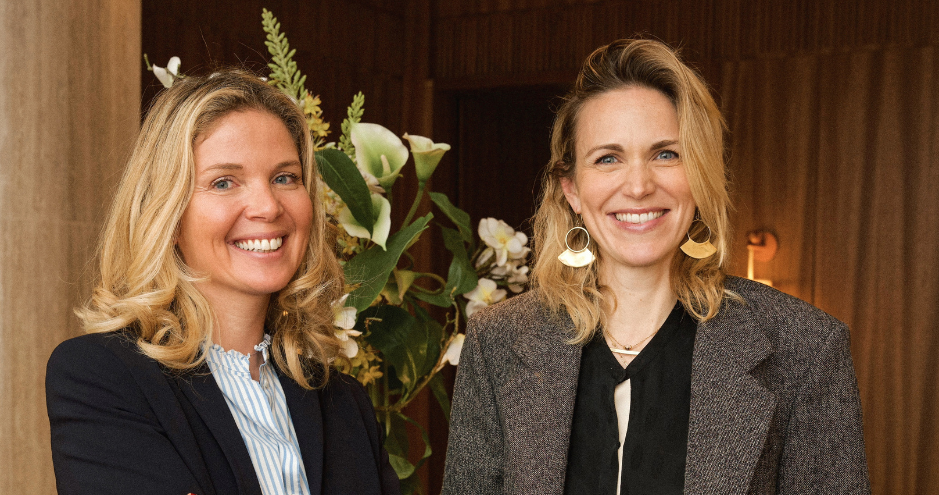
The personal load working professionals carry daily into the workplace can be costly, for both your mental health and your company's performance. To tackle this long-invisible problem, Camille Agon and Rebecca Fischer-Bensoussan founded Yolo, a startup that helps executives and entrepreneurs better manage their personal and family lives alongside demanding careers. Meet the two entrepreneurs who turned their lived experience into an entirely new sector: life care.
And among major demographic changes, one in four families are now single-parent households, and 20% of employees are acting as caregivers of whom 68% are women.
These numbers show the issue has become structural. Something companies can no longer ignore.
For the two founders, this conviction only deepened: personal life constraints should no longer limit professional ambition.
Life Care: A New Sector, a New Profession
Yolo positions itself as the leader of a sector that did not previously exist: life care. In practice, every employee supported by Yolo is matched with a dedicated ally: a term chosen deliberately to move away from the traditional assistant-assistee dynamic.
That ally takes ownership of the personal and family tasks that otherwise eat into the working day: hard-to-get medical appointments, water damage claims, administrative errands, school logistics, day-to-day anticipation…
The B2B model is equally straightforward. Corporate clients purchase hour packages: between 30 and 80 hours per year, depending on each employee’s life situation, with no rigid monthly allocation, because “life is not linear”. Clients include CAC 40 groups such as L'Oréal, Sanofi, Accor and Pernod Ricard, consulting firms, and industrial companies. Independent professionals: entrepreneurs, doctors, lawyers, journalists, etc. now account for 25% of revenue and represent a fast-growing vertical.
“Our allies are not therapists, they are not coaches. They are there to handle the hard stuff of everyday life, and the impact they have, simply by doing things on your behalf, is truly liberating." — Rebecca Fischer-Bensoussan, co-founder of Yolo
The collective now counts more than 80 Allies, all former corporate professionals, all freelance, all driven by a shared conviction: that having lived the mental load from the inside is the best possible training ground. Since its launch three years ago, over 3,000 applications have been received, and more than 25,000 requests have been handled in two years. What makes the matching so powerful is its specificity: a single mother is paired with an ally who is also a single mother, a caregiver with someone who has been one, a twin with a twin. This is where, as Camille puts it, “the magic of Yolo happens.”
This magic shows up in the numbers:
+3 hoursof working time recovered per week | 90%reduction in perceived mental load | 100%revenue growth every year since launch |
An Entrepreneurial Journey Built on Independence
Yolo has been built against the grain of the typical startup playbook. To date, no fundraising has been needed: the company is entirely self-financed, with 100% year-on-year revenue growth since inception and profitability from the early stages.
“We wanted to build a company that was profitable so that we could stay autonomous, grow at our own pace, and not be subject to outside pressure.” — Camille Agon, co-founder of Yolo
The two founders also made the unusual choice to start with large corporates rather than SMEs, embracing the complexity of their processes and high standards as an accelerated school of growth. A calculated risk, even if Rebecca admits: “It took a lot of blissful ignorance to walk in. We were a tiny startup trying to match the standards of companies that are absolute behemoths.”
The other critical lesson: backing themselves. “We spent far too much money in the early days because we didn't trust ourselves enough. By the time we understood that we had the right vision and the right intuition, that cost us. But we learned fast!”
And they do keep on learning. The pair joined the Incubateur HEC Paris at a pivotal moment in Yolo’s development. “We wanted to surround ourselves with the right people, to be part of a strong ecosystem, and to be carried by that collective energy," says Camille Agon. They found not only networking and business development opportunities, but (perhaps more valuably) a rare quality of human support. “The incubator teams are always available, genuinely attentive, and sharp. That has mattered enormously.”
The Ambition: Europe’s First Ally Collective
Recently featured in the French Challenges “100 Startups to Invest In” 2026 ranking, Yolo’s is set to expand its impact beyond France. Over the next three to five years, Yolo’s ambition is twofold: first, to continue a broader societal evangelization,making the reflex of having an ally as natural as having a phone, and second, to become the leading collective of its kind across Europe.
“The day a woman says: ‘I’ll take that job, but only if the company gives me my Yolo ally.’ That’s when we’ll know we’ve made it.”
“If you redesign the company for women, you redesign it for everyone,” concludes Rebecca Fischer-Bensoussan. Indeed, with a community of currently 70% female and 30% male, Yolo is a persistent reminder that mental load is not a gender issue, it is a human one. And the companies that learn to address it will be the ones best placed to attract, retain, and grow the talent of tomorrow.
Picture having to step out of a strategic meeting to chase down a paediatric specialist, manage a burst pipe from a conference room, or respond to your child’s school between two board sessions. This scenario, one that countless executives know intimately, is precisely what Camille Agon and Rebecca Fischer-Bensoussan set out to solve when they created Yolo back in July 2022. Both supported by the Incubateur HEC Paris since April 2025, they have built a profitable, fast-growing company on a radical conviction: that employees’ personal lives have become a corporate problem.
A Personal Problem That Became a Societal One
Yolo was born from a frustration shared by two women who had each lived it from the inside. Camille Agon, a serial social entrepreneur who had previously built a coding school in Johannesburg as part of Xavier Niel’s École 42 network, returned to Paris with her first child and came face-to-face with the concrete reality of being both a mother and a company founder.
Rebecca Fischer-Bensoussan, meanwhile, spent 15 years in investment banking before joining an executive committee while pregnant with her third child… Only to find the Covid crisis turned her life into an impossible juggling act between managing 60 team members on financial markets and the full weight of home, school, and family.
“I looked for help to delegate personal tasks. I couldn’t find it. And talking to people around me, I realized that mental load was still an immensely feminine issue: one with very real consequences on women’s careers,” says Rebecca.
What began as a personal frustration quickly revealed a broader, systemic issue.
Before launching, the two founders put their intuition to the test: they sent a questionnaire to more than 400 female senior executives between the ages of 35 and 45.
“80% of them told us they were in a state of mental overload all or almost all of the time, and above all, that they had no choice but to spend an hour a day handling personal matters during working hours.”
— Camille Agon, co-founder of Yolo
The finding was unambiguous: the boundary between professional and personal life was collapsing. What companies had long considered “employees’ private business” was fast becoming their own problem to solve.
Numbers That Reveal the Scale of the Challenge
Far from relying solely on their own experience, the two founders meticulously documented the landscape.
- One in two women modifies her working hours after a first maternity leave.
- 44% of women turn down an executive role for family reasons.
82% of female executives say the difficulty of balancing work and personal life affects their mental health.