


 Geopolitics & Public Affairs

Key findings
- The rules-based world order is rapidly weakening
- Europe now appears as an exception attached to multilateralism
- Europeans increasingly expect the EU to protect them
- Strategic dependencies weaken European sovereignty
- Trade diversification is reshaping Europe’s global positioning
- Decarbonization is also a tool for geopolitical independence
There is growing uncertainty around the future of the international order. Long structured around multilateral cooperation, predictable alliances, and shared rules, global relations are now increasingly shaped by power struggles, economic fragmentation, and geopolitical rivalry.
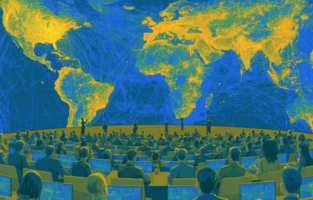
In this video, Alberto Alemanno, Professor at HEC Paris and specialist in EU law and public policy, examines what the collapse of the “rules-based world order” means for Europe. Speaking during a discussion with journalists on current geopolitical transformations, he explains why the European Union now finds itself in an uncomfortable position: defending a model of cooperation and rules-based governance in a world that is rapidly moving away from it.



 Economics & Finance

 Strategy & Leadership

 Sustainability & Society