
Purpose Has No Effect on Performance Until You Do This
Companies rush to define their purpose, sure it will fire up their teams and lift results. Rodolphe Durand has spent ten years checking whether that was true. Few people are better placed to know: he holds the Joly Family Chair in Purposeful Leadership at HEC Paris, runs its Purpose Center, and has spent over a decade on the boards of listed, private, and non-profit organisations - watching purpose decisions get made from the inside.
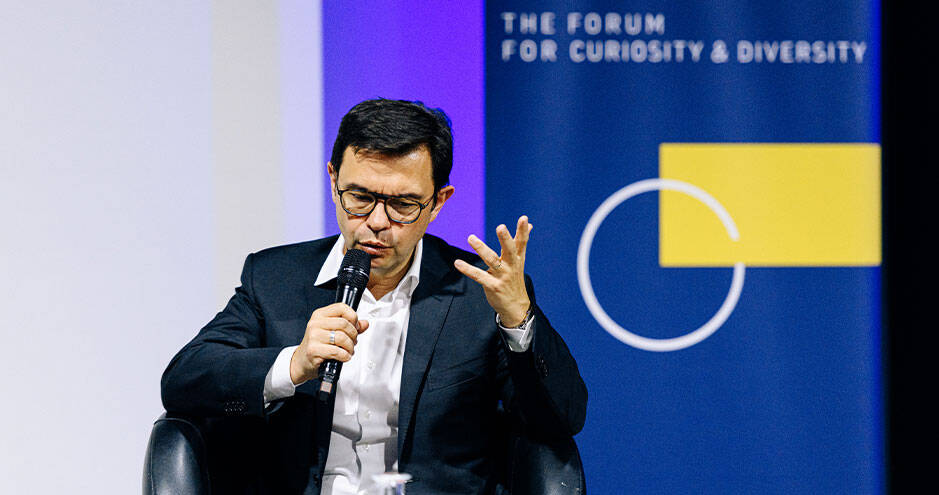
Which is what makes his finding so disarming. “The effect of purpose on corporate performance”, he says, “is null on average”. Done badly, purpose could even degrade a company's performance. Done well, purpose-based leadership can provide a +50% boost at your team performance. What really makes the difference is whether purpose is incarnated by leaders throughout the organization.
A word that means too much
Much of the muddle around purpose comes from three other ideas that keep borrowing its name.
Ask people what purpose means, and many will, in fact, mistake it with personal ethics: the private sense of right and wrong that an individual brings to work. It belongs to the person, not the payroll, and it shifts from one desk to the next. A company cannot hold a conscience the way an employee can. Corporate purpose is collective, or it is nothing at all: the same reason to exist, shared across the whole organization.
Another confusion is with ESG. As a purpose usually carries social and environmental commitments inside it, people usually assume they are the same object under two names. Except ESG is a rating a company receives after the fact, scored from the outside by investors, agencies and regulators against a checklist of issues, water, soil pollution, virgin materials, recyclability, carbon... It answers a demand that comes from others. Purpose runs in the opposite direction. It starts inside the company and asks the question that comes before anything: why does this company exist at all? One is measured at the issue level, the other is chosen by the organization as a whole.
Then there is the mission, which sounds a lot like a purpose. The difference is that a mission is a “what”: concrete, measurable, dated. Double the market share, gain the region’s leadership, offer the best service... Purpose is the “why” underneath it. Reach a mission, and you write a new one. The purpose remains even when the target has been met and forgotten. The image Durand uses is laying bricks at a building site. The mission might be to lay them twice as fast whereas purpose is the school that the bricks will become. Same gesture, but only one of the two answers explains why the work is worth doing.
Purpose, properly defined, is the reason a company exists and intends to last, resting on beliefs its people share about why the effort means something. It belongs to everyone.
On average, purpose pays nothing
In a study , Claudine Gartenberg, working with colleagues at Harvard Business School, built a measure of corporate purpose from a large body of employee responses and set it against financial results. The line was flat: on average, more purpose bought exactly nothing. How proud people said they were to work somewhere told you almost nothing about how the company performed.
That average covers very different stories. In the same dataset sit companies whose people describe their work with a catch in the throat and still turn in mediocre numbers, alongside more discreet companies, with barely a purpose to their name, that mint money year after year. Put the two side by side, and they cancel each other out. Durand's warning to executives is to drop the fairy tale:
“Let's not have a pink, rosy version of purpose”. Writing one down does not summon a workforce that suddenly cares.
It can even do the opposite. “Having a purpose can generate problems you didn't have before”, he notes. Picture one firm in two versions. Version A states that it has no purpose and simply chases profit. Version B commits to one, and immediately inherits extra statutory and operating goals, more targets to reconcile, more coordination, more meetings, a heavier organization. It has also made a promise, and promises can be broken. Declare a purpose, then promote the executive who stands for everything it disowns, and the trust drains out faster than any campaign can top it back up. A mishandled purpose knocks up to 30 percent off performance. It is a strategy, and you need to put efforts to implement it well.
The missing letter in every purpose strategy
So why do some firms make a fortune from purpose while others bleed? Durand's answer is a model he calls Clarity©, drawn from his research across 1,400 organizations and more than a million employee responses.
The model captures what happens inside a team as a stated purpose takes hold. For every point a company gains on a scale of purpose-based leadership – as employees rate it – it earns several percentage points in six dimensions that management research has linked to performance over the past thirty years. Commitment, Legitimacy, Autonomy, Resourcefulness (the team's ability to handle complex situations), Innovativeness (the appetite for new ideas), and then the Trust members place in one another. Set them side by side, and you get C-L-A-R-I-T. Summing across the gains, for one point increase in purpose-based leadership experience, you could earn up to +50% performance.
Except a letter is missing from the end. “The letter missing is Y, which stands for You”, explains Durand. Every gain the six dimensions promise is magnified by the one variable: the leader's own behavior.
“If you manage a company with purpose the way you managed a company without purpose, nothing will happen”, he says.
A statement on the wall changes no numbers, but a leader who acts as though they mean it does.
Forget the average, watch the variance
Let’s illustrate with the C of Clarity: Commitment. Everyone tracks the average level of engagement on a team, except the average is not the whole story. Or at least half of it, because it buries the part that decides everything: how far people sit from one another.
Two teams can both average four out of six and have nothing in common. In one, more or less everyone is at four. In the other, the four results from twos and sixes, a group hauling in opposite directions. “You'd rather have everyone move from four to four and a half than sit on an average of four that hides a lot of variance”, Durand argues. Protecting a comfortable mean stretched over a fault line is the trap. Shrinking that spread through managerial attention and the way work is built is the job.
One more point of purpose-based experience yields roughly 15 percent more engagement, which converts to about a fifth, or roughly +3 percent of performance.
Clarity settles decisions too. “When your purpose is clear, it becomes much easier to say no”, Durand notes. Few companies have pushed this further than Nexans, the French cable maker. When they settled on a purpose built around “electrification of the future”, Nexans cut its customer base by some 70 percent, along with 40 percent of its product references. No quarterly guidance recommends intentionally dropping paying customers. A purpose does, and well-implemented a purpose-based strategy delivers better financial ratios.
From statement to execution
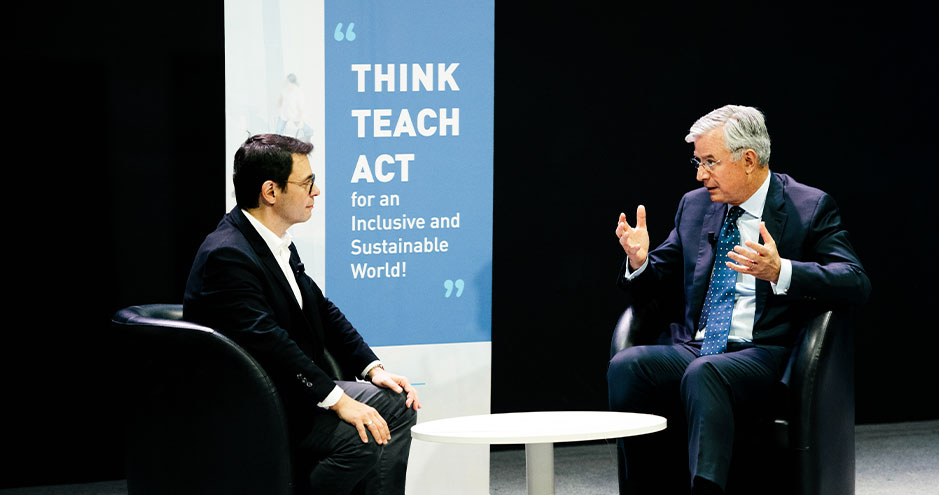
Rodolphe Durand and Hubert Joly bring two experiences of purpose into the same room: the one who studies it, and the one who tested it in a corporate turnaround.
“A leader's job”, in a line from Hubert Joly that Durand keeps close, “is less about telling people what to do than about building the conditions in which they grow more autonomous, more inventive, more resourceful”. To get the most of a purpose-based strategy, you need a change in management style and work on CLARITY©.
The hard part starts after writing a purpose statement. How to translate it into daily decisions ? Into governance, incentives, leadership behavior, and measurable business outcomes ?
Rodolphe Durand explores exactly these questions in HEC Paris Executive Education's Purpose & Performance program- two days, built around the Clarity© framework and drawn from his research across 1,400 organizations. If your company already has a purpose but can't get it to move decisions, behavior, or the numbers, this is where you start. |