
The More Uncertain the World, the More You Need a Strategy
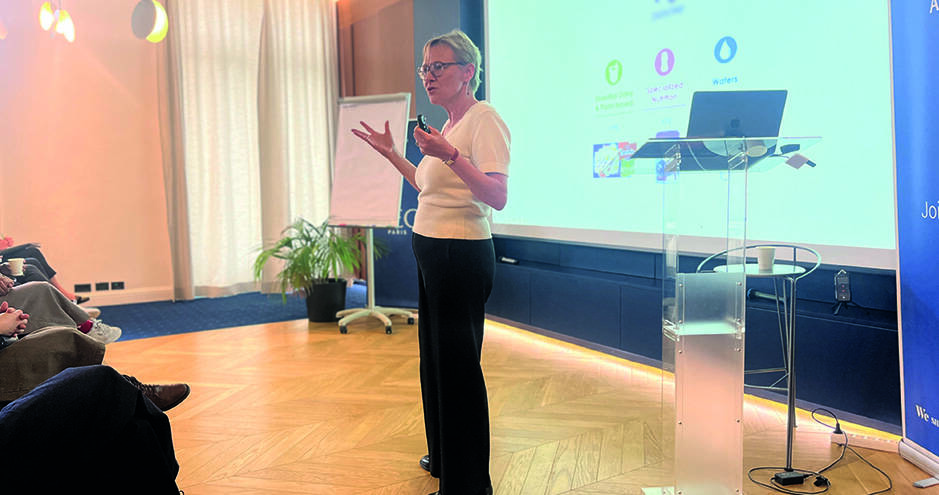
AI and geopolitical turmoil have convinced many executives that the future is too unpredictable to plan for. Laurence Lehmann-Ortega, strategy professor at HEC Paris and co-author of Strategor, argues the reverse: permanent crisis is precisely why strategy matters again, on one condition, that you stop forecasting the future and start preparing for several of them at once.
The temptation to give up
Ask most executives about strategy today, you will sense the same fatigue. With tariffs, energy prices and AI all moving at once, the future refuses to sit still long enough to plan around it. If nothing can be predicted, the reasoning goes, strategy is a luxury. Better to take each day as it comes.
Professor Lehmann-Ortega rejects the premise behind that conclusion. The error is treating the present as a storm that will pass. It will not. “We're not in a crisis right now. We are in a permanent crisis”, she argues. They will keep arriving, each one giving way to the next, and what we take for an exceptional moment is in fact the new normal. If turbulence were temporary, postponing strategy until calmer days might be defensible. But there are no calmer days ahead. And an organization that waits for visibility before it thinks will wait forever.
“Strategy is about the long term”, she says, “but we don't know what the long term is going to look like, because we have no clue how technology is going to change, and no clue about geopolitics.”
The harder the future is to read, the more dangerous it becomes to move through it without a strategy.
What strategy actually is
The word “strategy”, warns Laurence Lehmann-Ortega, means two different things. The first is corporate strategy: deciding which businesses a company should be in at all. She points to Danone, which sold off Kronenbourg beer and the LU biscuit brand. Only because they no longer fit the company's reason for being – “bringing healthy food to as many people as possible” – not because they were unprofitable. Corporate strategy is about managing that portfolio, choosing what to keep and what to let go of.
The second is business strategy: how a given activity builds a competitive advantage. Its central tool is the business model, which Lehmann-Ortega breaks into three linked parts. The value proposition answers who the customer is and what they are offered. The value architecture describes how the company organizes itself to deliver that, its resources, processes and channels. The profit equation is simply those two seen through a financial lens: where revenues come from and where costs come from. A sound model keeps the two sides aligned, and she insists, “the keyword in strategy is alignment.” Put more concretely, “business strategy is how I organize a dialogue between operations and marketing to make sure that we generate a profit.”
Reinventing the business model
A business model describes the present. Strategy interrogates the future: will this model survive what technology and geopolitics are about to do to it? This is precisely Professor Lehmann-Ortega's field, and she illustrates it with a case drawn from her collection.
Picture a facility manager trying to cut a building's energy bill. “Let's say you spend 100 on your energy”, she begins. "If you install a temperature regulator, it costs you 40, and you save 15 on your bill every year." On a spreadsheet, it works: the device pays for itself in under three years. In practice, the sale stalls on the same objection every time. “We don't have the 40”, the facility managers tell Schneider or Honeywell. A manager judged on this year's budget has little appetite to spend now for savings that land later. Now, the conventional reflex is to compete on price, dropping the device to 38, then 36, the bloody price war Laurence Lehmann-Ortega calls the red ocean. But what if the manufacturer installs the device for free and takes its pay from the savings it generates? The customer now carries no risk and no upfront cost. The risk sits entirely with the supplier, who must be confident enough in the product to stake its revenue on it. The manufacturer no longer merely sells and ships: it installs, monitors, and ensures the savings actually materialize. Profit no longer arrives in one shot but stretches over years, and the capital tied up grows. Same product, entirely different business model, and a real environmental gain on top, since less energy is now consumed.
The reason such reinventions are rare is that exploring them feels dangerous. “What's the best way not to fail? Not to try. And this is how companies die.”
AI changes everything except who does the thinking
No technology weighs more heavily on this question than AI, and Laurence Lehmann-Ortega fixes its turning point on a single date. “Do you remember what you did in November 2022?” she asks.
“This will be a historical date, our kids will learn about it.” Not because AI arrived then, she is quick to add, “AI has been around for over 30 years”, but because that is when it entered daily life.
Since then, the temptation has been to imagine that AI will do the strategic work itself. But AI does not invent business models: it enables them. The internet did not conceive Amazon. It made Amazon possible, and people did the conceiving. AI plays the same role.
The professor once met a construction and real-estate firm that used AI on both sides of its business model. On the value proposition, the managers told her: “AI is amazing, because it allows us to do something super tailored for the customer, who can choose the color, choose where the wall goes.” And on the cost side: “When you build, 15 % of your costs come from the fact that you did it wrong and you have to rebuild it. With AI, you can run more simulations, and you drastically reduce that cost.” The same firm now eyes 3D printing to rethink construction itself: printing a building rather than conventionally erecting it.
The technology enables the new model, but the strategic imagination is still human.
From forecasting to foresight
If the future cannot be predicted, how can anyone plan for it? Professor Lehmann-Ortega's answer is a single word, set against another:
“I don't believe in forecasting anymore. I believe in foresight.Forecasting, she says, is what happens when strategy is left to the finance department.
“Last year was this, so next year will be that”. Until one day, the past stops predicting the future. Kodak could not have drawn a curve through 2001, 2002, 2003 and read its future from it. The past had stopped predicting anything.
Foresight works the other way around. Rather than projecting one future from past data, it imagines several, three or four plausible versions of the world in five to ten years, none of them certain. Next comes the reverse move, backcasting: for each scenario, what must I begin doing now to be ready?
The discipline is to prepare for all scenarios at once, not to bet on any one. It is the revival of scenario planning, popular in the 1970s and made urgent again by exactly the uncertainty that tempts executives to give up. AI is useful here too, less to write the scenarios than to surface the uncertainties behind them.
Strategy means being uncomfortable
Strategy today is not a choice between improving what you have and inventing what comes next. It is doing both at the same time. “Strategy is about combining exploitation and exploration”, Laurence Lehmann-Ortega emphasizes. Exploitation means refining the current business model to make it more profitable and sustainable through incremental innovation. Exploration means testing the radical models of tomorrow, knowing most attempts will lead nowhere. Companies are often comfortable with the first and allergic to the second, because exploration looks like wasted effort until, occasionally, it saves the firm.
There is a job title for this, only half a joke, that she picked up at LinkedIn: “chief hacker in residence”. The person whose role is to hack the company's business model from the inside before a competitor does it from the outside. Who, in your company, holds that role? Usually, no one.
Certainty is not coming back. For executives, the job is no longer to predict the right future and march toward it, but to stay ready for several, and to keep questioning the model that works today before it stops working tomorrow. “If you are super comfortable, it's probably not strategic”, concludes Laurence Lehmann-Ortega.
| HEC Paris Executive Education runs Strategy in the C-Suite, a twelve-day Executive Certificate built on the STRATEGOR framework Lehmann-Ortega helped write. It works through the same three questions this article raises in turn: which businesses to be in, how each one competes, and how to make either actually happen including how to rebuild a business model for several futures rather than one. The Executive Education team can talk through whether it fits your situation. |