

 Economics & Finance
 Geopolitics & Public Affairs
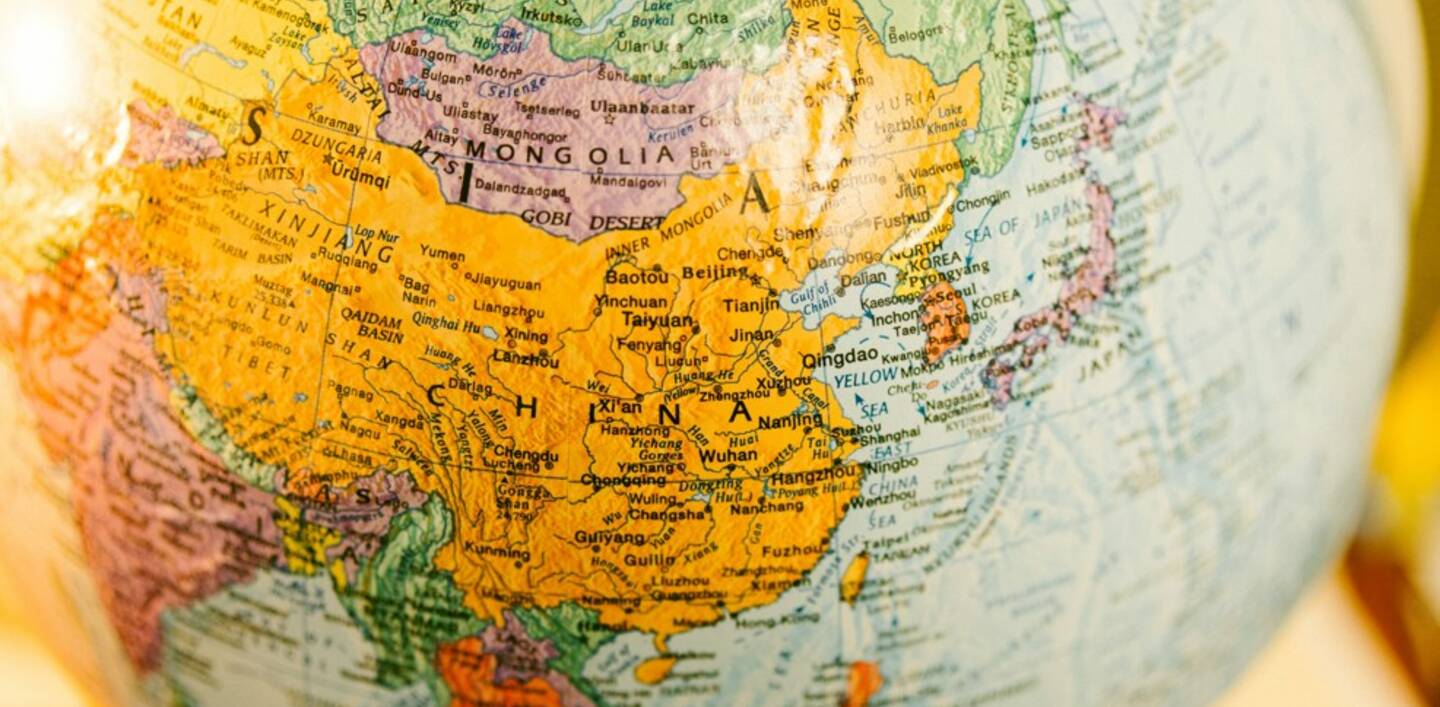

- According to David Baverez, Europe is facing a growing competitive gap with China.
- He attributes China’s competitiveness to massive public support for companies and data-driven management practices.
- He argues that Europe’s model, more focused on subsidizing demand, is reinforcing industrial dependencies.
- He calls for closer alignment between geopolitics, corporate strategy, and public–private cooperation.
As China’s industrial power continues to rise, European companies are operating in an increasingly uncertain environment. David Baverez (H.88), author of Welcome to the War Economy, believes Europe is underestimating the scale of the competitive shock and must fundamentally rethink the relationship between governments and businesses. He spoke to Dare from Hong Kong.
Dare: In your view, is China a threat, a competitor, or a mirror of Europe’s own weaknesses?
David Baverez: We first need to understand the context of the two “China shocks.” The first occurred in 2001, when China joined the WTO and was seen as a partner of the West.
The second “China shock,” emerging after COVID, reflects a marked deterioration in Europe’s price competitiveness, largely driven by unfavorable trends in producer prices and declining Chinese industrial costs.
In my view, this large-scale industrial competition stems primarily from two key pillars of China’s strategy: massive state support for companies and agile management built on the intensive use of customer data.
As a result, China is increasing Europe’s economic dependence across several strategic sectors—critical raw materials, manufactured goods, and key industrial supply chains. It also exposes coordination challenges between public institutions and economic actors within the European Union.
Dare: What role do public subsidies play in the competitiveness gap you describe?
The Chinese state plays a central role in competitiveness by massively supporting its companies—around 4% of GDP according to the IMF, or nearly $1 trillion. This reflects what I call a “war economy” approach: subsidizing production, but also innovation, financing, and exports.
As I explain in my latest book, Welcome to the War Economy, Europe remains structured around a demand-subsidy model, which in turn reinforces its industrial dependencies.
France’s trade deficit reached around €80 billion in 2024, nearly €50 billion of which was with China—close to half. However, this concentration applies only to trade in goods; France’s overall current account remains broadly balanced.
Dare: What characterizes the new form of agile management emerging in China?
This model is based on iterative innovation and intensive data use. Companies launch products quickly in small batches and continuously adjust production based on observed demand.
Firms like Shein can move from design to production in just a few weeks by combining signals from social media with internal data (apps, sales, clicks).
This system relies less on traditional vertical integration and more on deep digital integration across the supply chain, enabling high responsiveness and competitive pricing. That said, the sustainability and transferability of this model—especially in Europe—remain open questions.
Dare: What do you recommend to executives and boards?
Geopolitics will hit fast and hard. In my view, leaders must undertake deep transformation, making two strategic shifts: integrating geopolitics into all levels of decision-making and reassessing economic dependencies.
More concretely, every executive team and board should formalize a “statement of interdependence,” turning new dependencies into structured interdependencies.
At the national level, France should strengthen dialogue between government, organizations, and researchers.
Further reading (in French)
- Interview with David Baverez on "Conflits" (Pascal Boniface blog)
- "Bienvenue en économie de guerre", Novice, Mai 2024
- Article in Le Monde: "« Welcome to the War Economy! »: a provocative wake-up call"
Sources
Article based on an interview with David Baverez by Céline Bonnet-Laquitaine.




 Sustainability & Society



 Strategy & Leadership